Calcutta High Court Questions Validity of PIL on 'Vande Mataram' Protocol
Synopsis
The Calcutta High Court is scrutinizing a PIL challenging the Central government's guidelines on 'Vande Mataram'. The court demands the petitioner to justify the admissibility of the case, emphasizing the implications on national security and sovereignty.
Key Takeaways
The Calcutta High Court is reviewing the legitimacy of a PIL against governmental guidelines on 'Vande Mataram'.
Evidence is required to support the PIL's admissibility.
National security and sovereignty are central themes in the discussions.
The next court date is set for March 23.
The case underscores the ongoing debate about national symbols and their implications.
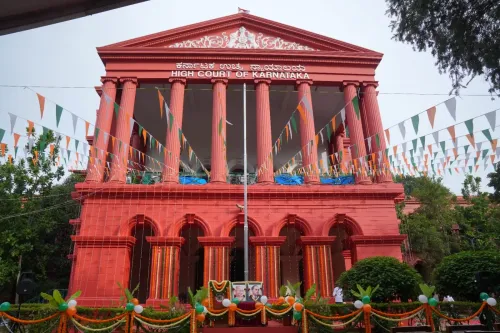
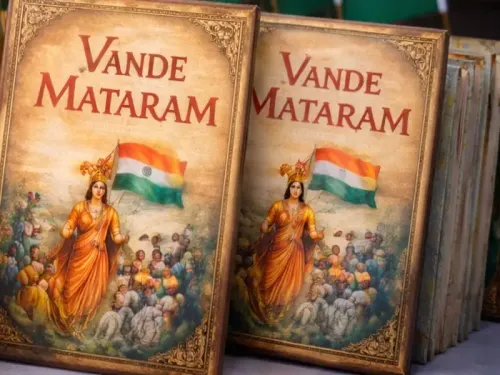
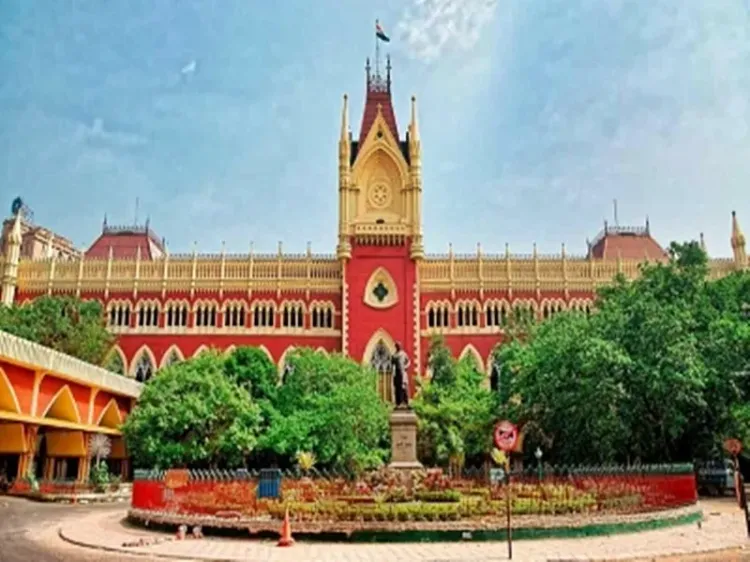
Kolkata, March 5 (NationPress) A bench of the Calcutta High Court raised concerns on Thursday regarding the legitimacy of a public interest litigation (PIL) that disputes the comprehensive guidelines released by the Central government concerning the official protocol for the performance of the national song 'Vande Mataram'.
The bench, consisting of Chief Justice Sujoy Paul and Justice Partha Sarathi Sen, instructed the petitioner to present logical evidence to substantiate the validity of the PIL.
During the afternoon hearing, Additional Solicitor General Ashoke Chakraborty was the first to bring up the issue of the PIL's admissibility, asserting that it was solely in the self-interest of the petitioner.
“Matters concerning the sovereignty and national security of our country are intertwined with the national song. Is this issue truly fit for judicial determination? The petitioner must first establish the foundation of this public interest litigation; otherwise, they could face significant penalties,” Chakraborty contended.
In response, the petitioner's attorney, Bikas Ranjan Bhattacharya, a senior advocate and CPI-M Rajya Sabha member, argued that the primary argument of the PIL is against the Union government’s directive issued on January 20 of this year to all state chief secretaries, mandating that the full official version of 'Vande Mataram', which includes six stanzas and lasts about three minutes and ten seconds, is to be performed or played during important state events.
“In 1937, certain portions of this song were acknowledged as universally acceptable by India’s first Prime Minister, Jawaharlal Nehru, based on the advice of Gurudev Rabindranath Tagore. Only that specific segment was granted the status of the national song, as it was reasoned that the phrases in the remaining stanzas might disrupt communal harmony. Consequently, Tagore suggested the exclusion of those additional stanzas, which the Constituent Assembly later approved in the Indian Constitution,” Bhattacharya elaborated.
Following this, the division bench instructed the petitioner’s counsel to furnish logical evidence to verify the admissibility of the PIL.
The bench also noted that suitable evidence should be provided to support the historical narratives that form the basis of the public interest litigation.
The next hearing in this case has been scheduled for March 23, by which time the counsel must submit the relevant evidence to the court.
Point of View
It invites a broader discourse on how national symbols are interpreted within legal frameworks. The outcome could have lasting effects on public sentiment and legal standards concerning national pride.
NationPress
19 Sept 2026
Frequently Asked Questions
What is the main issue in the Calcutta HC PIL?
The main issue revolves around the legitimacy of a PIL challenging the Central government's guidelines on the performance of the national song 'Vande Mataram'.
What did the Calcutta HC ask the petitioner to do?
The court directed the petitioner to provide logical evidence to establish the admissibility of the PIL.
Who raised the concerns about the PIL?
Additional Solicitor General Ashoke Chakraborty raised concerns regarding the admissibility of the PIL.
When is the next hearing for this case scheduled?
The next hearing is scheduled for March 23.
What historical context was provided by the petitioner's counsel?
The counsel mentioned that only a portion of 'Vande Mataram' was adopted as the national song due to concerns about communal harmony.