Manickam Tagore blames DMK corruption, ally treatment for electoral losses
Synopsis
Congress's Tamil Nadu chief Manickam Tagore has gone on record to challenge the DMK's post-election narrative — arguing that corruption, law and order failures, and the humiliation of allies, not voter deletions, cost the party at the ballot box. His X post directly cites Stalin's own pre-election speech as evidence that the DMK cannot now blame the electoral roll revision it had publicly declared a success.
Key Takeaways
Congress Tamil Nadu president Manickam Tagore publicly rejected the DMK 's claim that voter deletions caused its losses in the 2026 Assembly elections and bypolls.
Stalin 's own 21 February Madurai speech, in which Stalin declared the Special Intensive Revision (SIR) a success backed by 75,032 booth agents and 5.5 lakh committee members .
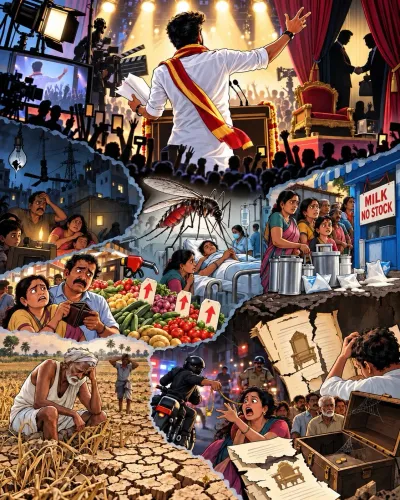
He blamed alleged unprecedented corruption , law and order failures, offensive remarks against women, and mistreatment of allies for the electoral rejection.
Tagore distinguished Tamil Nadu from states like West Bengal , Bihar , and Maharashtra , where voter-deletion complaints were credible, arguing no comparable evidence exists in Tamil Nadu.
He questioned the DMK's absence from a Delhi protest demanding the Chief Election Commissioner's resignation, alleging the party feared antagonising the BJP .
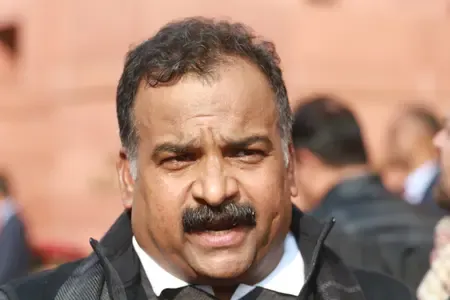
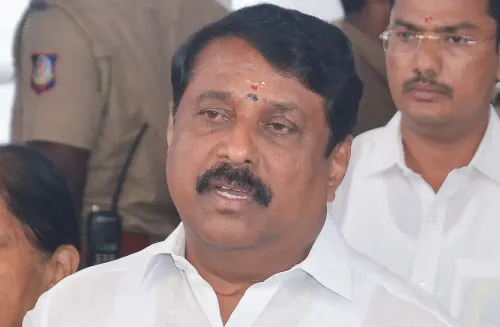
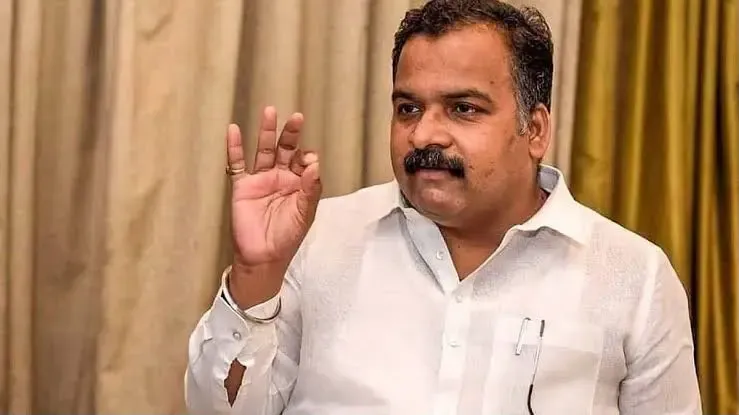
Congress's Tamil Nadu president and Member of Parliament Manickam Tagore on Monday, 12 October 2026, publicly blamed alleged corruption, deteriorating law and order, offensive remarks against women, and the poor treatment of alliance partners for the Dravida Munnetra Kazhagam (DMK)'s recent electoral setbacks — flatly rejecting the party's claim that voter deletions were responsible for its losses in the 2026 Tamil Nadu Assembly elections and subsequent bypolls.
The X Post That Started the Debate
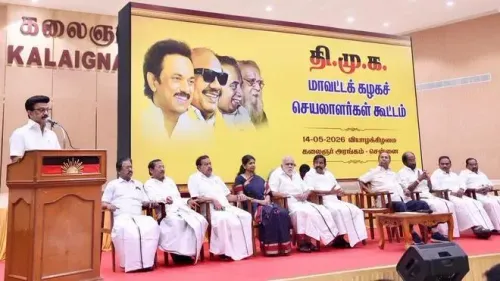
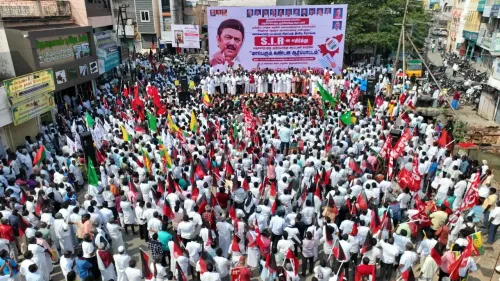
Tagore made his remarks in a post on X, directly challenging the DMK's official explanation for its defeats. He pointed to a speech delivered by DMK President and then Chief Minister M.K. Stalin on 21 February at a training conference for southern zone polling station committee members in Madurai, in which Stalin had categorically assured that no voter in Tamil Nadu had been removed during the Special Intensive Revision (SIR) of electoral rolls.
Stalin had cited the party's formidable organisational machinery — comprising 75,032 booth-level agents, 5.5 lakh polling station committee members, and 75,032 digital agents — as evidence that the revision had been handled successfully and would secure victory. Tagore argued that the DMK could not now reverse course and attribute its losses to the very same process it had publicly declared a success before polling day.
Tagore's Core Argument Against DMK's Voter Deletion Claim
The Congress leader also pointed to a memorandum submitted to the President, noting that its fourth demand sought cancellation of elections only in states where decisive evidence of vote theft had been presented. He acknowledged allegations of voter deletions and electoral irregularities in West Bengal, Assam, Bihar, Maharashtra, and Haryana, but maintained that Tamil Nadu, Kerala, and Puducherry had not witnessed comparable complaints regarding SIR. His argument, in essence, was that the DMK was applying a convenient post-result narrative unsupported by the pre-election record.
Corruption, Law and Order, and Ally Relations in the Dock
Turning to what he described as the real reasons for voter rejection, Tagore argued that allegations of unprecedented corruption, failures in maintaining law and order, remarks he characterised as offensive to women, and the public humiliation of alliance partners had collectively damaged the DMK's standing with the electorate. He did not name specific individuals in connection with these allegations, but the critique pointedly targeted the DMK's conduct in government.
This comes amid long-simmering tensions within the INDIA bloc in Tamil Nadu, where constituent parties have periodically complained about being sidelined or disrespected by the dominant DMK. Tagore's remarks add a rare on-record dimension to what has largely been a private grievance among allies.
DMK's Absence at Delhi Protest Draws Sharp Criticism
Tagore also questioned why DMK MPs were absent from a protest in Delhi demanding the resignation of the Chief Election Commissioner. He noted that leaders from Tamil Nadu's Left parties, the Viduthalai Chiruthaigal Katchi (VCK), and the Manithaneya Makkal Katchi (MDMK) participated and were arrested during the demonstration. He alleged that the DMK stayed away out of fear of antagonising the Bharatiya Janata Party (BJP) — a charge that strikes at the heart of the party's secular and democratic credentials.
If the DMK was genuinely committed to Tamil Nadu's welfare, democracy, and secularism, Tagore said, it should have joined such protests without hesitation. Voters, he concluded, would not accept an explanation that so directly contradicted the party's own pre-poll assurances about the integrity of the electoral rolls. The remarks signal a sharpening of intra-alliance tensions ahead of what are likely to be closely watched local body elections.
Point of View
He forecloses the DMK's most convenient alibi and forces a public accounting — something rare from within an alliance partner. The deeper story here is not just electoral post-mortems but a Congress signalling, ahead of local body polls, that it will no longer silently absorb the costs of a lopsided partnership. The allegation that the DMK skipped the Delhi protest to avoid upsetting the BJP is particularly cutting, as it undermines the party's core secular brand at precisely the moment it needs alliance credibility. If the DMK does not respond substantively, the silence itself becomes a political cost.
NationPress
12 Oct 2026
Frequently Asked Questions
Why did Manickam Tagore criticise the DMK over its electoral defeats?
Tagore argued that alleged corruption, law and order failures, offensive remarks against women, and the mistreatment of alliance partners — not voter deletions — were responsible for the DMK's losses in the 2026 Tamil Nadu Assembly elections and recent bypolls. He made the remarks in a post on X on 12 October 2026.
What did M.K. Stalin say about the Special Intensive Revision before the elections?
At a training conference in Madurai on 21 February, Stalin declared that the DMK's network of 75,032 booth-level agents, 5.5 lakh polling station committee members, and 75,032 digital agents had ensured no voter was removed during the SIR of electoral rolls. Tagore used this statement to argue that the DMK cannot now blame the same process for its defeat.
Did the Congress accept the DMK's voter-deletion argument in other states?
Tagore acknowledged voter-deletion complaints as credible in West Bengal, Assam, Bihar, Maharashtra, and Haryana, but maintained that Tamil Nadu, Kerala, and Puducherry had not witnessed comparable evidence of SIR-related irregularities. He cited a memorandum to the President that called for election cancellations only where decisive evidence of vote theft existed.
Why did Tagore question the DMK's absence from the Delhi protest?
Tagore noted that leaders from Tamil Nadu's Left parties, the VCK, and the MDMK attended and were arrested at a Delhi protest demanding the Chief Election Commissioner's resignation, while DMK MPs were absent. He alleged the DMK stayed away to avoid antagonising the BJP, calling into question its commitment to democracy and secularism.
What does this mean for the Congress-DMK alliance?
The public nature of Tagore's critique signals escalating tension within the INDIA bloc alliance in Tamil Nadu. It suggests Congress is increasingly unwilling to absorb what it describes as being sidelined, a posture that could influence seat-sharing and coalition dynamics in upcoming local body elections.