Does the Ultimate Decision Rest with the People of TN? Congress Responds to CM Stalin's Remarks on Single Party Government
Synopsis
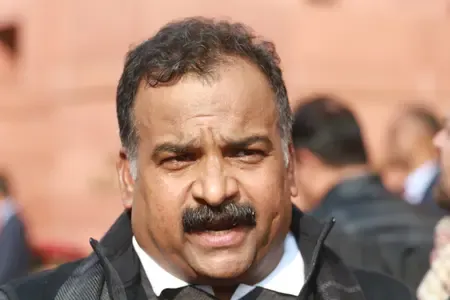
As Tamil Nadu gears up for the 2026 Assembly elections, Congress MP B. Manickam Tagore insists that the power lies with the people. His response to CM Stalin's remarks about single-party governance adds fuel to the ongoing debate about coalition dynamics in the state. Will voters favor a coalition or a single-party government?
Key Takeaways
The ultimate decision about governance in Tamil Nadu lies with the people.
Chief Minister Stalin advocates for a single-party government.
Historical context reveals missed opportunities for the Congress in previous elections.
Political discussions are intensifying as the 2026 elections approach.
The electorate's mandate will shape the future of governance in the state.
Chennai, Feb 11 (NationPress) In light of the escalating discourse within the DMK-led coalition about the potential for a coalition government in Tamil Nadu following the 2026 Assembly elections, Congress MP B. Manickam Tagore asserted that the final choice lies with the residents of the State.
His statements were made in reaction to Chief Minister and DMK leader M.K. Stalin, who recently dismissed the Congress party’s request for a coalition government should the alliance attain victory in 2026.
Stalin claimed that Tamil Nadu's political legacy supports a single-party government rather than a coalition.
Challenging the Chief Minister's viewpoint, the MP from Virudhunagar expressed on social media that it is the voters who will decide if Tamil Nadu will move towards a coalition or continue with a single-party government.
He stressed that democratic mandates should shape governance strategies post-elections, rather than premature political assertions.
Tagore also reflected on the choices made by the Congress in the wake of the 2006 Assembly elections.
He noted that the Congress missed a critical chance to advocate for power-sharing with the DMK when they had the opportunity.
In the 2006 elections, the DMK secured only 96 seats in the 234-member Assembly, falling short of a simple majority.
Despite lacking sufficient numbers to govern independently, the DMK managed to complete a full five-year term with the external backing of its alliance partners.
The Congress contributed 34 MLAs, while the PMK and CPI(M) provided support with 18 and 9 MLAs respectively.
Tagore argued that the Congress should have seized that moment to negotiate a formal power-sharing agreement with the then Chief Minister M. Karunanidhi.
He characterized the failure as a missed political opportunity for the party within Tamil Nadu.
These remarks have introduced a new layer to the ongoing conversations within the DMK-led alliance as preparations ramp up for the 2026 Assembly elections.
It remains to be seen if the alliance will reconsider the topic of coalition governance, but the matter has clearly re-emerged in the political discussions of the State.
Point of View
The evolving political narrative in Tamil Nadu reflects a broader trend of coalition dynamics in Indian politics. The emphasis on the electorate's voice underscores the importance of democratic processes in determining governance structures. As political parties prepare for the 2026 Assembly elections, it is crucial to recognize the electoral mandate's role in shaping future alliances and governance models.
NationPress
23 Sept 2026
Frequently Asked Questions
What did Congress MP B. Manickam Tagore say regarding governance in Tamil Nadu?
He stated that the ultimate decision about governance rests with the people of Tamil Nadu, challenging CM Stalin's assertion of a single-party government.
How did CM Stalin respond to calls for a coalition government?
Stalin ruled out the possibility of a coalition government, citing Tamil Nadu's political tradition as favoring a single-party government.
What historical context did Tagore provide from the 2006 Assembly elections?
He mentioned that the Congress party missed an opportunity to negotiate power-sharing with the DMK when they had the leverage following the 2006 elections.