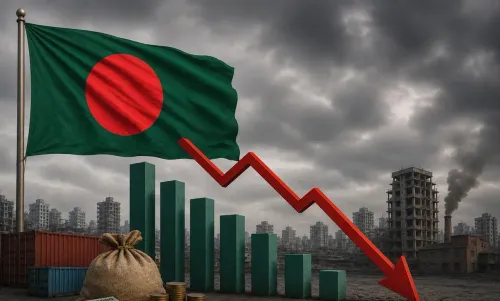
Bangladesh graduate unemployment hits 13.54%, highest across all education levels
Synopsis
Bangladesh's Labour Force Survey has uncovered a damning paradox: the more educated you are, the more likely you are to be unemployed. With 13.54% of university graduates jobless and 885,000 without work, the country risks squandering its demographic dividend — and experts warn that AI-driven job displacement is set to make the skills mismatch even worse before policy reforms can catch up.
Key Takeaways
The Bangladesh Bureau of Statistics (BBS) Labour Force Survey records graduate unemployment at 13.54 per cent — the highest of any educational category.
Approximately 885,000 university graduates in Bangladesh are currently without employment.
By contrast, only 1.25 per cent of people with no formal education are unemployed, revealing a stark education-unemployment paradox.
The ILO data cited in reports puts youth unemployment among those aged 18 to 24 at 9.39 per cent .
Economists at the CPD and the World Bank estimate the skills gap costs Bangladesh several billion dollars annually in lost GDP growth.
Professor Ridhwanul Haq of IBA, University of Dhaka , has called for technical education to be brought up to international standards ahead of accelerating AI-driven displacement.
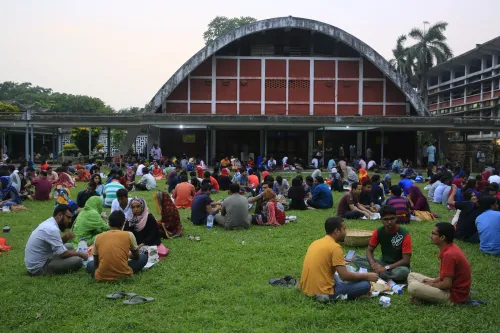
Unemployment among university graduates in Bangladesh has reached 13.54 per cent — the highest rate recorded across all educational categories in the country — according to the latest Labour Force Survey by the Bangladesh Bureau of Statistics (BBS). Roughly 885,000 university graduates currently remain without jobs, as monthly survival costs increasingly crowd out long-term career planning for an entire generation of educated young people.
A Stark Reversal: More Education, Higher Unemployment
The BBS data reveals a troubling inversion at the heart of Bangladesh's labour market: only 1.25 per cent of people with no formal education are unemployed, compared to 13.54 per cent among the most highly educated. The pattern is consistent across educational tiers — the further a person advances academically, the greater their risk of remaining jobless.
Separately, data cited from the International Labour Organisation (ILO) indicates that 9.39 per cent of young people aged 18 to 24 in Bangladesh are currently unemployed, underscoring the scale of the crisis among the country's youngest workforce entrants.
The Human Cost: Rent Before Ambition
The financial strain on unemployed graduates has been captured in a remark that has since circulated widely. When asked by an interview panel, 'Where do you see yourself in five years?', a job-seeking graduate reportedly answered, 'Sir, I would be happy if I could simply pay next month's mess rent for now.'
According to reports in Bangladeshi daily Prothom Alo, while the exchange has become a social media talking point, it reflects the daily calculus facing hundreds of thousands of educated young Bangladeshis — weighing hostel rent against recruitment examination fees, month after month.
Skills Gap and the AI Disruption Ahead
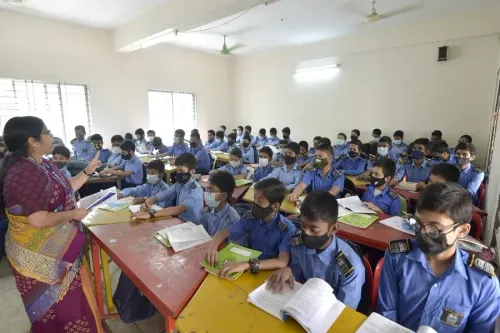
Professor Ridhwanul Haq of the Institute of Business Administration (IBA) at the University of Dhaka has identified the widening mismatch between academic qualifications and actual labour-market demand as a central driver of the crisis.
'In the era of AI, formal employment opportunities will shrink in various fields, from media to accounting. However, opportunities for technically skilled workers will remain, and demand for such skills will increase significantly in the future. Therefore, we must bring technical education in the country up to international standards and increase the use of technology,' Professor Haq stated.
His warning carries particular weight given that Bangladesh's education system remains heavily oriented toward general degrees, while industry demand is shifting rapidly toward technical and digital competencies.
Economic Cost: A Squandered Demographic Dividend
Economists at the Centre for Policy Dialogue (CPD), a Dhaka-based think tank, and the World Bank have both flagged that inadequate skills leave billions of dollars' worth of human resources underutilised every year. Prolonged graduate unemployment is reportedly preventing Bangladesh from fully capitalising on its demographic dividend — the economic growth potential that arises when a large share of a population is of working age — costing the country several billion dollars annually in foregone GDP growth.
Career experts cited in reports warn that meaningful curriculum reform and policy intervention could take years to materialise, even as thousands of young graduates struggle to meet basic monthly expenses right now. As one assessment put it, 'a significant portion of an entire generation's talent and youth remains trapped in a cycle of uncertainty.'
What Needs to Change
Analysts broadly agree that closing the skills gap requires overhauling technical education to meet international standards, aligning university curricula with emerging industry needs, and creating structured pathways from education into employment. Without these reforms, the risk is that Bangladesh's working-age population boom becomes a liability rather than an asset — a demographic burden rather than a dividend.
Point of View
The country expanded university enrolment without a parallel effort to align curricula with industry demand, and the bill is now coming due in the form of 885,000 idle graduates. What makes this especially urgent is the AI inflection point: the white-collar, general-degree roles that educated Bangladeshis have historically competed for are precisely the ones most exposed to automation. The demographic dividend that economists have long cited as Bangladesh's structural advantage will turn into a demographic burden if technical education reform remains aspirational rather than operational. The real accountability question — absent from most coverage — is whether the government's education and labour ministries have a credible, time-bound plan, or whether 'curriculum reform' remains a phrase deployed to defer scrutiny.
NationPress
8 Aug 2026
Frequently Asked Questions
What is the current unemployment rate among university graduates in Bangladesh?
According to the Bangladesh Bureau of Statistics Labour Force Survey, the unemployment rate among university graduates stands at 13.54 per cent — the highest recorded across all educational categories in Bangladesh. Around 885,000 university graduates are currently without jobs.
Why are educated people more likely to be unemployed in Bangladesh than those with no education?
Analysts attribute the paradox to a deep mismatch between academic qualifications and actual labour-market demand. Bangladesh's university system has expanded enrolment in general degree programmes while industry increasingly requires technical and digital skills, leaving graduates overqualified on paper but underprepared in practice.
How much is graduate unemployment costing Bangladesh's economy?
Economists at the Centre for Policy Dialogue and the World Bank estimate that the skills gap leaves billions of dollars' worth of human capital underutilised every year, costing Bangladesh several billion dollars annually in foregone GDP growth by preventing the country from fully realising its demographic dividend.
What role will AI play in Bangladesh's graduate unemployment crisis?
Professor Ridhwanul Haq of IBA, University of Dhaka, has warned that AI will further shrink formal employment in fields such as media and accounting, which many general-degree graduates target. He argues that demand will shift sharply toward technically skilled workers, making curriculum reform and technology adoption urgent priorities.
What reforms are experts recommending to address the crisis?
Experts broadly recommend aligning university curricula with emerging industry needs, upgrading technical and vocational education to international standards, and creating structured employment pathways. However, career experts caution that meaningful policy changes could take years to implement, leaving the current generation of graduates with limited near-term relief.