Vaishnaw Shares Modi's 'Chip to Ship' Vision at IIT Delhi
Synopsis
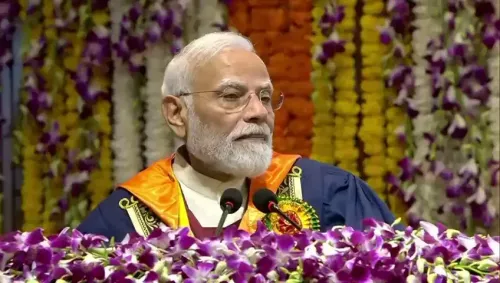
PM Modi, speaking at IIT Delhi, declared that everything from semiconductors to ships will be manufactured in India by Indian hands — a vision quoted by Union Minister Ashwini Vaishnaw anchoring the government's Atmanirbhar Bharat and India Semiconductor Mission push.
Key Takeaways
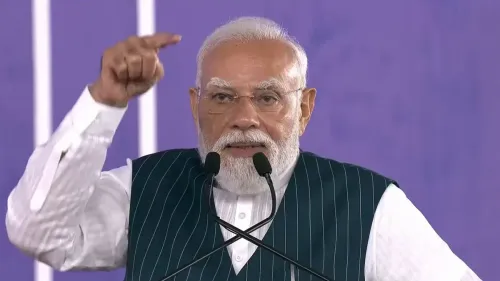
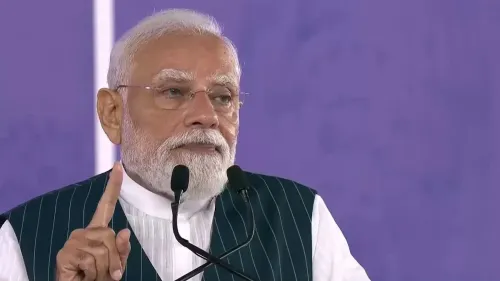
PM Narendra Modi addressed students at IIT Delhi , declaring India will manufacture everything 'from chip to ship' domestically.
Union Minister Ashwini Vaishnaw shared the quote on August 8, 2026 , amplifying the message across the technology and policy space.
The India Semiconductor Mission , approved in 2021 , provides financial incentives for chip fabrication and design to reduce import dependence.
The Atmanirbhar Bharat initiative, launched in 2020 , underpins the government's push for end-to-end domestic production in electronics and heavy engineering.
IITs are being positioned as active nodes in India's industrial policy network, not just academic institutions.
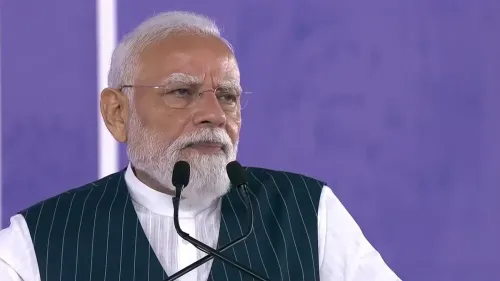
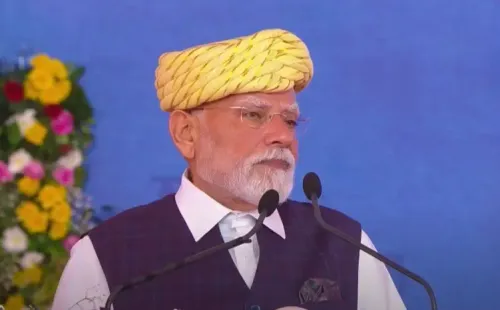
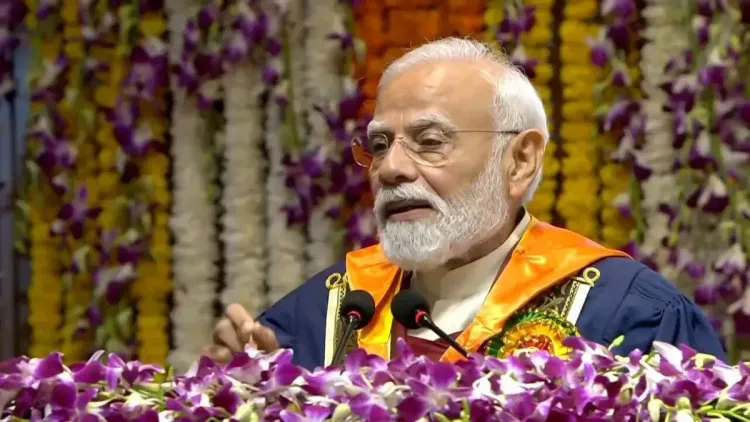
From semiconductors to shipyards — all of it built right here, by Indian hands. That was the charge Prime Minister Narendra Modi delivered at IIT Delhi, quoted by Union Minister Ashwini Vaishnaw on Saturday, August 8, 2026.
The line PM Modi delivered — 'Chip se lekar ship tak sab kuch, yaheen par aap hi ke haathon se banega' ('From chip to ship, everything will be made right here, by your own hands') — is a compact manifesto. It collapses two ends of India's industrial ambition into a single sentence: the microscopic precision of semiconductor fabrication and the brute-scale engineering of shipbuilding.
Why 'Chip to Ship' Is More Than a Slogan
India's dependence on imported chips has been a structural vulnerability for decades. The India Semiconductor Mission, approved in 2021, was designed to crack that open — offering financial incentives for chip fabrication units and design-linked support to attract global and domestic players. Shipbuilding, meanwhile, sits at the other end of the scale: a sector India has long sought to revive as part of its maritime and defence ambitions. The phrase 'chip to ship' knits both together under the Atmanirbhar Bharat framework launched in 2020 — a policy architecture that bets on domestic production across every strategic sector. Delivering that message inside an IIT is deliberate: these institutions are the intended engine, the place where the engineers who will actually build this future are sitting in the audience.IITs as Anchor Points for Industrial Policy
Successive policy moves have tried to close the gap between academic excellence and industrial output. IITs have increasingly been drawn into this orbit — through research partnerships, startup incubators, and direct collaboration with government schemes on semiconductors and advanced manufacturing. The Modi government has leaned into this linkage, framing premier technical institutes not just as centres of learning but as nodes in a national production network. For engineering students in that hall, the message was pointed: the opportunity — and the responsibility — to build India's chip fabs and shipyards is theirs. India has set the ambition. The question now is whether the projects already in the pipeline — semiconductor fabs, design clusters, and a revived shipbuilding sector — can deliver the scale that slogan demands.Point of View
The statement also reinforces the government's strategy of conscripting academic prestige into industrial policy — making students feel like protagonists, not bystanders. Whether the semiconductor projects already approved can actually deliver at scale will determine whether this vision lands as legacy or as aspiration.
NationPress
8 Aug 2026
Frequently Asked Questions
What did PM Modi say at IIT Delhi about chips and ships?
PM Modi told students at IIT Delhi that everything from semiconductors ('chip') to vessels ('ship') will be manufactured right here in India, by Indian hands — a statement captured and shared by Union Minister Ashwini Vaishnaw.
What is the India Semiconductor Mission?
The India Semiconductor Mission was approved in 2021 to offer financial incentives for chip fabrication units and design-linked support, aiming to reduce India's dependence on imported semiconductors.
What is Atmanirbhar Bharat and how does it relate to this?
Atmanirbhar Bharat , launched in 2020 , is the government's self-reliance initiative promoting domestic production across strategic sectors including electronics and shipbuilding — the policy backbone behind Modi's 'chip to ship' vision.
Why was this speech delivered at IIT Delhi?
IIT Delhi is a premier technical institution whose students are seen as future engineers and entrepreneurs. The government has increasingly linked IITs to industrial policy, positioning them as active contributors to semiconductor and advanced manufacturing goals.
What does 'chip to ship' mean in the context of Indian policy?
'Chip to ship' refers to India's ambition to build domestic capability across the full spectrum of manufacturing — from microscopic semiconductor chips to large-scale shipbuilding — reducing reliance on imports at both ends of the industrial spectrum.