Bangladesh's madrasa system shapes millions, but skills gap threatens economic ambitions
Synopsis
Over 84 lakh Bangladeshi students study in madrasas operating largely outside the national development strategy — even as the country targets an investment-driven economic transformation. With graduate unemployment at 13.5% and 30% of youth classified as NEET, analysts say Bangladesh cannot afford to leave its largest education sector behind.
Key Takeaways
70 lakh students are enrolled in nearly 25,000 Qawmi madrasas in Bangladesh, with another 14 lakh in over 9,000 Alia madrasas .
Education Minister ANM Ehsanul Hoque Milon confirmed there is no comprehensive national policy for market-oriented skills in Qawmi madrasas.
Bangladesh's graduate unemployment rate was 13.5 per cent in 2024 — reportedly three times the overall national rate.
Approximately 30 per cent of youth are classified as NEET (not in education, employment, or training).
An estimated 22 lakh youth enter the job market annually, but only around 14 lakh new jobs are created each year.
The ILO has flagged that the core challenge is aligning education with labour market demands , not just expanding training volume.
Bangladesh's madrasa education system is shaping a significant portion of the country's future workforce, yet analysts warn that the sector's disconnect from national development strategy could derail the country's ambitions of becoming an upper-middle-income, investment-driven economy. A report by Dhaka's Daily Sun, published in July 2025, has brought renewed attention to the structural fault lines in Bangladesh's education landscape.
Scale of Madrasa Enrolment
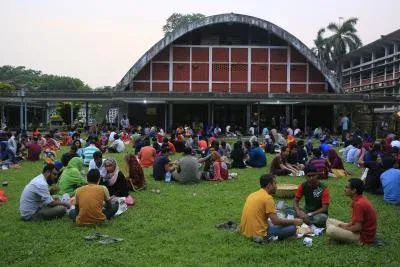
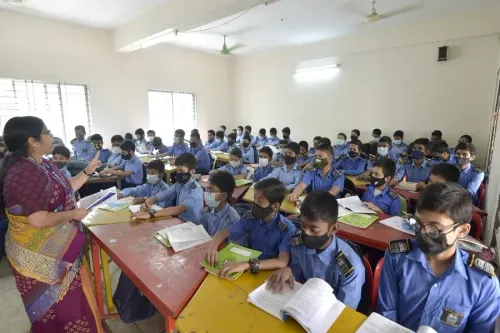
Bangladesh's Education Minister ANM Ehsanul Hoque Milon has disclosed that approximately 70 lakh students are currently enrolled in nearly 25,000 Qawmi madrasas across the country. An additional 14 lakh students attend more than 9,000 Alia madrasas, with a further significant number studying in Ebtedayi institutions. Taken together, these figures indicate that the madrasa system is one of Bangladesh's largest education channels — yet it operates largely outside the national development framework.
The Skills Mismatch Problem
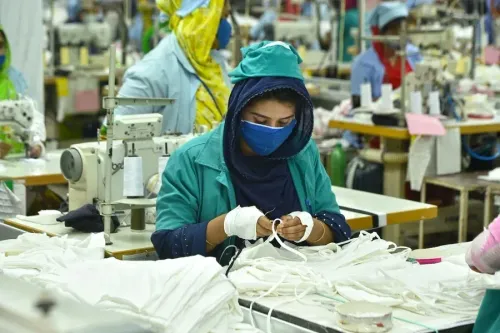
Analysts cited in the Daily Sun report have raised pointed questions about whether madrasa graduates are being adequately prepared for an economy that Bangladesh wants to transform into an industrial, technology-driven, and service-oriented hub. The government has set its sights on reducing dependence on the readymade garment sector and attracting investment in electronics, pharmaceuticals, information technology, logistics, agro-processing, and other high-value industries.
According to the report, foreign investors evaluate not just infrastructure and policy, but also the availability of skilled engineers, technicians, programmers, electricians, machine operators, quality control professionals, and digitally competent workers — alongside soft skills such as communication, teamwork, and adaptability. Minister Milon himself acknowledged that there is still no comprehensive national policy for developing market-oriented skills within Qawmi madrasas.
ILO Flags Structural Challenge
Max Tunon, Country Director of the International Labour Organization (ILO) in Bangladesh, has stated that the principal challenge is not simply training more people, but aligning the education system with actual labour market demands. This perspective underscores a broader concern: that volume-based skill development programmes have not resolved the mismatch between graduate output and employer needs.
Notably, Bangladesh has undertaken approximately a dozen major skill development and employment creation projects over the past two decades, some funded by the Asian Development Bank (ADB) and the World Bank. These initiatives expanded training infrastructure, yet complaints about mismatch and graduate unemployment have persisted.
Graduate Unemployment and the NEET Crisis
A report from June 2025 revealed that Bangladesh's graduate unemployment rate stood at 13.5 per cent in 2024 — reportedly three times higher than the overall national unemployment rate. Youth unemployment among those aged 15 to 29 years is approximately 10 per cent, more than double the overall rate of under five per cent.
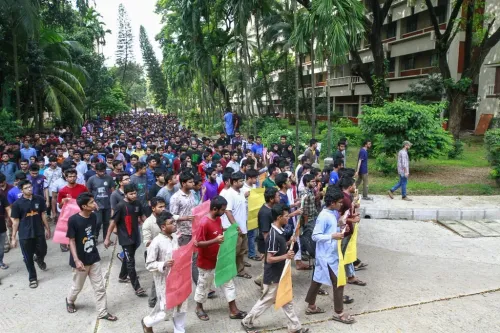
More strikingly, around 30 per cent of youth are classified as NEET — not in education, employment, or training — according to an article in Dhaka-based The Daily Star. Rough estimates based on Bangladesh Bureau of Statistics data suggest that 22 lakh youth enter the job market annually, while only around 14 lakh new jobs are created, leaving more than a third of new entrants without employment.
What Analysts Say Must Change
The Daily Sun report concluded that Bangladesh needs an education ecosystem in which a madrasa graduate can confidently pursue careers in factories, software companies, banks, hospitals, government institutions, or engineering firms. Analysts argue that jobless economic growth is as much an economic policy failure as it is an education and training challenge — and that leaving the madrasa sector outside the national development strategy is no longer a viable position.
Whether Bangladesh's interim administration and policymakers act on these recommendations before the country's next major economic planning cycle will be closely watched by development partners and investors alike.
Point of View
And its most neglected. The absence of a national policy to integrate Qawmi madrasa graduates into a modern economy is not an oversight; it is a structural choice with compounding costs. With 22 lakh youth entering the job market annually against only 14 lakh new positions, the arithmetic of exclusion is already punishing. What is missing from mainstream coverage is the political economy dimension: integrating madrasas into a skills framework requires navigating deeply entrenched religious and institutional interests, something successive governments have deferred. Until that political will materialises, no amount of ADB or World Bank-funded training programmes will close the gap.
NationPress
16 Oct 2026
Frequently Asked Questions
How many students are enrolled in madrasas in Bangladesh?
According to Education Minister ANM Ehsanul Hoque Milon, approximately 70 lakh students are enrolled in nearly 25,000 Qawmi madrasas, and around 14 lakh more study in over 9,000 Alia madrasas, with additional students in Ebtedayi institutions. This makes the madrasa system one of Bangladesh's largest education channels.
Why is Bangladesh's madrasa education system a concern for the economy?
Analysts argue that madrasa graduates are not being adequately prepared for Bangladesh's target economy — one driven by electronics, IT, pharmaceuticals, and high-value manufacturing. With no comprehensive national policy linking madrasa curricula to labour market needs, a large portion of the future workforce may lack the skills foreign investors require.
What is Bangladesh's graduate unemployment rate?
Bangladesh's graduate unemployment rate was reported at 13.5 per cent in 2024, which is reportedly three times higher than the country's overall unemployment rate. Youth unemployment among those aged 15 to 29 stands at around 10 per cent, more than double the national average.
What does NEET mean and how does it affect Bangladesh's youth?
NEET stands for 'not in education, employment, or training.' Around 30 per cent of Bangladesh's youth fall into this category, according to reporting by The Daily Star. This represents a significant pool of disengaged young people outside both the education system and the formal economy.
What has the ILO said about Bangladesh's skills challenge?
Max Tunon, Country Director of the International Labour Organization in Bangladesh, has stated that the core challenge is not simply training more people but restructuring the education system to match actual labour market demands. This view aligns with analyst assessments that past skill development projects, despite ADB and World Bank funding, have not resolved the graduate-employer mismatch.