Bangladesh youth unemployment hits 10%, graduate jobless rate at 13.5% in 2024
Synopsis
Bangladesh's jobs math is broken: 22 lakh youth enter the workforce every year, but only 14 lakh jobs of any kind exist. With graduate unemployment at 13.5% and 30% of youth in NEET, this is not a training gap — it is a demand-side failure of the growth model itself.
Key Takeaways
Bangladesh's graduate unemployment rate reportedly reached 13.5 per cent in 2024 — nearly three times the overall rate.
Youth unemployment ( 15-29 years ) stands at about 10 per cent , more than double the national rate of under 5 per cent .
Around 30 per cent of youth are categorised as NEET — not in education, employment, or training.
About 22 lakh youth enter the job market yearly, but only 14 lakh jobs of any kind are available.
Roughly a dozen skill-development projects, some backed by ADB and the World Bank , have failed to close the gap.
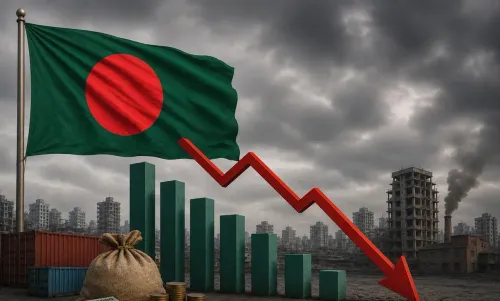
Bangladesh is staring at a deepening youth jobs crisis, with the graduate unemployment rate reportedly climbing to 13.5 per cent in 2024 — nearly three times the country's overall unemployment rate of under 5 per cent, according to an article published in Dhaka-based The Daily Star. Youth unemployment in the 15-29 age group stands at around 10 per cent, more than double the national average.
Key findings from the report
More worryingly, about 30 per cent of Bangladesh's youth are now classified as NEET — not in education, employment, or training, the report noted. Rough estimates based on Bangladesh Bureau of Statistics data suggest that roughly 22 lakh young people enter the labour market every year, while only about 14 lakh new jobs of any kind are available — leaving more than a third of fresh job-seekers without work.
A policy problem, not a training problem
The report frames Bangladesh's predicament as one of jobless economic growth, arguing this is far more an economic policy failure than a shortcoming of education and training. Over the last two decades, around a dozen major skill development and employment-creation projects have been rolled out in the country, several backed by the Asian Development Bank (ADB) and the World Bank.
These interventions have expanded training capacity and helped build institutional support. Yet, complaints of skill-mismatch and rising graduate unemployment have persisted, the report observed.
The 'vocational school fallacy' revisited
The article revisits a seminal critique by sociologist Philip Foster, who six decades ago warned against what he called the 'vocational school fallacy'. Foster argued that inserting vocational courses into primary and secondary schooling was an oversimplified response to youth unemployment.
His view was that basic general education must focus on foundational literacy, numeracy, reasoning, and values — the bedrock skills young people need to function as adults at work and in society. Schools in low-income countries, he held, were already stretched delivering those fundamentals and should not be burdened with vocational training duties.
Why the critique still resonates
Experience with vocationalising general secondary schools has been almost entirely negative, the report stated. Foster's conclusion, it argued, is even more pertinent today because the nature of work is changing rapidly, requiring workers to continually relearn and upgrade their skills throughout their careers.
With the demographic dividend window narrowing, the onus is on policymakers in Dhaka to address structural demand-side gaps in the economy rather than rely on supply-side training fixes alone.
Point of View
The issue is not curriculum design — it is that the economy is not generating the kind of formal, productive jobs an educated cohort expects. Decades of donor-funded skilling have built institutions but not demand, and Foster's six-decade-old warning that schools cannot substitute for an absent labour market is being vindicated again. Dhaka's next reform window must focus on industrial diversification beyond ready-made garments, or the demographic dividend will quietly turn into a liability.
NationPress
26 Sept 2026
Frequently Asked Questions
What is Bangladesh's youth unemployment rate in 2024?
Youth unemployment in Bangladesh, covering the 15-29 age group, is reported at around 10 per cent in 2024 — more than double the country's overall unemployment rate of under 5 per cent. The graduate unemployment rate is even higher, at 13.5 per cent.
What does NEET mean and how many Bangladeshi youth are NEET?
NEET refers to youth who are 'not in education, employment, or training'. According to the report, about 30 per cent of Bangladesh's young population currently falls in this category, reflecting a deep disengagement from both the schooling system and the labour market.
Why is graduate unemployment so high in Bangladesh?
The report attributes it primarily to jobless economic growth — the economy is not creating enough formal jobs to absorb new entrants. Roughly 22 lakh youth enter the labour market each year, but only about 14 lakh jobs of any kind are available, leaving over a third unemployed.
Have skill-development programmes helped reduce unemployment?
Not significantly. Around a dozen major skill and employment projects, some funded by the ADB and the World Bank, have expanded training capacity over two decades, but graduate unemployment and skill-mismatch complaints have persisted, suggesting the bottleneck lies on the demand side of the economy.
What is the 'vocational school fallacy' referenced in the report?
It is a critique by sociologist Philip Foster, made six decades ago, warning against treating vocational courses inserted into primary and secondary schooling as a fix for youth unemployment. Foster argued that schools should focus on foundational literacy, numeracy, and reasoning, while vocational training belongs elsewhere.