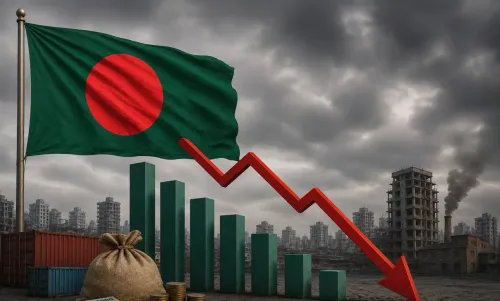
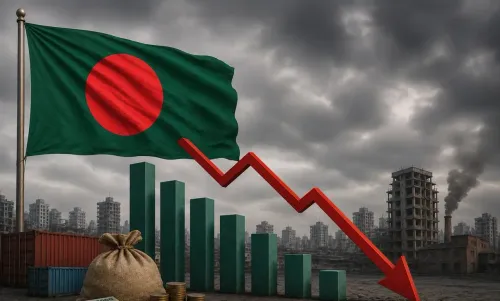
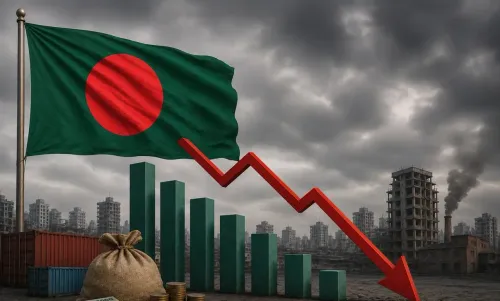
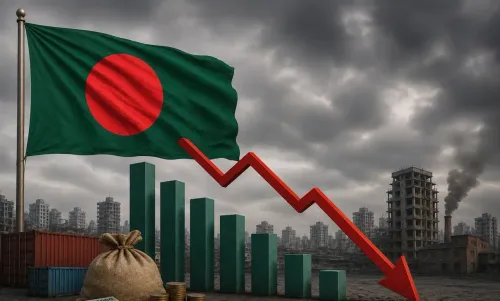
Bangladesh 'new poor': 6.2 crore at risk as wages lag prices for 56 months
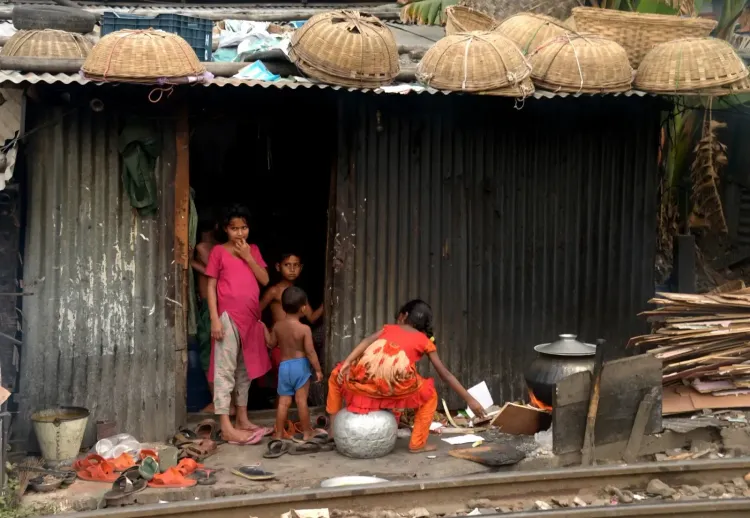
Synopsis
Bangladesh's poverty crisis has a new face: 6.2 crore people who are not counted as poor but are one lost job or medical bill away from falling below the line. With inflation beating wages for 56 straight months and the average household spending more than it earns, the 'new poor' are a class in formation — and the World Bank warns the official poverty rate could surge to 22.5 per cent by 2026.
Key Takeaways
An estimated 6.2 crore Bangladeshis are one economic shock away from falling into poverty, identified as an emerging 'new poor' class.
The World Bank projects Bangladesh's poverty rate could rise to 22.5 per cent in 2026 from 18.7 per cent in 2022 .
Extreme poverty against the $3-a-day threshold may have climbed to 10.1 per cent from 5.9 per cent .
Inflation has outpaced wage growth for 56 consecutive months through September 2026 .
47.42 per cent of households borrowed to cover living costs; average monthly expenditure ( Tk 35,311 ) exceeds average income ( Tk 33,513 ).
The report urges a government quarterly poverty dashboard by October 2027 , disaggregated by sex, age, and location.
An estimated 6.2 crore Bangladeshis are hovering on the edge of poverty — technically above the official poverty line yet one economic shock away from falling below it — as stagnant wages, persistent inflation, and weak social protection erode household resilience, according to a new report by The Business Standard, a Bangladesh-based publication. The report identifies this vulnerable segment as an emerging 'new poor' class.
Scale of the Crisis
The report cites a World Bank assessment projecting Bangladesh's poverty rate could climb to 22.5 per cent in 2026, up sharply from 18.7 per cent in 2022. Extreme poverty, measured against the international $3-a-day threshold, may have risen to 10.1 per cent from 5.9 per cent over the same period, according to that assessment.
Inflation Outpacing Wages for Nearly Five Years
Inflation has reportedly outpaced wage growth for 56 consecutive months through September 2026 — a streak that has forced many families to cut food quality, delay medical care, or sell productive assets just to meet immediate needs. 'When prices rise faster than earnings, families lose purchasing power even when nominal wages increase,' the report noted.
A separate official survey conducted in October found that 47.42 per cent of households borrowed money to cover everyday living expenses, with rural borrowing even higher at 51.91 per cent. Average monthly household expenditure stood at Tk 35,311 against an average monthly income of only Tk 33,513 — a gap that leaves families structurally in deficit.
Employment Barriers and Structural Constraints
The report pointed to weak private investment, energy constraints, and regulatory uncertainty as key barriers to business expansion and job creation. Young people, it said, face underemployment or work that does not match their qualifications, while women encounter additional barriers to secure, adequately paid employment.
The publication also flagged the banking sector as a systemic risk, warning that poor loan recovery, preferential lending, and inadequate accountability divert resources away from productive enterprises. 'The costs of financial misconduct should not be passed on to businesses, workers, and taxpayers,' the report stated, framing banking reform as integral to the broader employment and development agenda.
Key Recommendations
The report urged the Bangladeshi government to release a quarterly dashboard by October 2027, covering data on poverty, real wages, decent employment, household debt, and social protection coverage — disaggregated by sex, age, location, and income group. It called for publicly accessible data and transparent methodologies to enable independent scrutiny.
With inflation showing little sign of easing and banking reform still in early stages, the trajectory of Bangladesh's 'new poor' class will likely depend on whether structural economic reforms gain traction in the months ahead.
Point of View
Banking, and energy supply that successive governments have avoided confronting. The World Bank's 22.5 per cent poverty projection for 2026 should be read as a warning, not a forecast — the gap between that number and policy action is where accountability lives. The call for a quarterly disaggregated dashboard is the right instinct, but dashboards without binding policy targets have a poor track record in South Asia.
NationPress
24 Oct 2026
Frequently Asked Questions
Who are Bangladesh's 'new poor'?
The 'new poor' refers to households that remain technically above the official poverty line but are highly vulnerable to slipping into poverty due to stagnant wages, rising prices, and weak social protection. According to the report, approximately 6.2 crore Bangladeshis fall into this category, living one economic shock away from poverty.
What does the World Bank project for Bangladesh's poverty rate?
The World Bank assessment cited in the report projects Bangladesh's poverty rate could rise to 22.5 per cent in 2026, up from 18.7 per cent in 2022. Extreme poverty measured against the $3-a-day international threshold may have climbed to 10.1 per cent from 5.9 per cent over the same period.
How long has inflation been outpacing wages in Bangladesh?
Inflation has outpaced wage growth for 56 consecutive months through September 2026, according to the report. This prolonged gap has forced many families to reduce food quality, delay healthcare, or sell assets to meet daily expenses.
How indebted are Bangladeshi households?
An official survey conducted in October found that 47.42 per cent of households borrowed money to cover living expenses, with the figure rising to 51.91 per cent in rural areas. Average monthly expenditure stood at Tk 35,311 against average monthly income of Tk 33,513, leaving most households in a structural deficit.
What reforms does the report recommend for Bangladesh?
The report urges the government to release a quarterly dashboard by October 2027 covering poverty, real wages, decent employment, household debt, and social protection data, disaggregated by sex, age, location, and income group. It also calls for banking reform to address poor loan recovery and preferential lending that diverts resources from productive enterprises.