Tamil Nadu to roll out AI, emerging tech curriculum in all govt schools for Classes 6-8
Synopsis
Tamil Nadu is moving beyond its 5,000-school TN SPARK pilot to bring AI, robotics, and emerging technology education to every government school for Classes 6-8 — a rollout that could reach over 60 lakh students. With grade-wise progression, bilingual textbooks already in place, and teacher training underway, this is one of India's most structured state-level attempts to embed AI literacy at the school level.
Key Takeaways
Tamil Nadu plans to extend its emerging technologies curriculum to all government schools for Classes 6 to 8 .
The initiative is expected to benefit more than 60 lakh students under the State Board syllabus .
The programme builds on the TN SPARK pilot, currently running in around 5,000 government schools .
SCERT has already prepared bilingual textbooks for Classes 6 to 8; textbooks for Classes 9 and 10 are due next academic year.
Topics include generative AI , prompt engineering, large language models, coding, and tools such as GeoGebra and PhET simulations .
The government is considering offering the curriculum as an elective for Classes 11 and 12 .
Tamil Nadu is set to introduce an emerging technologies curriculum across all government schools for students in Classes 6 to 8, with dedicated textbooks also being developed for higher classes under the State Board syllabus. The move, discussed on Tuesday, 22 July, is expected to benefit more than 60 lakh students enrolled in State Board schools across the state.
High-Level Committee Meets to Shape the Curriculum
The proposal was taken up at the first meeting of the High-Level Curriculum Expert Committee and the Curriculum Development Committee, chaired by School Education Minister A. Rajmohan at the Anna Centenary Library in Chennai. Officials said the initiative is designed to equip students with future-ready digital skills and deepen technology-based learning in government schools.
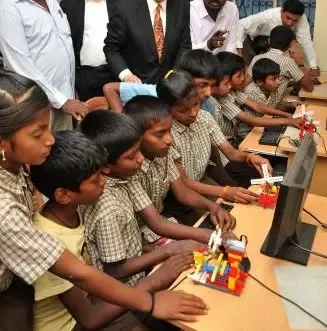
The curriculum goes beyond conventional computer education, introducing students to artificial intelligence (AI), computational thinking, coding, and digital tools through hands-on, project-based learning. The emphasis is firmly on applying technology to solve real-world problems rather than rote theoretical instruction.
TN SPARK Pilot Paves the Way
The programme builds on the Tamil Nadu Schools Programme for AI, Robotics and Knowledge of Online Tools (TN SPARK), which is currently being piloted in approximately 5,000 government schools. Encouraged by the response, the School Education Department now plans to extend the programme to all government schools covering Classes 6 to 8.
The State Council of Educational Research and Training (SCERT) has already prepared bilingual textbooks for Classes 6 to 8 under TN SPARK. Textbooks for Classes 9 and 10 are expected to follow in the next academic year, with Classes 11 and 12 materials slated for a later phase.
Grade-by-Grade Learning Progression
The curriculum has been structured progressively. Class 6 students will begin with digital awareness; Class 7 students will explore the fundamentals of emerging technologies and their applications; and Class 8 students will undertake practical projects. For Classes 9 and 10, the focus shifts to using technology to address real-life challenges.
At advanced levels, students will be introduced to concepts such as generative AI, prompt engineering, large language models, and AI-powered text, image, and music generation. Hands-on experience will also be provided with tools including GeoGebra, Google Earth, PhET simulations, Stellarium, and LibreOffice.
Teacher Training and Elective Plans
Mathematics and science teachers in government and government-aided schools will be trained by SCERT to handle the new subject. School Education Department Additional Chief Secretary B. Chandra Mohan said the government is also considering offering the emerging technologies curriculum as an elective subject for Classes 11 and 12, with modalities currently being worked out.
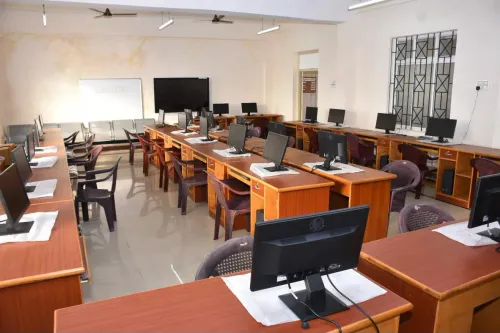
This comes amid a broader national push to embed AI literacy in school education, with several states piloting technology curricula. Tamil Nadu's structured, grade-wise rollout — backed by bilingual textbooks and teacher training — positions it among the more comprehensive state-level efforts to date. The success of the expansion will hinge on training depth and infrastructure readiness across rural government schools.
Point of View
Particularly in rural government schools with thin infrastructure. The bilingual textbook push is a sensible inclusion signal, but the gap between curriculum design and classroom reality in under-resourced schools is historically wide. How SCERT manages teacher readiness at scale will determine whether this becomes a genuine skills pipeline or another well-designed document that underdelivers in practice.
NationPress
20 Oct 2026
Frequently Asked Questions
What is Tamil Nadu's emerging technologies curriculum for schools?
It is a structured programme introducing students in Classes 6 to 8 in all Tamil Nadu government schools to artificial intelligence, coding, computational thinking, robotics, and digital tools through hands-on, project-based learning. The curriculum expands on the existing TN SPARK pilot and is expected to benefit over 60 lakh State Board students.
What is the TN SPARK programme?
TN SPARK stands for Tamil Nadu Schools Programme for AI, Robotics and Knowledge of Online Tools. It is currently being piloted in around 5,000 government schools and serves as the foundation for the broader statewide curriculum rollout.
When will textbooks for Classes 9 to 12 be available?
Textbooks for Classes 9 and 10 are expected to be introduced in the next academic year, while materials for Classes 11 and 12 are planned for a later phase. The government is also considering offering the subject as an elective at the Class 11 and 12 level.
What topics will students learn under this curriculum?
Students will be introduced to AI, generative AI, prompt engineering, large language models, coding, and digital tools such as GeoGebra, Google Earth, PhET simulations, Stellarium, and LibreOffice. The curriculum progresses from digital awareness in Class 6 to practical real-world problem-solving by Classes 9 and 10.
Who will teach the emerging technologies curriculum in Tamil Nadu schools?
Mathematics and science teachers in government and government-aided schools will be trained by SCERT to deliver the new curriculum. Teacher training is part of the rollout plan announced at the High-Level Curriculum Expert Committee meeting on 22 July.