84% Voter Turnout: Tamil Nadu's Historic 4-Way Battle 2026
Synopsis
Tamil Nadu's 2026 Assembly Election shattered the Dravidian two-party mold with a stunning 84%+ voter turnout across all 234 seats. DMK, AIADMK, Vijay's TVK, and Seeman's NTK are locked in a historic four-cornered battle — and the May 4 results could permanently redraw the state's political landscape.
Key Takeaways
84%+ voter turnout was recorded across all 234 Tamil Nadu Assembly constituencies on Thursday, April 24, 2026 — among the highest in recent state election history.
Over 5.7 crore eligible voters participated in the democratic exercise, reflecting exceptional public engagement.
The election evolved into a four-cornered contest involving DMK-led SPA , AIADMK-led NDA , Vijay's TVK , and Seeman's NTK — breaking the traditional Dravidian two-party dominance.
Vijay's TVK contested all 234 seats , making it the most ambitious debut by a new political party in Tamil Nadu's recent history.
Polling was largely peaceful with extensive security deployed; isolated crowd management issues were reported at select booths but did not affect overall conduct.
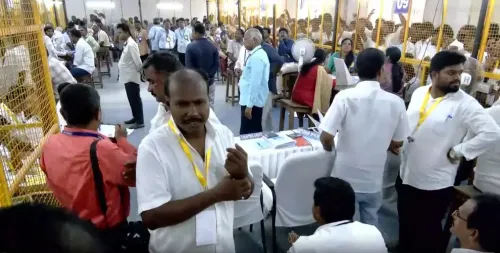
Election results are scheduled to be declared on May 4, 2026 , with outcomes expected to have significant national political implications.
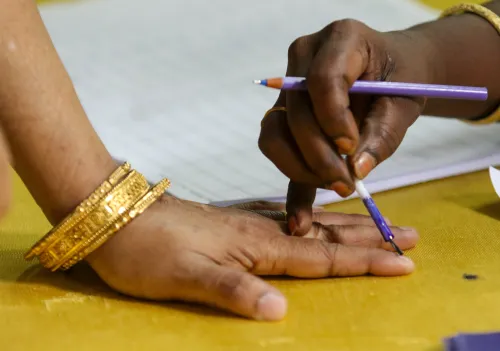
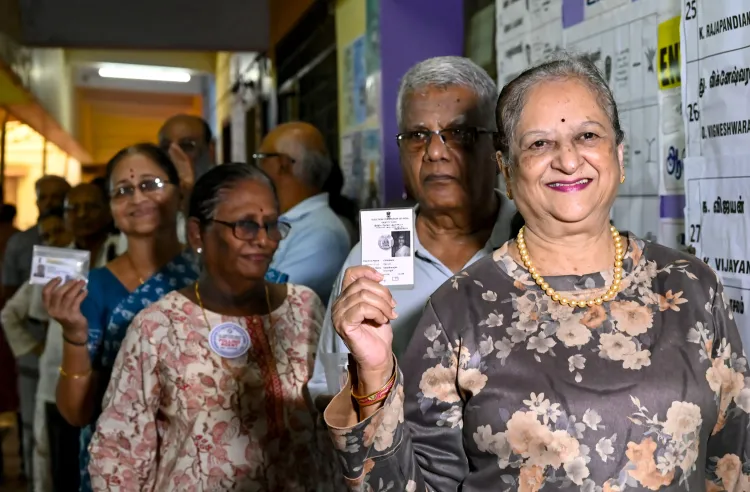
Tamil Nadu scripted electoral history on Thursday, April 24, 2026, as polling across all 234 Assembly constituencies concluded with a remarkable voter turnout exceeding 84 per cent — one of the highest participation rates in the state's recent democratic history. Over 5.7 crore eligible voters exercised their franchise in what has emerged as a transformative, multi-cornered political contest that could redraw the state's political map for years to come.
A Four-Cornered Fight Breaks Dravidian Duopoly
For decades, Tamil Nadu politics was defined by a binary battle between the DMK and the AIADMK. The 2026 Assembly Election has decisively shattered that template. Four major political formations are now competing for voter allegiance: the DMK-led Secular Progressive Alliance (SPA), the AIADMK-led National Democratic Alliance (NDA), actor-turned-politician Vijay's Tamilaga Vettri Kazhagam (TVK), and Senthamizhan Seeman's Naam Tamilar Katchi (NTK).
This fragmentation of the electoral field is not merely cosmetic — it carries deep structural consequences. With TVK contesting all 234 seats and NTK fielding candidates across every constituency, vote-share arithmetic has been fundamentally disrupted, making outcome predictions far more complex than in previous cycles.
Polling Day: Strong Turnout Despite Scorching Heat
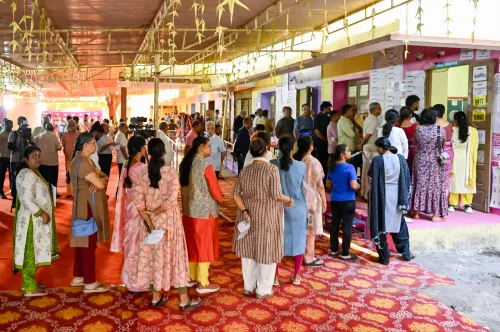
Voting commenced briskly across urban centres and rural belts alike on Thursday morning, with long queues forming outside booths well before opening time. Despite soaring temperatures — a recurring challenge in Tamil Nadu's April heat — voters turned out in large numbers, reflecting heightened civic engagement.
By 3 p.m., turnout had already crossed the 70 per cent mark, signalling exceptional public interest. Final figures confirmed participation exceeding 84 per cent, placing this election among the most heavily contested in the state's post-independence history.
Authorities deployed extensive security arrangements across all districts. While polling was largely peaceful, isolated incidents of crowd management difficulties and minor disruptions were reported at select booths. Overall, election officials confirmed smooth conduct of the democratic exercise.
What Each Alliance Is Fighting For
The ruling DMK, led by Chief Minister M.K. Stalin, is seeking a rare second consecutive term in power. The party has anchored its campaign on flagship welfare schemes, governance credentials, and its track record on social justice — positioning Stalin as a stable, development-oriented administrator.
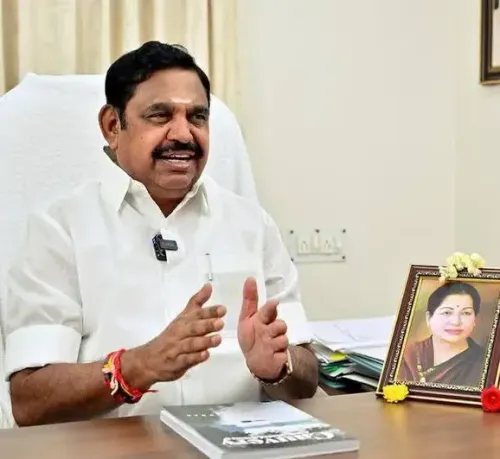
The AIADMK, under the leadership of Edappadi K. Palaniswami (EPS), is fighting what many political analysts describe as an existential battle. The party has weathered significant internal factional turbulence since its 2021 defeat, and this election is widely seen as a critical test of whether it can reclaim relevance as the principal opposition force in the state.
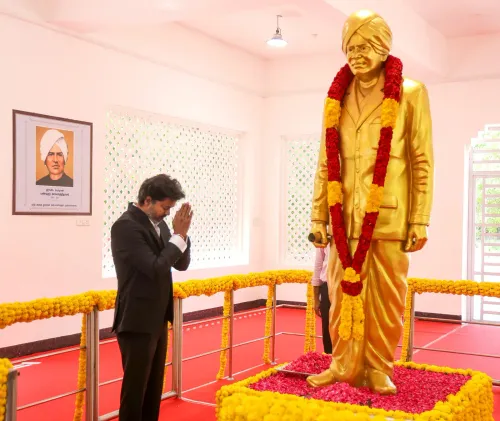
Vijay's TVK represents the most watched new entrant. Having built a massive grassroots following — particularly among youth and first-time voters — the former superstar is attempting to translate screen popularity into electoral power. His party's decision to contest all 234 seats signals serious intent rather than a symbolic debut.
Seeman's NTK continues its consistent advocacy for Tamil nationalism, environmental protection, and anti-establishment politics. The party has historically drawn support from younger, ideologically motivated voters who feel unrepresented by the mainstream Dravidian parties.
Deeper Political Significance: What This Election Really Means
The 2026 Tamil Nadu Assembly Election arrives at a pivotal moment in Indian politics. Nationally, the BJP-led NDA has been seeking to deepen its footprint in southern states — a region that has largely resisted its electoral advances. The AIADMK's alignment with NDA is a strategic gamble that tests whether BJP's national appeal can translate into Tamil electoral gains.
Meanwhile, the rise of TVK mirrors a pan-India trend of celebrity-driven political movements attempting to capture youth disillusionment with established parties. Notably, similar experiments — from Andhra Pradesh's Jana Sena to Delhi's AAP — have produced wildly varying results, reminding observers that star power alone does not guarantee electoral success.
Critics also point to a deeper irony: while both DMK and AIADMK claim the mantle of Dravidian ideology and Tamil welfare, the emergence of TVK and NTK suggests that a growing segment of Tamil voters — especially youth — no longer finds adequate representation within the traditional Dravidian framework.
The fragmented vote share could also produce a hung assembly scenario or a government formed with thin margins, raising questions about political stability in the state going forward.
Results on May 4: What to Watch
Vote counting is scheduled for May 4, 2026, and the results will carry national implications beyond Tamil Nadu's borders. A DMK victory would consolidate Stalin's position as a key opposition leader at the national level. An AIADMK comeback would signal the resilience of traditional Dravidian politics. A surprise performance by TVK or NTK could permanently alter the state's political ecosystem and inspire similar new-generation political movements across southern India.
All eyes will be on the vote-share percentages as much as seat tallies — the numbers will reveal whether the four-cornered contest truly fragmented the electorate or whether voters ultimately consolidated behind one of the established formations.
Point of View
Not from a national party, but from within Tamil society itself. The rise of TVK and NTK reflects a generational demand for new political vocabulary — one that goes beyond caste arithmetic and welfare populism. What happens on May 4 will either confirm the durability of the old order or signal the beginning of a genuinely new Tamil political era — and either outcome has national consequences that New Delhi cannot afford to ignore.
NationPress
19 Sept 2026
Frequently Asked Questions
What was the voter turnout in Tamil Nadu 2026 Assembly Election?
The Tamil Nadu 2026 Assembly Election recorded a voter turnout of over 84 per cent across all 234 constituencies. This is one of the highest participation rates in the state's recent electoral history, with more than 5.7 crore eligible voters casting their votes.
Who are the main parties contesting the Tamil Nadu 2026 election?
The four main political formations are the DMK-led Secular Progressive Alliance (SPA), the AIADMK-led NDA, actor Vijay's Tamilaga Vettri Kazhagam (TVK), and Seeman's Naam Tamilar Katchi (NTK). This marks a significant departure from the traditional two-party Dravidian contest.
When will Tamil Nadu 2026 election results be declared?
The Tamil Nadu 2026 Assembly Election results will be declared on May 4, 2026. Vote counting will take place across all 234 constituencies on that date.
What is Vijay's TVK and how many seats did it contest?
Tamilaga Vettri Kazhagam (TVK) is the political party launched by Tamil film superstar Vijay, who entered politics ahead of the 2026 election. TVK contested all 234 Assembly seats in Tamil Nadu, marking an ambitious full-state debut aimed primarily at youth voters.
Is the DMK seeking a second consecutive term in Tamil Nadu?
Yes, the DMK led by Chief Minister M.K. Stalin is seeking a second consecutive term in the 2026 Tamil Nadu Assembly Election. The party has campaigned on its welfare schemes and governance record since winning power in 2021.