Are the Left Parties Truly Secular? Taslima Nasreen Questions Their Stance
Synopsis
In a provocative Facebook post, Taslima Nasreen challenges the secular reputation of India's Left parties, highlighting their contradictions and questioning their silence on fundamentalism. Is their support for minorities genuine, or is it merely a facade? Read more to find out.
Key Takeaways
Taslima Nasreen critiques the secular image of Left parties.
She highlights contradictions in their stance on fundamentalism.
Her writings emphasize the persecution of minorities. 'Lajja' has been influential yet controversial.
The call for equal rights for all minority groups remains urgent.
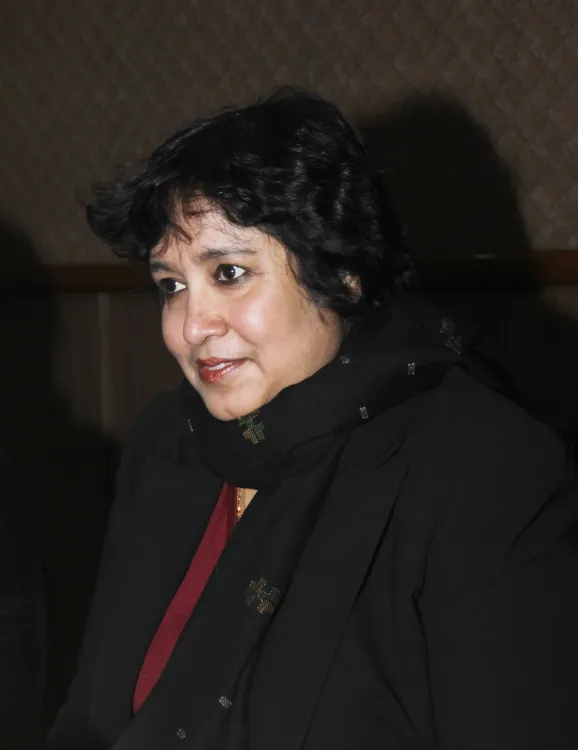
New Delhi, Jan 6 (NationPress) Are the Left parties in India genuinely secular and liberal as often portrayed? No, asserts Taslima Nasreen, a Bangladeshi author living in exile, in a recent post on Facebook. She highlights the contradiction of communists who are currently “very active against jihadists in Bangladesh” but previously dismissed her book on radical fundamentalism as falsehoods, ultimately leading to her expulsion from Kolkata.
“Certain blind (for their organization) communist factions in West Bengal are spewing vitriol against me. They want to present that the CPM members are actively opposing jihadists in Bangladesh. Is that true?” the writer stated in Bengali on her Facebook account on Tuesday.
The CPM, or CPI(M), is the main component of the Left Front – the Communist Party of India (Marxist). She also questioned the party's silence over decades of “persecution of Hindus by Islamic fundamentalists in Bangladesh, forcing them to flee the nation.”
Labeling her exile from Bangladesh as “unjust,” Taslima inquired if there had been any protests “in the so-called progressive city of Kolkata” during instances when “terrorists have murdered bloggers and freethinkers have been compelled to leave the country one by one.”
With a bounty on her life, she initially sought refuge in Sweden but eventually settled in Kolkata, which she perceived as “closer to home.”
Although she holds Swedish citizenship, she resides in India on renewable permits. However, in 2007, violent protests erupted against her writings, forcing her to flee West Bengal once more. After a brief period of uncertainty, she has been living in Delhi under government protection.
“Throughout the 1990s, CPM-aligned publications published numerous pieces against 'Lajja (Shame)'. They claimed I was lying in 'Lajja', asserting there was no persecution of Hindus in Bangladesh. Hindus are peaceful and happy, and Muslims are very liberal and non-communal. Yet, I am supposed to feel ashamed for writing with supposed ill intent,” remarked the activist and writer focused on gender equality and freedom of expression.
'Lajja', released in 1993, illustrated the oppression of Hindus in Bangladesh following the Babri Masjid demolition in India. The novel was banned in Bangladesh for allegedly provoking communal discord and has since been translated into around 25 languages globally, according to Taslima.
“Remarkably, when they support minorities in their nation, it is deemed generosity and liberalism, but when I advocate for minorities in my homeland, it is viewed as having ill intent?” she posted.
She also mentioned the 2003 prohibition on the third volume of her autobiography 'Dwikhondito (split in two)' in West Bengal, then under the Left Front government led by Buddhadeb Bhattacharya.
“In 'Dwikhondito', I wrote about free thinkers resisting fundamentalist forces in Bangladesh. I protested against modifying the secular constitution to establish Islam as the state religion,” asserts Taslima.
“Yet, it was banned,” she laments. “Numerous partisan intellectuals wrote extensively against the book. The APDR (Association for Protection of Democratic Rights, part of the national civil and human rights movement) even filed a case against the book's ban. During the High Court hearing, the government's lawyers failed to present a single compelling argument for the ban. The Calcutta High Court eventually lifted the ban,” she emphasizes.
“When Muslims, a minority in India, face persecution, it is entirely appropriate to protest – and I do. However, it deeply pains me to witness the CPM supporting misogynistic Muslim laws. They oppose the Uniform Civil Code, which is grounded in equal rights. They advocate for Hindu women's equal rights but disregard the same for Muslim women,” the author points out.
“Even if there is barbarism in religion, if there is misogyny, they (CPM) prefer to keep them submerged in that barbarism and misogyny. If they genuinely wanted to civilize Muslims, they wouldn't defend Islam under the pretense of trickery and deceit,” Taslima asserts.
Point of View
It is vital to approach this matter from a balanced perspective. Taslima Nasreen's views raise significant questions about the secular credentials of Left parties in India. While her experiences illustrate genuine concerns about fundamentalism and minority rights, it is equally important to consider the broader political context. Understanding the complexities of these issues requires an open dialogue and a commitment to uphold democratic values.
NationPress
26 Sept 2026
Frequently Asked Questions
What does Taslima Nasreen say about the Left parties?
Taslima Nasreen claims that the Left parties in India are not genuinely secular and highlights their contradictions in addressing fundamentalism.
Why was Taslima Nasreen expelled from Kolkata?
Taslima Nasreen was expelled from Kolkata due to violent protests against her writings, which some viewed as controversial.
What is the book 'Lajja' about?
'Lajja' depicts the persecution of Hindus in Bangladesh following the Babri Masjid demolition in India and has been banned for allegedly inciting communal disharmony.
How does Taslima view the support of minorities?
Taslima questions the sincerity of the Left parties' support for minorities, suggesting it is viewed as generosity when they do so, but her advocacy is seen as ill-intent.
What is the significance of 'Dwikhondito'?
'Dwikhondito' addresses the struggle of free thinkers against fundamentalism in Bangladesh and was banned under the Left Front government.