Taslima Nasrin's Kolkata return on August 1 tests free speech limits
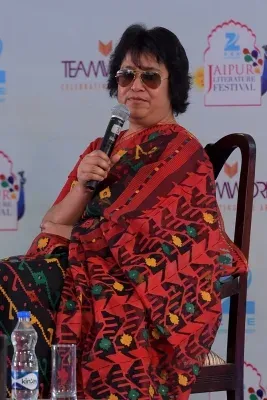
Synopsis
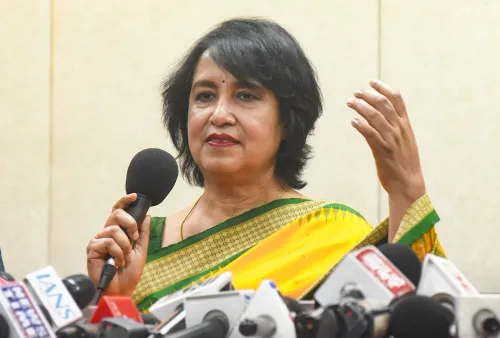
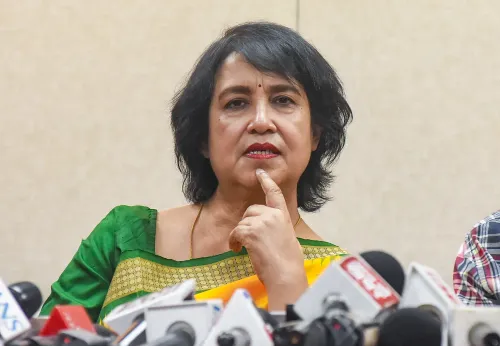
For the first time in nearly two decades, Taslima Nasrin is returning to Kolkata — the city that once expelled her under violent pressure. Her 1 August appearance at an anti-fundamentalism literary event is less a cultural footnote and more a political flashpoint: a live test of whether West Bengal's new establishment can hold the line on free expression where its predecessors did not.
Key Takeaways
Taslima Nasrin is scheduled to visit Kolkata on 1 August for an anti-fundamentalism literary event — her first return in nearly two decades .
She was effectively forced out of the city in November 2007 after hardline groups staged violent riots over her autobiographical writings, including 'Dwikhandito' .
The ban on her entry persisted across both the Left Front and TMC administrations in West Bengal.
BJP 's Samik Bhattacharya had called for her return in Parliament in March last year ; the new state government is now extending security for the visit.
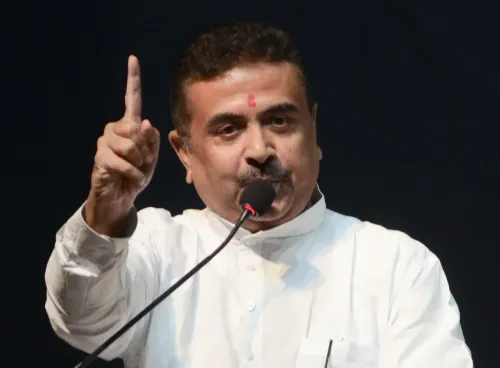
CPI(M) leader Sujan Chakraborty argued decisions on her stay are a Central government matter; TMC MLA Akhruzzaman criticised the visit, citing her writings on Islam.
Nasrin, 63 , fled Bangladesh in 1994 after fatwas and death threats following the publication of 'Lajja (Shame)' in 1993; she has lived in India on a temporary residential permit since.
Author Taslima Nasrin is set to visit Kolkata on 1 August for an anti-fundamentalism literary event — her first return to the city in nearly two decades after being driven out in 2007 amid violent protests against her writings. The visit has ignited a sharp political debate, with the new state government projecting it as a statement of liberal values while critics allege it is being used for electoral point-scoring.
Nearly Two Decades of Exile
Nasrin's connection to Kolkata — widely regarded as the cultural capital closest to her native Bengali heritage — was severed abruptly in November 2007, when hardline groups enforced violent shutdowns and riots demanding her expulsion over autobiographical works such as 'Dwikhandito' (Split in Two). The then Left Front government reportedly capitulated under pressure, effectively forcing her relocation out of the state to restore public order.
The ban on her writings and the bar on her entering West Bengal persisted under the subsequent All India Trinamool Congress (TMC) administration as well, making her exclusion a bipartisan political arrangement that advocates of free expression have long criticised.
The Political Backdrop to Her Return
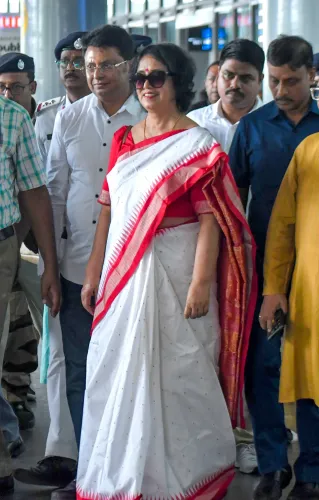
The conversation around Nasrin's return to Kolkata gained formal momentum in March last year, when Bharatiya Janata Party (BJP) Rajya Sabha MP Samik Bhattacharya — now the party's chief in West Bengal — raised the matter in the Upper House of Parliament, calling for her to be allowed back.
The new state government is now proactively extending security for her visit and framing it as an ideological reversal — a rejection of what some describe as the 'long-standing appeasement politics' of previous regimes that kept the 63-year-old author out to avoid antagonising fundamentalist elements.
Political Reactions Across the Spectrum
Communist Party of India (Marxist) [CPI(M)] leader Sujan Chakraborty deflected blame from the former Left Front state government, arguing in a Facebook post that decisions on where a foreign national may stay are a Central government prerogative. 'Why blame the (then) state Left Front government? Where would a foreign national stay and for how long, is an issue not for the state but the Central government to decide. There may have been a Left Front government in West Bengal, but not at the Centre,' he wrote.
TMC MLA Akhruzzaman was more pointed in his criticism, saying, 'She has said a lot against the Muslim community, against Shariat in Islam. If someone speaks against the Muslims then the double engine government will respect them, what is there to say?' Others have alleged that the ruling party is using Nasrin's presence primarily to stoke religious polarisation ahead of future electoral contests.
Who Is Taslima Nasrin
Nasrin began her career as a physician in Bangladesh before emerging as a fierce and controversial advocate for women's equality and the secular critique of orthodox religion. Her 1993 novel 'Lajja (Shame)' — which chronicled the persecution of the Hindu minority in Bangladesh following the Babri Masjid demolition in India — triggered massive outrage among religious hardliners.
Radical clerics issued fatwas demanding her execution and placed a bounty on her head. Facing an immediate threat to her life, she fled Bangladesh in 1994, seeking refuge first in Sweden and subsequently in other European countries. She has since lived in India on a temporary, renewable residential permit, as no Bangladeshi government has permitted her to return to her homeland given the persistent threats against her life.
What Her Visit Signals
Nasrin's return to the City of Joy, however brief, is being read as more than a literary occasion. By facilitating the visit and providing security, the current state establishment is signalling a departure from decades of precedent — positioning itself as a defender of liberal values against fundamentalist pressure. How the event unfolds on 1 August will be closely watched as a barometer of West Bengal's evolving political and cultural climate.
Point of View
But framing it as an ideological triumph risks obscuring the transactional politics underneath. The real test is not whether Nasrin arrives on 1 August, but whether the state can protect her without incident — and whether that protection outlasts its immediate political utility. Free expression that depends on which party is in power is not free expression at all.
NationPress
14 Oct 2026
Frequently Asked Questions
Why is Taslima Nasrin visiting Kolkata in August 2025?
Taslima Nasrin is attending an anti-fundamentalism literary event in Kolkata on 1 August — her first visit to the city in nearly two decades. She was effectively exiled from Kolkata in 2007 after violent protests by hardline groups over her autobiographical writings, and successive state governments had barred her return until now.
Why was Taslima Nasrin forced to leave Kolkata in 2007?
In November 2007, hardline groups enforced violent shutdowns and riots in Kolkata demanding Nasrin's expulsion over her autobiographical works, particularly 'Dwikhandito'. The then Left Front state government reportedly capitulated under pressure and she was relocated out of the city, ostensibly to restore public order.
What is the political controversy surrounding her return?
The new state government is framing Nasrin's visit as a rejection of past appeasement politics, while critics — including TMC MLA Akhruzzaman — allege the ruling party is using her presence to score political points and stoke religious polarisation. CPI(M) leader Sujan Chakraborty has argued that decisions on a foreign national's stay are a Central government matter, not a state one.
Who is Taslima Nasrin and why is she controversial?
Taslima Nasrin is a 63-year-old Bangladeshi-born author and former physician known for her fierce advocacy of women's equality and secular critique of orthodox religion. Her 1993 novel 'Lajja (Shame)' triggered mass protests in Bangladesh; radical clerics issued fatwas demanding her execution, forcing her to flee Bangladesh in 1994. She has lived in India on a temporary renewable residential permit since.
Does the Indian government need to sanction Taslima Nasrin's visit to Kolkata?
According to CPI(M) leader Sujan Chakraborty, decisions on where a foreign national may stay and for how long fall under the Union government's purview — specifically the Home Ministry — rather than the state government. Nasrin has lived in India on a temporary residential permit and her movements within the country are subject to Central government approval.