Taslima Nasrin returns to Kolkata after nearly two decades of exile
Synopsis
Taslima Nasrin's return to Kolkata after nearly two decades reads like a real-life chapter from her own novel Phera — but the parallel cuts both ways. Kalyani's fictional homecoming was bittersweet; the homeland of memory did not match the one she found. Whether Nasrin's second home proves genuinely hospitable, or whether the door reopened for one visit closes again after the applause, is the question her return leaves unanswered.
Key Takeaways
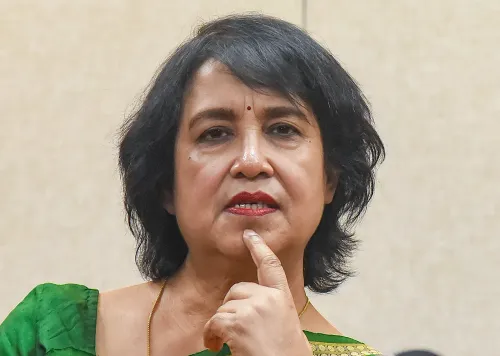
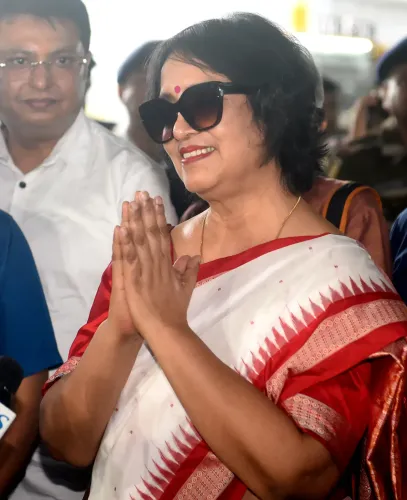
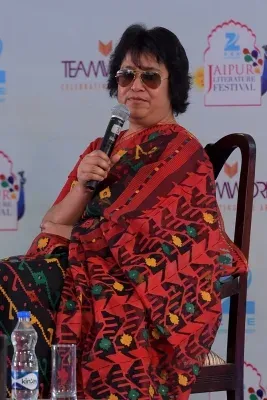
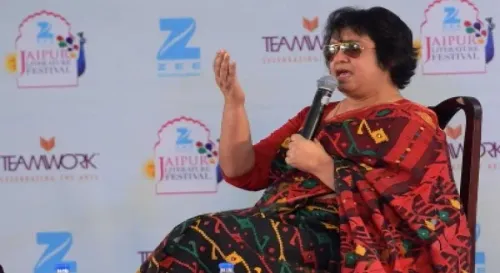
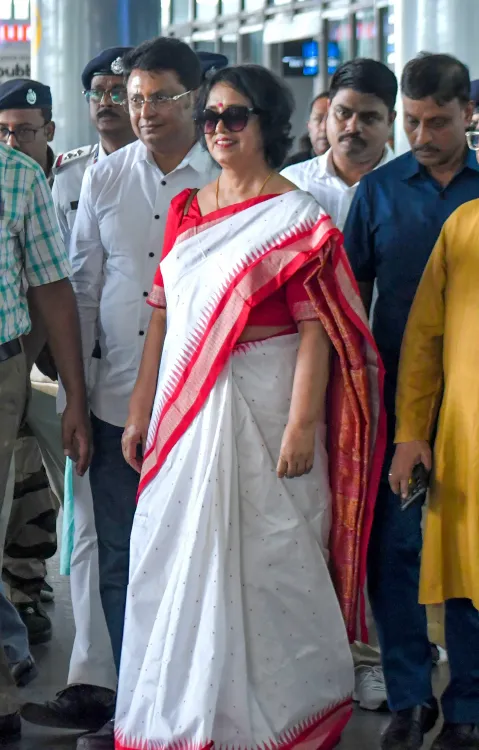
Taslima Nasrin appeared publicly in Kolkata for the first time in nearly two decades on 2 August 2025 .
She was effectively forced out of West Bengal in 2007 by the then Left Front government citing security concerns over protests against her autobiographical work Dwikhandito .
Nasrin left Bangladesh in 1994 after fundamentalists placed a bounty on her head, partly over her 1993 novel Lajja (Shame) .
BJP MP Samik Bhattacharya raised the question of her return in the Rajya Sabha in March 2024 .
Her visit mirrors the plot of her novel Phera (The Return) , though the causes of displacement — religious identity vs. atheism and feminist writing — differ fundamentally.
Author Taslima Nasrin made her first public appearance in Kolkata on 2 August 2025 — nearly two decades after she was compelled to leave the city she had adopted as her own. The visit, laden with personal and political significance, draws an almost uncanny parallel to her novel Phera (The Return), in which a Bengali Hindu woman revisits the land she was forced to abandon — though the circumstances, and the stakes, differ in crucial ways.
A Return That Mirrors Her Own Fiction
In Phera, Nasrin's protagonist Kalyani is a Hindu woman who fled what was then East Pakistan for India, only to return years later and find that the home preserved in memory no longer matched the reality before her. Time had reshaped people, places, and the very meaning of belonging. The parallel with Nasrin's own journey is striking: both women are Bengali, both were displaced by the intersection of politics and identity, and both return to discover that homecoming is rarely as simple as crossing a threshold.
Yet the comparison also reveals a crucial difference. Kalyani's displacement was rooted in her religious identity as part of a minority community in East Pakistan. Nasrin's exile, by contrast, stems from her atheism, her feminist writing, and her unflinching criticism of religious orthodoxy — making her controversial not only in Bangladesh, where she was born, but in parts of India as well.
The Road to Exile — and the Long Wait to Return
Nasrin left Bangladesh in 1994 after fundamentalist groups placed a bounty on her head, driven by her advocacy for women's rights and her rejection of faith-based discrimination. Her novel Lajja (Shame), published in 1993, had depicted the persecution of a Hindu family in Bangladesh following the demolition of the Babri Masjid in India, and provoked fierce opposition at home.
She settled in Kolkata in 2004, finding in the city a linguistic and cultural kinship that made it, in her own words, a second homeland. But in 2007, protests over her autobiographical work Dwikhandito (Split) turned hostile, and the then Left Front government cited security concerns to effectively push her out of West Bengal. She relocated to New Delhi, and though no formal legal ban barred her return, Kolkata's door remained shut — through successive governments, including under the All India Trinamool Congress (TMC).
A Parliamentary Push That Reopened the Door
A ray of hope emerged in March 2024, when West Bengal Bharatiya Janata Party (BJP) President and Member of Parliament Samik Bhattacharya raised the matter in the Rajya Sabha, urging that Nasrin be permitted to return to Kolkata. His intervention followed reports that the TMC government had allegedly prevented a theatrical adaptation of Lajja from being staged — an incident that reignited debate over the author's right to engage with the city's cultural life.
Nasrin has described the current visit as an emotional and personal homecoming, expressing gratitude that Kolkata's door has, at last, reopened. Whether that door stays open beyond this visit remains the defining question.
What Phera Tells Us About This Moment
Phera is not merely a novel about return — it is a social-historical and feminist work that interrogates the Partition's long shadow, the vulnerability of minority identities, and the way political authority repeatedly decides who may belong and on what terms. Kalyani's return in the novel is bittersweet: the homeland of memory cannot be fully reclaimed.
Nasrin's return to Kolkata this week carries the same ambivalence. The city is not her birthplace, but it is where she built her sense of literary and cultural home — through language, relationships, and the everyday texture of Bengali life. The central irony, as Nasrin herself has noted, is that both she and Kalyani are Bengali women whose right to belong has been repeatedly adjudicated by political authorities and communal gatekeepers rather than by their own choice.
What Comes Next
The warmth of one reception, however genuine, does not resolve the structural questions around Nasrin's status in India. Her long-term residency and freedom to write and speak without threat remain contingent on political will that has historically proved inconsistent. As with Kalyani in Phera, the true measure of this return will not be the applause at arrival, but whether the welcome endures once the moment passes.
Point of View
But symbolism without structural protection is fragile. She was not expelled by law but by a combination of street pressure and state inaction — a mechanism that can be replicated at any time. The BJP's parliamentary advocacy for her return is also worth scrutinising: championing a critic of Islamic orthodoxy fits a political narrative, and Nasrin deserves support that is principled rather than instrumental. The deeper question her visit raises is one India has never cleanly answered — whether a writer's right to live and work freely can be guaranteed against majoritarian pressure, regardless of which majority is doing the pressuring.
NationPress
16 Sept 2026
Frequently Asked Questions
Why was Taslima Nasrin forced to leave Kolkata?
Nasrin left Kolkata in 2007 after protests erupted over her autobiographical work Dwikhandito (Split), and the then Left Front government cited security concerns. Though no formal legal ban was imposed, the political climate effectively shut the city's door to her for nearly two decades.
What is Taslima Nasrin's novel Phera about?
Phera (The Return) is a social-historical and feminist novel by Nasrin in which a Hindu woman named Kalyani, displaced from East Pakistan to India, revisits her country of birth years later. The novel explores how memory, identity, and belonging are shaped — and distorted — by Partition and communal history.
How does Nasrin's return to Kolkata compare to Phera's plot?
Both involve a Bengali woman returning to a place from which she was displaced by political and communal forces. The key difference is cause: Kalyani's displacement stemmed from her Hindu minority identity in East Pakistan, while Nasrin's exile was driven by her atheism and feminist criticism of religious orthodoxy.
Who advocated for Taslima Nasrin's return to Kolkata?
West Bengal BJP President and MP Samik Bhattacharya raised the matter in the Rajya Sabha in March 2024, urging that Nasrin be allowed to return. His intervention followed reports that the TMC government had allegedly blocked a theatrical adaptation of her novel Lajja.
Why did Taslima Nasrin originally leave Bangladesh?
Nasrin left Bangladesh in 1994 after fundamentalist groups announced a bounty on her head, provoked by her advocacy for women's rights and her 1993 novel Lajja (Shame), which depicted the persecution of a Hindu family following the demolition of the Babri Masjid. She has lived in exile ever since.