Tata Trusts: Chandrasekaran reappointment void, casting vote unlawful
Synopsis
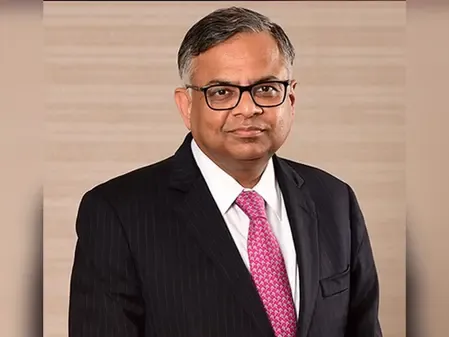
Tata Trusts has declared Chandrasekaran's reappointment as Tata Sons Chairman legally void, calling it 'void ab initio' after one of its two nominee directors voted against it on 17 September. With senior advocate Abhishek Manu Singhvi now on board and a Supreme Court precedent from the Mistry case being wielded, this is shaping up as one of India's most consequential corporate governance battles in a decade.
Key Takeaways
Tata Trusts declared on 20 September 2026 that the resolution to reappoint N.
Chandrasekaran as Chairman of Tata Sons is void ab initio and has no legal effect.
At the 17 September 2026 board meeting, one of two Tata Trusts nominee directors voted against the resolution, failing the AoA's majority-support condition.
Tata Trusts holds approximately 66 per cent of Tata Sons; its AoA requires affirmative support from a majority of its nominee directors for resolutions to pass.
The trust argues the casting vote was improperly exercised, as it applies only at the overall board level — not among Tata Trusts nominees specifically.
Tata Sons' current legal position is said to contradict arguments it successfully made before the Supreme Court of India during the Cyrus Mistry removal case.
Tata Trusts has appointed senior advocate Abhishek Manu Singhvi for legal representation as the dispute escalates.
Tata Trusts on Sunday, 20 September 2026, escalated its corporate battle with Tata Sons, declaring that the resolution to reappoint N. Chandrasekaran as Chairman — passed at a board meeting on 17 September 2026 — is legally void and carries no effect. The trust, which holds approximately 66 per cent of Tata Sons, argued that the use of a casting vote to push through the resolution was constitutionally impermissible under the company's own Articles of Association.
The Core Legal Dispute
At the heart of the standoff is a provision in the Articles of Association (AoA) of Tata Sons that requires the affirmative support of at least a majority of Tata Trusts-nominated directors for any board resolution to be validly passed. There are two such nominee directors on the Tata Sons board. On 17 September 2026, one of them voted against the reappointment resolution — meaning the condition for majority support among Trusts nominees was not met.
'The resolution to reappoint Mr N. Chandrasekaran as the Chairman of Tata Sons, considered at the Board meeting on September 17, 2026, was not validly passed and has no legal effect. In the eyes of the law, it is void ab initio,' the Tata Trusts statement said.
Why the Casting Vote Argument Fails, Per Tata Trusts
Tata Sons reportedly contended that there was a deadlock at the board level, entitling the meeting's Chairman to exercise a casting vote. Tata Trusts directly rejected this framing. According to the trust's statement, a casting vote is only available where there is an equality of votes at the overall board level, and does not operate among Tata Trusts nominee directors specifically.
'There was no paralysis, and there was no deadlock. The Board put a question, and the AoA answered it in the negative. The exercise of a protective right conferred by a company's own constitution is not a deadlock; it is that constitution working as it was written to work,' the statement asserted.
Supreme Court Precedent Invoked
Tata Trusts also pointed to a significant contradiction in Tata Sons' current position. During the Cyrus Mistry removal dispute, Tata Sons had itself defended these same AoA provisions before the Supreme Court of India as a legitimate shareholder protection — not oppressive. The Supreme Court upheld that argument and set aside findings that the Articles were oppressive. Tata Trusts now argues that Tata Sons cannot take the opposite position in the Chandrasekaran matter.
'It is unfortunate that the Chairman of Tata Sons, a Company renowned for setting high standards of corporate governance, is contending reappointment on such an untenable interpretation of the Articles,' the statement said.
Listing Question and Corporate Governance
Separately, the trust also pushed back on arguments that listing Tata Sons on public markets would improve corporate governance. According to Tata Trusts, this argument 'assumes a governance gap which does not exist,' noting that Tata Sons has voluntarily held itself to public-company governance standards for years, independent of any listing requirement.
Legal Representation and What Comes Next
Tata Trusts has retained senior advocate Abhishek Manu Singhvi for legal representation as the dispute intensifies. Singhvi warned of broader implications: 'In the ultimate analysis, fundamental rights of shareholder-owners cannot be nullified in the manner in which they have been. To stultify shareholder ownership rights would spell doomsday for corporate governance across hundreds of Indian companies,' he said.
The dispute now appears headed toward a formal legal challenge, with the validity of Chandrasekaran's reappointment and the enforceability of the AoA's protective provisions likely to be tested in court. The outcome could set a landmark precedent for minority-to-majority shareholder rights in Indian corporate law.
Point of View
A contradiction Tata Trusts has shrewdly weaponised. What mainstream coverage risks missing is the systemic implication: if a casting vote can effectively nullify a majority shareholder's AoA-guaranteed veto, it would undermine the reliability of shareholder agreements across Indian companies far beyond the Tata group. The courts, when this lands before them, will be ruling on something much bigger than Chandrasekaran.
NationPress
20 Sept 2026
Frequently Asked Questions
Why has Tata Trusts called Chandrasekaran's reappointment void?
Tata Trusts says the reappointment resolution passed at the 17 September 2026 Tata Sons board meeting is void ab initio because it lacked the affirmative support of a majority of Tata Trusts nominee directors, as required by the Articles of Association. One of the two Trusts nominees voted against the resolution, meaning the mandatory condition was not satisfied.
What is the dispute over the casting vote?
Tata Sons reportedly argued that a deadlock at the board justified the Chairman exercising a casting vote to pass the resolution. Tata Trusts contests this, stating that a casting vote is only available where there is overall equality of votes at the board level — and crucially, it cannot be used to override the separate AoA requirement for Tata Trusts nominee-director support.
How does the Cyrus Mistry case feature in this dispute?
During the Cyrus Mistry removal litigation, Tata Sons successfully argued before the Supreme Court of India that the same AoA protective provisions were a legitimate shareholder entitlement, not oppressive. Tata Trusts is now citing this precedent to argue that Tata Sons cannot reverse its position and undermine those very protections in the Chandrasekaran matter.
Who is representing Tata Trusts legally?
Tata Trusts has retained senior advocate Abhishek Manu Singhvi as its legal representative amid the escalating dispute. Singhvi has cautioned that nullifying fundamental shareholder ownership rights could have damaging consequences for corporate governance across hundreds of Indian companies.
What happens next in the Tata Trusts vs Tata Sons standoff?
The dispute appears set for formal legal proceedings, with the validity of Chandrasekaran's reappointment and the enforceability of the AoA provisions likely to be adjudicated in court. The outcome could establish a significant precedent for shareholder rights and corporate governance standards in India.