C.P. Radhakrishnan Advocates for Tech-Driven Justice Access
Synopsis
Vice-President C.P. Radhakrishnan calls for a justice system that is affordable, inclusive, and timely, emphasizing the role of technology. His remarks at a National Consultation highlight the importance of reaching marginalized communities and enhancing legal services accessibility.
Key Takeaways
Affordable , inclusive, and timely justice is essential for all citizens.
The use of technology is crucial for enhancing access to legal services.
Inclusivity in the legal system empowers marginalized communities.
Quality and accountability must not be compromised in the pursuit of technological advancements.
The Tele-law initiative serves as a model for democratizing legal access.
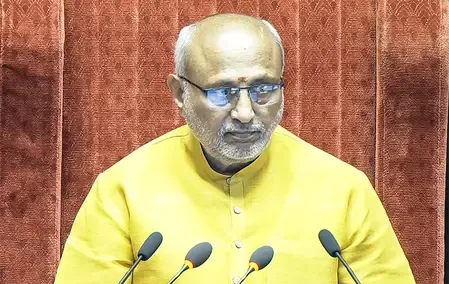
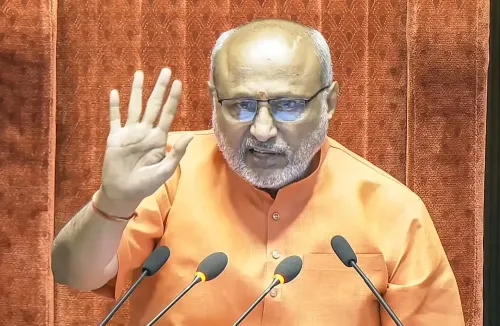
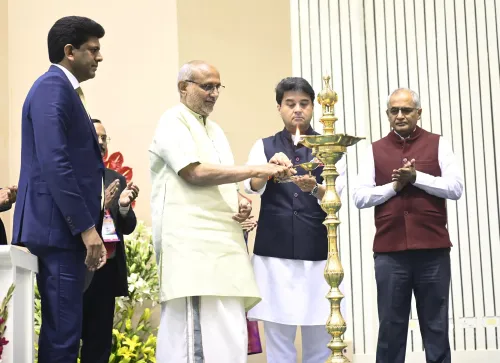
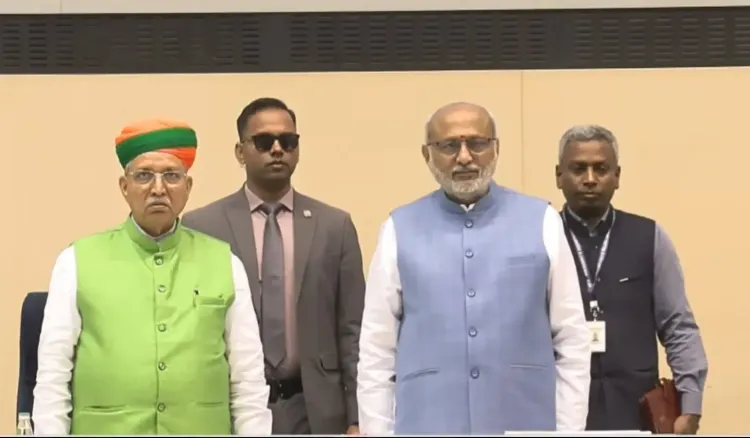
New Delhi, March 29 (NationPress) Vice-President C.P. Radhakrishnan emphasized the importance of affordable, inclusive, and timely justice for all citizens, highlighting the necessity of enhancing access to justice via technology-driven legal services.
While addressing a National Consultation organized by the Department of Justice under the Ministry of Law and Justice, he stated, "The empowerment through law is reliant on three focal points -- inclusivity, quality, accountability, and the innovation or utilization of technology in a user-friendly manner."
He noted that the effectiveness of our legal framework hinges on its inclusivity and its capability to reach the most marginalized communities in society.
Vice-President Radhakrishnan warned that while tech advancements are essential, they must not compromise quality and accountability in delivering justice.
He mentioned, "India is currently at a pivotal juncture, with Prime Minister Narendra Modi outlining the vision for 'Viksit Bharat@2047'. This requires the overhaul of colonial-era laws, which were intended to govern rather than serve the populace. The recent transition to three new criminal laws is a significant stride towards a citizen-centric justice framework," he remarked.
He cited the Tele-law initiative as a prime example of how technology can democratize access to legal services.
"The pre-litigation aspect of the Tele-law initiative also facilitates matter resolution and alleviates litigation burdens," he elaborated, emphasizing the government's initiative to provide laws in regional languages.
"The consultation served as a forum for discussions, policy dialogue, and engagement with stakeholders," an official commented.
The National Consultation 2026, part of the Tele-Law initiative under the Designing Innovative Solutions for Holistic Access to Justice (DISHA) Scheme, aims to enhance access to justice.
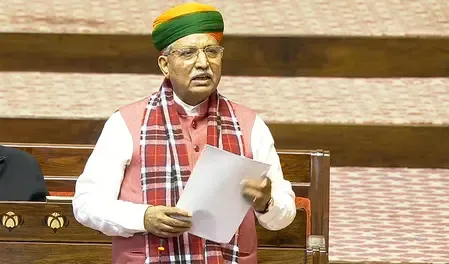
Minister of State (Independent Charge) for Law and Justice, Arjun Ram Meghwal, underscored the significance of the Tele-law initiative in improving legal accessibility.
"Today, it is unnecessary to travel to urban areas to seek justice or contact an attorney," he remarked, noting that the Tele-law initiative effectively delivers justice at people's doorsteps.
He also emphasized the need for pro-bono services from lawyers to enhance justice accessibility.
The event witnessed the launch of the "Voice of Beneficiaries" Booklet 2025–26, which encapsulates inspiring stories of individuals positively affected by Tele-Law services, showcasing the transformative capacity of digital justice access.
A detailed presentation on the DISHA Scheme's progress across India, featuring live interactions with Tele-Law Panel Lawyers, Village Level Entrepreneurs, and beneficiaries, highlighted real-time experiences and grassroots impacts of technology-enabled legal aid.
"A special segment celebrated the 150th anniversary of the National Song 'Vande Mataram', performed by local artists, honoring its historic and cultural importance," stated the announcement.
The consultation also released a white paper derived from a technical session preceding the event, consolidating insights, recommendations, and best practices from experts, policymakers, and practitioners.
An AI-driven chatbot, Nyaya Setu, was launched, designed to serve as a digital link between citizens and legal services.
This chatbot aims to provide immediate, user-friendly legal information and guidance, assisting users in understanding their legal rights, accessing Tele-Law services, and navigating dispute resolution.
A series of legal awareness comic books produced in collaboration with the National Law University in Delhi were unveiled during the event.
Approximately 1,200 participants attended, including officials from the Supreme Court e-Committee, National Legal Services Authority, Bar members, Government counsels, Tele-Law Panel Lawyers, and Village Level Entrepreneurs," the statement noted.
Point of View
He highlights the urgent need to empower marginalized communities while ensuring accountability and quality within the legal framework.
NationPress
27 Sept 2026
Frequently Asked Questions
What is the Tele-law initiative?
The Tele-law initiative is a government program designed to use technology to provide legal services and empower citizens in accessing justice more easily, even in remote areas.
How does technology improve access to justice?
Technology enhances access to justice by streamlining legal processes, allowing citizens to obtain legal information and services from the comfort of their homes, thereby reducing the need for physical travel.
What are the main priorities for legal empowerment mentioned by the Vice-President?
The Vice-President emphasized three key priorities for legal empowerment: inclusivity, quality, and accountability through innovative use of technology.
Why is inclusivity important in the legal system?
Inclusivity is vital to ensure that marginalized and underrepresented communities can access legal services and participate fully in the justice system.
What is the significance of the 'Voice of Beneficiaries' Booklet?
The 'Voice of Beneficiaries' Booklet showcases inspiring stories of individuals benefiting from Tele-Law services, reflecting the positive impact of technology in accessing justice.