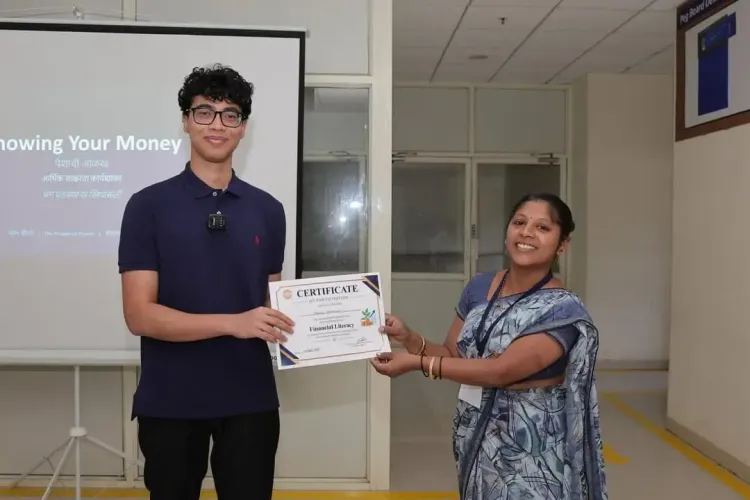
Teen founder Rehaan Chowdhary brings financial literacy to 420 women across India
Synopsis
A 17-year-old student based in Dubai founded The Prosperity Project in 2025 after learning about financial fraud that hit his caregiver's family. He has since reached 420 women across West Bengal and Maharashtra with a ten-module financial literacy curriculum — and trained 40 community educators to carry it further.
Key Takeaways
Rehaan Chowdhary , 17, founded The Prosperity Project in 2025 to deliver financial education to women in India.
The initiative has reached 420 direct learners across West Bengal and Maharashtra .
His curriculum, Knowing Your Money , spans 10 modules covering budgeting, savings, borrowing, digital payments, and fraud prevention.
40 Community Resource Persons (CRPs) have been trained to extend learning beyond formal workshops.
Collaborating partners include Bandhan-Konnagar , Bengal Shristi Infrastructure Development Limited , FEED , and Indo Count in Kolhapur.
An impact report is being finalised and will be published on the project's website.
Rehaan Chowdhary, a 17-year-old student at Nord Anglia International School Dubai, has built a financial education initiative that has reached 420 women across West Bengal and Maharashtra since its founding in 2025. Through The Prosperity Project, Chowdhary has delivered workshops on budgeting, savings, borrowing, digital payments, and financial fraud — practical skills that remain out of reach for millions of women in India's semi-urban and rural communities.
The Personal Spark Behind the Project
The initiative traces its origins to a conversation closer to home. Learning about financial fraud that had affected the family of Shampa, who has cared for Chowdhary since birth, prompted him to consider how greater financial awareness could help people protect their savings. An existing interest in finance that had focused on his own learning gradually shifted into a structured effort to make that knowledge accessible to others.
The result was Knowing Your Money, a ten-module curriculum and accompanying textbook that explains financial concepts through familiar, everyday situations. The material covers household budgeting, wages, savings instruments, borrowing terms, investment basics, digital payment safety, fraud recognition, and emergency planning.
How the Workshops Reach Communities
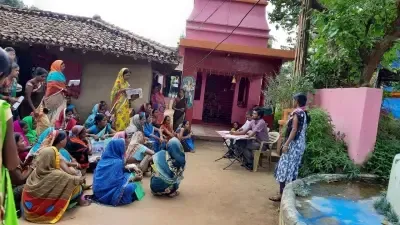
The programme launched with sessions in Baruipur, West Bengal, in collaboration with Bandhan-Konnagar and with support from Bandhan Bank. It subsequently expanded to Asansol through Bengal Shristi Infrastructure Development Limited and FEED. A workplace deployment at Indo Count in Kolhapur, Maharashtra, brought workshops to 200 women employed there.
According to figures provided by The Prosperity Project, the 420 direct learners are distributed across four collaborations: 40 through Bandhan-Konnagar, 70 through Bengal Shristi Infrastructure Development Limited, 110 through FEED, and 200 through Indo Count. Sessions are conducted in Hindi and English, with local teams providing language support; at Indo Count, local facilitators enabled Marathi translation.
The Community Resource Person Model
A defining feature of the initiative is its Community Resource Person (CRP) model, designed to extend learning well beyond individual workshops. Chowdhary has trained 40 CRPs through the Bandhan and Bengal Shristi collaborations, equipping them to carry the curriculum forward in their own networks. The CRPs are counted within the 420 direct learners; people they subsequently teach are not included in that total.
The project has also developed teaching videos, multilingual resources, and a dedicated website so that participants and facilitators can revisit the material at any time. Before-and-after assessments are used to gauge comprehension and identify concepts requiring reinforcement, supported by a data management system Chowdhary built to score responses and track outcomes. An impact report is currently being finalised and will be published on the project's website.
What the Project Addresses — and What Comes Next
'I wanted to make financial education practical and relevant to the decisions people face in their everyday lives. It is not just about knowing how money works, but about being able to ask the right questions, understand the risks involved and make informed decisions about your own money,' Chowdhary said.
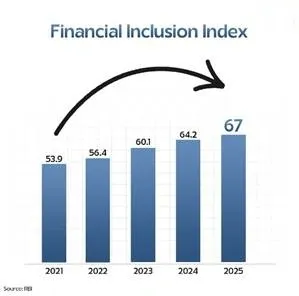
This comes amid a broader recognition that financial inclusion in India is a two-part challenge: access to banking and payment infrastructure is expanding, but the knowledge needed to use those tools wisely — and to avoid fraud — lags behind. The Prosperity Project's community-based approach attempts to close that gap at the grassroots level.
The initiative plans to expand through additional community organisations and employers, with a focus on locally relevant teaching, facilitator preparation, and follow-up learning. The longer-term goal is to enable organisations working with women to adopt the resources independently and sustain financial education within their own communities and workplaces.
Point of View
Yet remain vulnerable to fraud and predatory lending because no one explained the risks. What makes Chowdhary's model worth watching is the CRP multiplier: training local educators rather than running one-off workshops is closer to how durable change actually happens. The real test, as the forthcoming impact report will show, is whether comprehension gains translate into behaviour change — a bar that most financial literacy programmes, well-resourced or otherwise, have struggled to clear.
NationPress
22 Oct 2026
Frequently Asked Questions
What is The Prosperity Project founded by Rehaan Chowdhary?
The Prosperity Project is a financial literacy initiative founded in 2025 by Rehaan Chowdhary, a 17-year-old student at Nord Anglia International School Dubai. It delivers practical financial education workshops to women in India, with a ten-module curriculum called Knowing Your Money covering budgeting, savings, borrowing, digital payments, and fraud awareness.
How many women has The Prosperity Project reached so far?
The initiative has reached 420 direct learners across West Bengal and Maharashtra, distributed across four partner organisations: Bandhan-Konnagar (40), Bengal Shristi Infrastructure Development Limited (70), FEED (110), and Indo Count in Kolhapur (200). An additional network of 40 trained Community Resource Persons is counted within this total.
What triggered Rehaan Chowdhary to start the initiative?
Chowdhary was prompted to act after learning about financial fraud that had affected the family of Shampa, who has cared for him since birth. The experience led him to explore how financial awareness could help people protect their savings and make informed decisions.
What is the Community Resource Person model used by the project?
The CRP model involves training local women as facilitators who can share the Knowing Your Money curriculum within their own communities after the formal workshops end. Chowdhary has trained 40 CRPs through the Bandhan and Bengal Shristi collaborations; people reached through their subsequent teaching are not counted in the 420 direct learner total.
What are the next steps for The Prosperity Project?
The project plans to expand through additional community organisations and employers, with a continued focus on locally relevant teaching and facilitator development. A full impact report is being finalised and will be published on the project's website, detailing comprehension outcomes and whether participants report applying the learning in their daily lives.