Shashi Tharoor says DMK falling into BJP 'trap' on delimitation
Synopsis
Shashi Tharoor has broken ranks with an opposition ally, accusing the DMK of walking into a BJP 'trap' by reportedly backing the delimitation bill. His salary analogy argues that a proportional seat increase still widens the power gap, and he questioned why India needs an 850-member Lok Sabha when the US froze its House at 435 in 1929.
Key Takeaways
Congress MP Shashi Tharoor said on 27 November 2026 he was “disappointed” with the DMK's reported support for the Constitution (131st Amendment) Bill, 2026 .
The package includes the Delimitation Bill, 2026 and the Union Territories Laws (Amendment) Bill, 2026 .
DMK chief MK Stalin said Tamil Nadu's share must not fall below its current 7.18% if constituencies increase.
Tharoor called the proportional-increase argument “very specious”, using a salary analogy to show that equal percentage growth widens absolute gaps.
He questioned an 850-member Lok Sabha, noting the US House has stayed at 435 seats since 1929 .
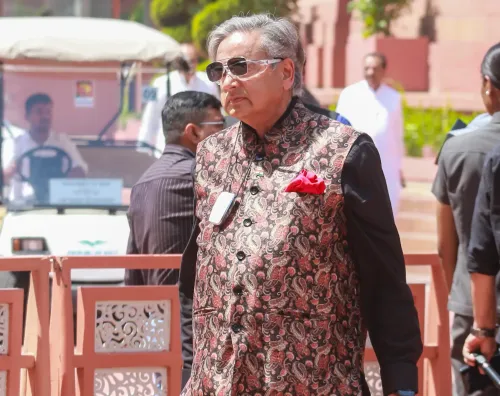
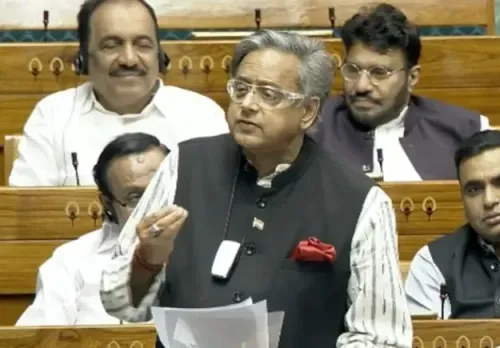
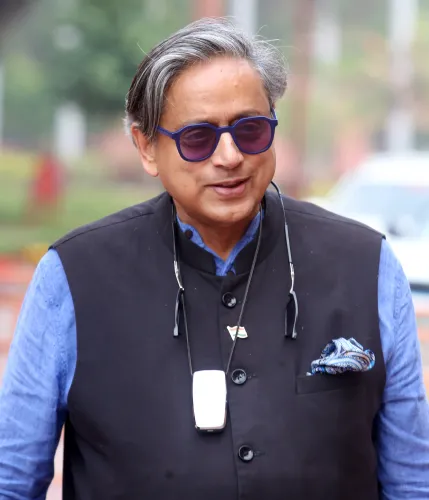
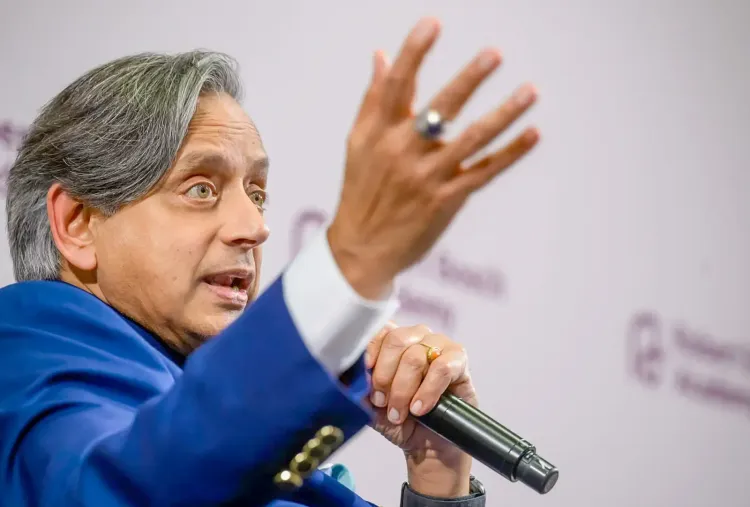
Congress MP Shashi Tharoor on Friday, 27 November 2026, said he was “disappointed” with the Dravida Munnetra Kazhagam (DMK) over its reported support for the Constitution (131st Amendment) Bill, 2026, warning that the party may be falling into a “trap” laid by the Bharatiya Janata Party (BJP)-led Centre. Speaking to reporters in Thiruvananthapuram, Tharoor said the DMK was accepting the proposal without examining what he called the BJP's larger agenda.
The legislative package includes the Delimitation Bill, 2026 and the Union Territories Laws (Amendment) Bill, 2026. Together, the bills form the framework for redrawing parliamentary constituencies and expanding the strength of the Lok Sabha.
Stalin Draws a Line on Tamil Nadu's Share
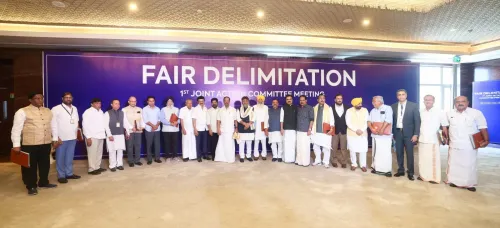
Tharoor's remarks came hours after DMK chief and former Tamil Nadu Chief Minister MK Stalin said there would be no “compromise” on the state's interests. “If the number of parliamentary constituencies is increased, under no circumstances should Tamil Nadu’s share fall below its current 7.18%!” Stalin said.
Stalin's position rests on protecting Tamil Nadu's proportional share of 7.18% in the Lok Sabha. Notably, Tharoor argued that this exact framing is the flaw in the DMK's reported approach.
Tharoor's Charge Against the DMK
According to Tharoor, the DMK is “surrendering on the specious grounds that the increase is proportionate, without looking at the larger agenda of the BJP behind it”. He described the stand as an “abdication of responsibility” towards the people in whose name the DMK claims to speak.
“I am disappointed. I have many friends in the DMK, and I have had very good working relations with them over the years, but the stand they are reportedly taking is not something that any true Dravidian supporter of the DMK is going to welcome,” he said.
The Salary Analogy
To illustrate why he considers the “proportional increase” argument “very specious”, Tharoor offered a workplace comparison. “Let's say you are the managing director of a company and you are paying yourself Rs 2 lakh while your driver has a salary of Rs 20,000, a proportion of 10 to one. You announce a 50% increase for everybody. Your salary goes up to Rs 3 lakh, and your driver's goes up to Rs 30,000. Are you not much better off? The proportion is still the same, 10 to one, but you have so much more money, so many more disposable assets, and so much more you can do. The same thing is what the BJP is trying to achieve,” he said.
“If the DMK has fallen into that trap, then they are not thinking for themselves as they should be,” he added. The argument suggests that equal percentage growth still widens the absolute gap in seats between larger and smaller states.
Questions Over an 850-Member Lok Sabha
Tharoor also questioned the need to expand the Lok Sabha at all. “There is no legislature in the world with 850 members. No democratic parliamentary legislature is that large,” he said.
He cited the United States, where the House of Representatives was frozen at 435 seats in 1929. “Their population has tripled since then. It was 120 million then, and it is 380 million today. They have not tried to increase the size of the House of Representatives. Why is it that only India needs to keep having more MPs per voter?” he asked.
The Thiruvananthapuram MP further alleged that there had been “no serious discussion and no effort has been made to take the people along” during the Parliament session. “It has truly been a disgraceful move by the government,” he remarked.
What Lies Ahead
This comes amid long-running concerns among southern states that population-based delimitation could dilute their political weight in Parliament. With the DMK reportedly leaning towards support, the opposition's ability to present a united front on the bills now appears uncertain, and the coming days of the session will show whether Tharoor's warning shifts the debate.
Point of View
Because absolute seat gaps with populous northern states would widen. The bigger story is the fracture it exposes within the opposition: if the DMK, long the loudest southern voice on delimitation, settles for a percentage floor, the federal argument loses its most credible champion. The Centre, meanwhile, owes Parliament a fuller debate on why an 850-member House is necessary at all.
NationPress
27 Nov 2026
Frequently Asked Questions
Why is Shashi Tharoor disappointed with the DMK?
Tharoor is disappointed over the DMK's reported support for the Constitution (131st Amendment) Bill, 2026, which includes the Delimitation Bill. He said the party may be falling into a BJP 'trap' by accepting a proportional seat increase without examining the larger agenda behind it.
What did MK Stalin say about delimitation?
MK Stalin said there would be no compromise on Tamil Nadu's interests. He asserted that if parliamentary constituencies are increased, the state's share must not fall below its current 7.18%.
What does the Constitution (131st Amendment) Bill, 2026 include?
The bill package includes the Delimitation Bill, 2026 and the Union Territories Laws (Amendment) Bill, 2026. Tharoor indicated it could expand the Lok Sabha to around 850 members.
Why does Tharoor oppose expanding the Lok Sabha?
Tharoor said no democratic parliamentary legislature in the world has 850 members. He pointed out that the US House of Representatives has stayed at 435 seats since 1929 even though the country's population has tripled.
What is Tharoor's salary analogy on delimitation?
Tharoor compared a managing director earning Rs 2 lakh and a driver earning Rs 20,000 who both get a 50% raise. The 10-to-one ratio stays the same, but the gap in absolute terms grows, which he argued is what a proportional seat increase would do.