Is Shashi Tharoor Facing Backlash for Defying Congress' Dynastic Norms?
Synopsis
Shashi Tharoor’s recent actions have sparked controversy within Congress, as he faces backlash for defying party norms associated with the Gandhi family. His attempts to challenge leadership and commend the current regime have resulted in tension and potential political isolation, reminiscent of past leaders who faced similar fates.
Key Takeaways
Shashi Tharoor's missteps have drawn ire from Congress leadership.
His comments in favor of Modi have put him at odds with party colleagues.
Historical precedents show that dissent in Congress often leads to isolation.
The Gandhi family's influence remains strong within the party.
Tharoor’s situation reflects ongoing tensions in Indian politics.
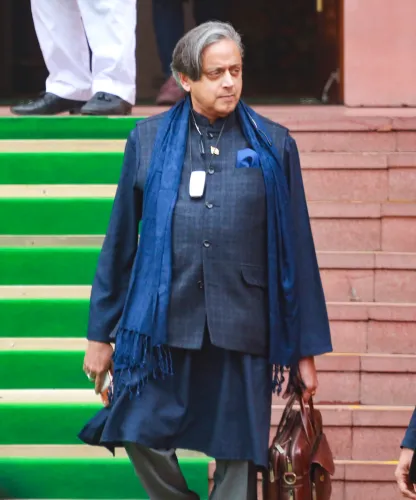
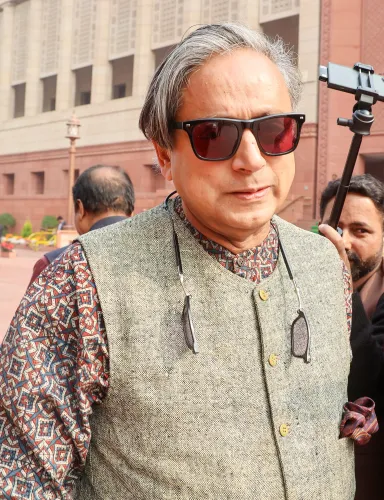
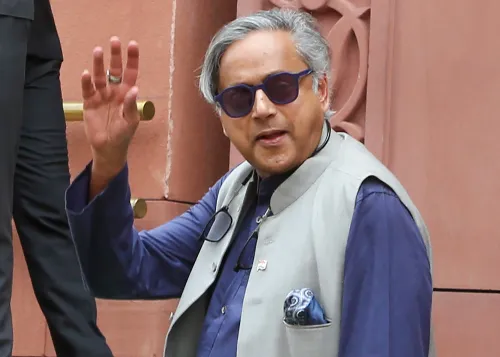
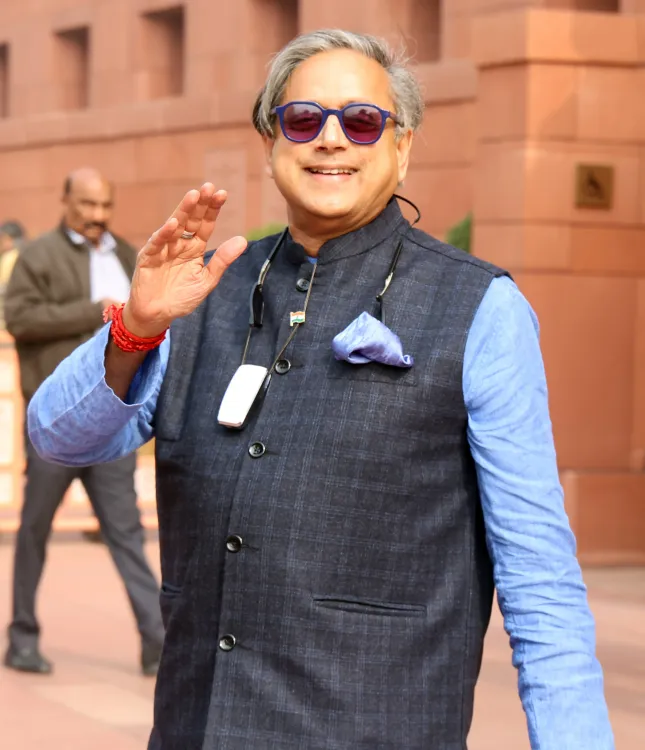
New Delhi, Jan 23 (NationPress) Congress MP Shashi Tharoor has reportedly committed at least two significant missteps against the highest ranks of his party recently, leading to a noticeable disregard from its leadership, similar to the treatment faced by others within the party. Tharoor, a four-time MP from Thiruvananthapuram, is said to be frustrated after being asked to address the audience before those who are junior to him, following an indication that he was ranked just above Rahul Gandhi.
During a recent event in Kochi, the Gandhi scion seemingly omitted Tharoor’s name while beginning his speech. Previously, the diplomat-turned-politician faced backlash from his party colleagues for his favorable remarks regarding Prime Minister Modi’s approach to national issues, including the execution of Operation Sindoor in response to the April 2025 Pahalgam terror attack.
His social media post featuring a selfie with the coach of the India men's cricket team, Gautam Gambhir, where he referred to him as “the man with the hardest job in India after the PM”, was also poorly received within Congress.
One of his major transgressions seems to be contesting against the Congress first family's preferred candidate for party President, Mallikarjun Kharge. Since then, his standing has changed dramatically.
Another misstep could be attributed to his commendation of any actions taken by the current regime or its leader. While Rahul Gandhi has vocally opposed the alleged “theft of votes” by the ruling BJP, it appears that within Congress, the Gandhi family tightly controls party elections. Historical instances, such as Jitendra Prasada’s attempt to challenge Sonia Gandhi for the presidency in 2000, demonstrate the consequences faced by those who deviated from the party line.
After his challenge, Prasada reportedly found himself politically isolated, and he tragically passed away shortly thereafter due to a cerebral hemorrhage. Similar instances involving Rajesh Pilot and Ghulam Nabi Azad highlight how internal dissent has often led to marginalization or disciplinary measures within Congress, particularly for those labeled as rebels.
In early 2024, Prime Minister Modi recalled how Congress previously disrespected its former President Sitaram Kesri, an OBC leader who held the party’s highest position in 1996 after P.V. Narasimha Rao stepped down. Kesri’s leadership was fraught with internal challenges and criticisms regarding his appeal, which ultimately led to his ousting in what was termed a “bloodless coup” when Sonia Gandhi took over in 1998. Reports suggest that he was effectively confined within party headquarters during the transition, symbolizing a shift towards dynastic politics under the Gandhi family.
Kesri's sidelining continued, as Narasimha Rao, known for spearheading India’s economic liberalization in the early 1990s, faced a similar fate. After his term, Congress reportedly neglected his contributions, distancing itself from his legacy. He faded from public life, and upon his death in 2004, his body was controversially not allowed to be taken to Congress headquarters for public tribute, with his cremation conducted in Hyderabad instead of Delhi, where he had served prominently.
Such actions reflect what many perceive as the Congress party's dynastic politics, which prioritize family loyalty while limiting the influence of leaders who operate independently of the Gandhi family.
Point of View
It's essential to recognize the complexities within political parties like Congress. Shashi Tharoor's situation raises questions about the balance between individual opinion and party loyalty, reflecting a broader narrative about the challenges faced by leaders who dare to speak out against established norms. We must remain vigilant in our coverage of these dynamics as they unfold.
NationPress
7 Oct 2026
Frequently Asked Questions
What are the consequences of Shashi Tharoor's remarks?
Shashi Tharoor's remarks have led to backlash within Congress, possibly resulting in political isolation similar to that faced by other leaders who challenged party norms.
Why is there tension between Tharoor and the Gandhi family?
The tension stems from Tharoor's actions that are perceived as deviating from the established party line dominated by the Gandhi family, particularly his challenge to their chosen candidates.
How has Congress historically dealt with dissent?
Historically, Congress has marginalized dissenting voices within the party, leading to significant political consequences for those who challenge the leadership.