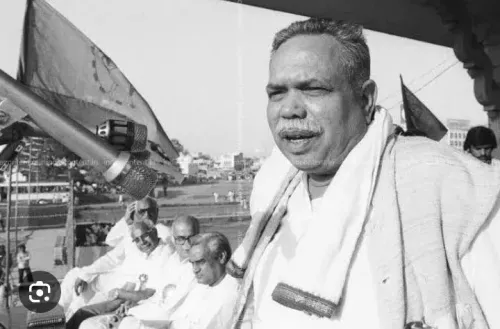
Brigadier Basant K. Ponwar: The man who taught India jungle warfare

Synopsis
Brigadier Basant K. Ponwar never led a famous battle — he shaped every battle that followed. By founding the Counter Terrorism and Jungle Warfare College at Kanker and drilling a single doctrine into thousands of CRPF and police personnel, he quietly engineered the strategic shift that put India's security forces on the front foot against Maoist insurgency.
Key Takeaways
Ponwar is credited with reshaping India's counter-insurgency doctrine against Left Wing Extremism in central India.
His core principle — 'fight a guerrilla like a guerrilla' — demanded small-team operations, terrain mastery, and intelligence-led tactics over brute force.
He founded the Counter Terrorism and Jungle Warfare College (CTJWC) at Kanker, Chhattisgarh , which trained thousands of personnel from the CRPF , state police forces, Greyhounds , C-60 , and District Reserve Guard .
Officers trained at CTJWC went on to lead successful operations across Chhattisgarh , Maharashtra , Telangana , Odisha , and Jharkhand .
Brigadier Ponwar believed realism in training was an act of compassion — mistakes made in exercises saved lives in the field.
Brigadier Basant K. Ponwar, the architect of India's modern jungle warfare doctrine, leaves behind a legacy that reshaped the country's counter-insurgency strategy against Left Wing Extremism across central India. His life's work — distilled into the principle 'fight a guerrilla like a guerrilla' — transformed how thousands of security personnel entered and survived the forests of Bastar.
A Doctrine Born from the Jungle
Long before the tide turned against Maoist insurgency, vast stretches of central India were considered near-impenetrable, and armed groups dictated the rhythm of conflict. Brigadier Ponwar recognised early that conventional military thinking would never produce unconventional victories. His philosophy demanded that security forces abandon predictable patterns and instead learn to think, move, and survive as their adversary did.
In practice, this meant travelling light, mastering terrain, operating in small teams, and relying on intelligence over brute force. To him, the forest was not an obstacle — it was a battlefield that first had to be understood before it could be won.
The Counter Terrorism and Jungle Warfare College
When Brigadier Ponwar established the Counter Terrorism and Jungle Warfare College (CTJWC) at Kanker, Chhattisgarh, he was not merely building another training institution. He was laying the foundation for a new way of fighting a war that had already consumed thousands of lives. The jungles of Bastar do not forgive mistakes — a poorly chosen route, a lapse in concentration, or an inability to read terrain can prove fatal. Every exercise he designed had one purpose: to ensure that the men who entered those forests returned home alive.
Thousands of personnel from the Central Reserve Police Force (CRPF), state police forces, and specialised anti-Naxal units — including Greyhounds, C-60, and District Reserve Guard — passed through the gates of CTJWC. They came from different states, spoke different languages, and wore different uniforms. They left with a common doctrine.
The Invisible Army Behind India's Victories
Many of the officers who later led successful operations across Chhattisgarh, Maharashtra, Telangana, Odisha, and Jharkhand carried instincts forged on the training grounds of Kanker — often without fully realising it. Every silent patrol, every successful ambush, and every life saved because a young officer recalled a lesson learnt years earlier became Brigadier Ponwar's unseen battlefield.
He believed that realism in training was an act of compassion. If a trainee struggled during an exercise, he would learn. If he made the same mistake during an operation, someone might not return home. That conviction demanded high standards and relentless discipline, but it also reflected something deeply human — a profound respect for the lives of those he trained.
A Legacy That Outlasts the Gunfire
India's campaign against Maoist insurgency is often narrated through dramatic encounters, surrendered leaders, and decisive operations. But behind every successful operation stands an invisible army of trainers who prepare others for the day when theory meets reality. Brigadier Ponwar was among the finest of them.
He rarely sought the spotlight. His greatest satisfaction lay not in personal recognition but in watching others succeed. The medals earned by those he trained, the operations they completed, and — most importantly — the lives they brought back safely became the quiet measure of his own success. He gave an entire generation of jungle warriors the confidence to confront fear, the wisdom to respect the forest, and the discipline to survive it.
As India gradually reclaimed regions trapped in decades of violence, better intelligence, improved inter-agency coordination, and courageous leadership all played a part. Yet beneath those achievements lay another truth: victories are not won only on the battlefield — they are first won on the training ground. That was Brigadier Basant K. Ponwar's battlefield, and his doctrine will continue to echo through India's forests long after the sound of gunfire has faded.
Point of View
Intelligence, and political will — but the training infrastructure that made those operations possible rarely enters the frame. Brigadier Ponwar's CTJWC is a case study in how doctrine, not firepower, decides long-run outcomes in asymmetric conflict. The fact that his name is unfamiliar to most Indians, even as his methods quietly underpin every significant anti-Naxal operation of the past two decades, says something uncomfortable about how this country recognises its institutional builders versus its battlefield commanders. The real question for India's security establishment is whether the CTJWC model has been scaled, updated, and insulated from bureaucratic dilution — or whether it risks becoming a monument to one man's vision rather than a living doctrine.
NationPress
13 Sept 2026
Frequently Asked Questions
Who was Brigadier Basant K. Ponwar?
Brigadier Basant K. Ponwar was an Indian Army officer who became the principal architect of India's jungle warfare and counter-insurgency doctrine against Left Wing Extremism. He is best known for founding the Counter Terrorism and Jungle Warfare College (CTJWC) at Kanker in Chhattisgarh, which trained thousands of CRPF and police personnel.
What is the Counter Terrorism and Jungle Warfare College (CTJWC)?
The CTJWC is a specialised training institution established by Brigadier Ponwar at Kanker, Chhattisgarh, to prepare security forces for operations against Maoist insurgents in central India's dense forests. Personnel from the CRPF, state police forces, Greyhounds, C-60, and District Reserve Guard have trained there.
What was Brigadier Ponwar's core doctrine?
His doctrine was built around the principle 'fight a guerrilla like a guerrilla.' It required security forces to abandon predictable patterns, travel light, master terrain, operate in small teams, and rely on intelligence rather than brute force — treating the jungle as a battlefield to be understood, not merely crossed.
Why does Brigadier Ponwar's legacy matter for India's counter-insurgency?
Many officers who led successful anti-Naxal operations across Chhattisgarh, Maharashtra, Telangana, Odisha, and Jharkhand were trained under his doctrine at CTJWC. His emphasis on realism in training — so that errors occurred in exercises rather than in the field — is credited with saving numerous lives over two decades of conflict.
How did Brigadier Ponwar view the role of training in warfare?
He believed victories are not won only on the battlefield but first on the training ground. He held that realism in training was an act of compassion: a mistake made during an exercise produces learning, while the same mistake in an operation can cost lives.