TMP Delays New TTAADC Council Formation Until Bengal Poll Results
Synopsis
Tipra Motha Party swept Tripura's TTAADC with 24 of 28 seats but is deliberately delaying council formation until West Bengal poll results arrive — a power move that exposes the BJP's shrinking tribal influence despite leading the state government.
Key Takeaways
Tipra Motha Party (TMP) won 24 out of 28 seats in the April 12, 2025 TTAADC elections , gaining six seats over its 2021 performance.
TMP has deferred election of the new TTAADC Chairman and Chief Executive Member (CEM) until West Bengal Assembly election results are declared.
Law Secretary Sankari Das will administer the oath to newly-elected TTAADC members on April 27, 2025 , per a Tripura government notification.
The BJP won only 4 seats in 2025, down from 10 seats in 2021 , despite leading Tripura's state government in coalition with TMP.
Outgoing Chairman Jagadish Debbarma and CEM Purna Chandra Jamatia were both re-elected, consolidating TMP's leadership continuity.
The TTAADC governs nearly 70% of Tripura's 10,491 sq km area, serving tribal communities who make up roughly one-third of the state's 4.2 million population .
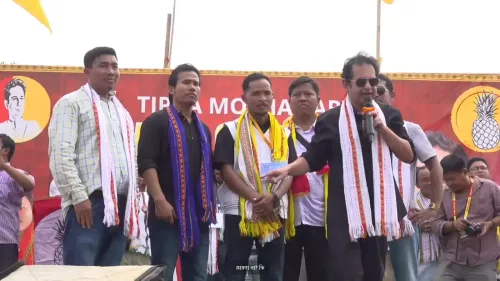
Tipra Motha Party (TMP), which swept the Tripura Tribal Areas Autonomous District Council (TTAADC) elections with a commanding majority, has decided to defer the formation of its new council until the outcome of the West Bengal Assembly elections is known. A senior party leader confirmed this on Friday, April 24, signalling that TMP's political calculus extends well beyond Tripura's borders.
TMP's Strategic Pause on Council Formation
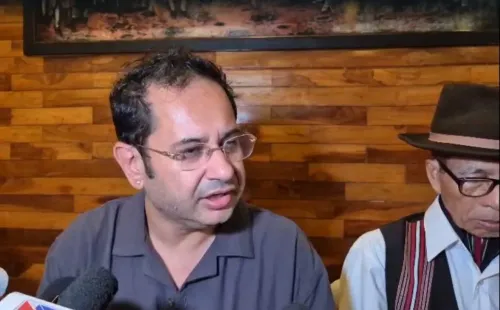
A newly-elected senior TMP leader, speaking on condition of anonymity, told reporters that the election of the new Chairman and Chief Executive Member (CEM) of the TTAADC would be held only after assessing the Bengal poll results. The decision underscores how tribal politics in Tripura is increasingly intertwined with the broader electoral dynamics of the northeastern and eastern Indian political landscape.
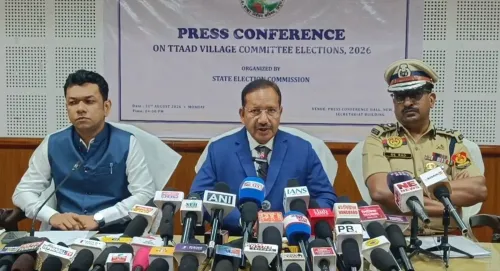
The Tripura government's Tribal Welfare Department has issued a notification confirming that the state's Law Secretary, Sankari Das, will administer the oath or affirmation to newly-elected TTAADC members on April 27. Typically, the election of the Chairman and CEM follows immediately after oath-taking — but not this time.
TMP's Landslide Victory in TTAADC Elections
The TMP secured a decisive 24 out of 28 elected seats in the April 12 TTAADC polls, results of which were declared on April 17. This represents a gain of six seats compared to its 2021 tally of 18. The party's outgoing stalwarts — Chairman Jagadish Debbarma and Chief Executive Member Purna Chandra Jamatia — both secured re-election, reinforcing their leadership grip over the council.
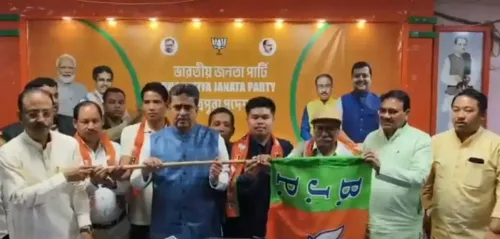
The BJP, despite being a coalition partner with TMP in Tripura's state government, won only four seats — a steep fall from the 10 seats it had captured in the 2021 TTAADC elections. The BJP, TMP, and the Indigenous People's Front of Tripura (IPFT) had contested separately after failing to arrive at an electoral alliance, a decision that clearly hurt the BJP most.
The CPI(M)-led Left Front and the Congress failed to win a single seat — repeating their 2021 shutout and highlighting the near-total collapse of Left influence in Tripura's tribal belt.
Why West Bengal Elections Matter to TMP
The West Bengal Assembly elections are being conducted in two phases: 152 constituencies voted on April 24, while the remaining 142 constituencies go to polls on April 29. TMP's decision to wait for Bengal results before constituting its council suggests the party is monitoring political alignments that could affect its own strategic positioning — particularly regarding the Greater Tipraland demand, which involves territorial aspirations crossing into parts of neighboring states.
Political analysts note that TMP's leadership, under Pradyot Kishore Manikya Debbarma, has consistently used electoral timing as a lever for political negotiation. By deferring council formation, TMP may be signalling to the BJP-led central government that it retains independent agency and is watching the national political winds carefully.
TTAADC: The Second Most Powerful Institution in Tripura
The TTAADC is widely regarded as Tripura's second most significant constitutional and political institution after the state Assembly. The 30-member council — comprising 28 elected members and 2 state government nominees — administers nearly 70 per cent of Tripura's total geographical area of 10,491 sq km.
Tribal communities constitute nearly one-third of Tripura's 4.2 million population and are a decisive electoral force. Control of the TTAADC translates directly into administrative authority over land rights, forest resources, education, and local governance for lakhs of tribal citizens — making it a high-stakes political prize.
Broader Political Implications
With two consecutive TTAADC victories, the TMP has firmly consolidated its dominance in Tripura's tribal political landscape. In 2021, TMP had wrested the council from the CPI(M)-led Left Front after years of Left rule — a historic shift. The 2025 result deepens that transformation and raises questions about the BJP's dwindling influence in tribal constituencies despite being in power at the state level.
The contradiction is stark: the BJP governs Tripura but cannot win tribal votes in its own backyard, even with a sitting coalition partner. This internal tension within the ruling alliance is likely to intensify as Tripura approaches its next state Assembly elections. As Bengal results pour in later this month, all eyes will be on how TMP translates its strengthened mandate into political leverage — both within Tripura and on the national stage.
Point of View
Despite governing Tripura, reveals a deepening credibility gap with tribal voters that no alliance arithmetic can paper over. The real story here is not administrative delay — it's a tribal political force asserting that it answers to its constituency first, and to Delhi second. As the Greater Tipraland demand simmers in the background, TMP's timing sends a clear message: their support is conditional, not guaranteed.
NationPress
30 Sept 2026
Frequently Asked Questions
Why is Tipra Motha Party delaying the formation of the new TTAADC council?
TMP has decided to wait for the West Bengal Assembly election results before electing the new TTAADC Chairman and Chief Executive Member. The party wants to assess the broader political landscape before constituting the new council leadership.
How many seats did TMP win in the 2025 TTAADC elections?
TMP won 24 out of 28 elected seats in the April 12, 2025 TTAADC elections — six more than its 2021 tally of 18 seats. The BJP won only four seats, a sharp decline from 10 in 2021.
When will the oath-taking ceremony for new TTAADC members be held?
Law Secretary Sankari Das will administer the oath to newly-elected TTAADC members on April 27, 2025, as per a notification by Tripura's Tribal Welfare Department. However, the election of the Chairman and CEM will be deferred until after Bengal results.
What is the TTAADC and why is it important?
The Tripura Tribal Areas Autonomous District Council (TTAADC) is the second most significant constitutional institution in Tripura after the state Assembly. It administers nearly 70 percent of Tripura's 10,491 sq km area and governs tribal communities who form one-third of the state's 4.2 million population.
What happened to the BJP and Left in the 2025 TTAADC elections?
The BJP won only four seats in 2025, down steeply from 10 in the 2021 TTAADC elections. The CPI(M)-led Left Front and Congress failed to win any seats, repeating their 2021 shutout in Tripura's tribal council elections.