What Happened to the Herd of Cows That a Train Struck in Bhind?
Synopsis
A heartbreaking incident in Bhind, Madhya Pradesh, sees a train run over a herd of cows, resulting in several deaths and injuries. Local activists rush to aid the surviving animals, highlighting the ongoing challenge of stray cattle on railway tracks.
Key Takeaways
10 to 12 cows died after being struck by a train in Bhind.
Several other cows sustained serious injuries.
Local volunteers provided emergency assistance to the surviving animals.
The incident raises concerns about the prevalence of stray cattle on railway tracks.
Authorities may investigate the incident for preventive measures.
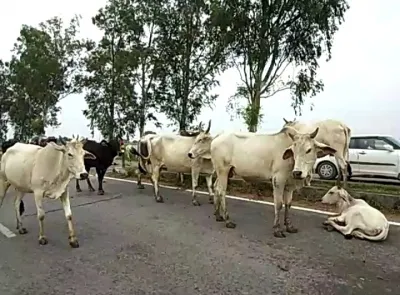
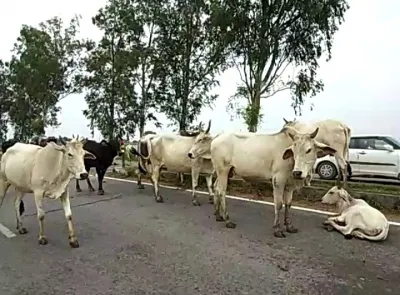
Bhind, Jan 22 (NationPress) A passenger train tragically struck a herd of cows that was resting on the railway tracks in the Bhind district of Madhya Pradesh, leading to the death of approximately 10 to 12 animals and inflicting serious injuries on several others.
The incident took place on Thursday morning when a train en route from Etawah (in Uttar Pradesh) to Gwalior sped through the Gohad area.
Witnesses and initial reports reveal that a herd of cows was either sitting or lying on the tracks, which is a frequent yet hazardous situation in rural areas where stray cattle often wander onto the railway lines.
The train driver had little time to respond or engage the emergency brakes due to the unexpected presence of the animals and the train's high speed.
The collision was catastrophic; 10 to 12 cows were killed instantly, while several others suffered from serious injuries, including deep lacerations and fractures.
Local animal welfare activists and gau-sevaks (cow protection volunteers) hurried to the scene after receiving notifications.
After several hours of work, they succeeded in transferring the surviving injured cows to nearby shelters and veterinary clinics for urgent care.
Reports suggest that among the injured were pregnant cows, which adds to the sorrow of the situation.
This incident underscores the ongoing issue of stray cattle on Indian railway tracks, especially in states like Madhya Pradesh and Uttar Pradesh, where a significant number of free-ranging cows often find their way onto railway lines in search of food or refuge.
Although railway authorities have not released an official statement regarding the incident, sources indicate that an investigation might be launched to explore preventative strategies, including enhanced fencing along vulnerable sections or increased surveillance in cattle-heavy zones.
Animal advocates and local community members have expressed profound grief over this loss, with many urging immediate actions to safeguard both the cattle and railway operations in the area.
Efforts by authorities and NGOs to assist the injured animals are ongoing.
Point of View
We recognize the gravity of this incident involving a train collision with a herd of cattle. The loss of animal life is distressing and reflects a broader issue of stray cattle on railway lines. We advocate for urgent measures to ensure the safety of both animals and train operations, emphasizing the need for improved infrastructure and community awareness.
NationPress
11 Oct 2026
Frequently Asked Questions
How did the train accident occur?
The train accident occurred when a passenger train traveling from Etawah to Gwalior struck a herd of cows resting on the tracks, leading to fatalities and injuries among the animals.
What measures are being taken to assist the injured cows?
Local animal welfare activists and gau-sevaks have been mobilized to provide emergency care to the injured cows and transport them to veterinary clinics.
What are the main challenges related to stray cattle on railway tracks?
Stray cattle pose significant dangers on railway tracks, especially in rural areas where they often wander onto the lines, leading to accidents and loss of animal life.
Will there be an investigation into the incident?
Yes, there are indications that railway authorities may initiate an inquiry to explore preventive measures against similar incidents in the future.
What can be done to prevent such incidents in the future?
Improved fencing along railway tracks, increased patrolling in cattle-prone areas, and community awareness programs can help mitigate the risks associated with stray cattle.