Gujarat revises 268 taluka classifications to direct investment under Viksit Policy-2026

Synopsis
Gujarat has reshuffled the industrial map — splitting 268 talukas across 34 districts into two incentive categories under its Viksit Gujarat Industrial Policy-2026. The move, backed by CM Bhupendra Patel, is designed to pull investment toward underserved regions by making the incentive framework transparent and location-specific, with a strong focus on MSMEs, startups, and green manufacturing.
Key Takeaways
Gujarat revised the classification of 268 talukas across all 34 districts on 11 October 2026 .
130 talukas placed in Category A ; 138 in Category B under the Viksit Gujarat Industrial Policy-2026 .
The policy, effective from 1 June , is a five-year framework covering MSMEs, large, mega, and ultra-mega projects.
Incentive structure allows eligible businesses to choose a mix of capital, interest, and power tariff subsidies .
Policy prioritises MSMEs, startups, women entrepreneurs , and first-generation entrepreneurs.
Sustainability provisions include green industrial parks , wastewater recycling, and circular economy measures.
Gujarat on Sunday, 11 October 2026 revised the classification of 268 talukas across all 34 districts into two categories under its 'Viksit Gujarat Industrial Policy-2026', giving entrepreneurs a clearer framework to identify applicable incentives for setting up or expanding industrial units in the state.
How the Classification Works
Under the revised framework announced by the state Industries and Mines Department, 130 talukas have been placed in Category A and 138 in Category B. The exercise accounts for the creation of new talukas in the state following administrative reorganisation, as well as the rollout of the new industrial policy itself.
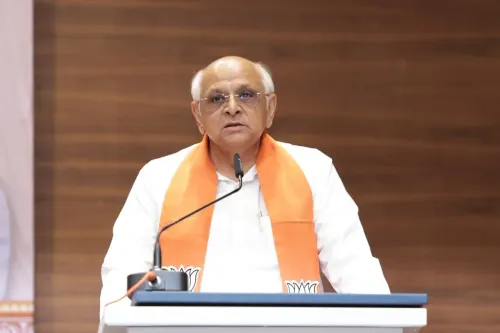
The classification was announced under the guidance of Chief Minister Bhupendra Patel, with the stated objective of increasing industrial investment and promoting more balanced development across different regions of Gujarat. However, access to incentives will remain subject to the eligibility criteria, rules, and conditions specified under each scheme.
What the Policy Covers
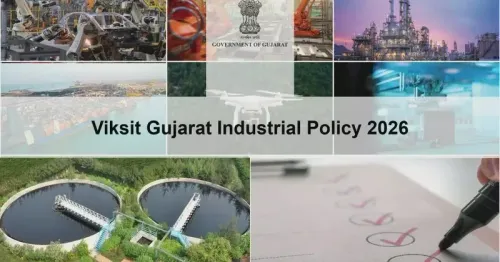
The Viksit Gujarat Industrial Policy-2026, effective from 1 June, is a five-year framework aimed at strengthening the state's industrial competitiveness and supporting sustainable growth. It introduces a flexible incentive structure under which eligible businesses can choose a combination of capital, interest, and power tariff subsidies, subject to applicable conditions.
The policy covers MSMEs as well as large, mega, and ultra-mega industrial projects, with incentives varying according to investment size, sector, and location. It also identifies priority industries and encourages research and development, cleaner production technologies, and employment generation.
Focus on MSMEs, Startups and Sustainability
Notably, the policy places particular emphasis on Micro, Small and Medium Enterprises (MSMEs), startups, women entrepreneurs, and first-generation entrepreneurs. It also provides for promoting green industrial parks, wastewater recycling, clean manufacturing technologies, and the circular economy — signalling a push for environmentally responsible industrial growth.
Regional Balance and Investment Direction
By updating the taluka classification, the state government aims to establish a structured approach to directing industrial investment across Gujarat, particularly toward relatively underserved regions. This is consistent with a broader national trend of using location-based incentive tiers to encourage industries to move beyond established industrial clusters.
The revised classification covers all 34 districts of Gujarat and forms part of the implementation architecture of the Viksit Gujarat Industrial Policy-2026. Entrepreneurs and industry bodies are expected to use the updated framework to plan and benchmark new project locations against the applicable incentive category going forward.
Point of View
Not a headline incentive — but the detail matters. By splitting 268 talukas into two tiers, the state is signalling which geographies it wants to develop and creating a transparent reference point for investors. The real test is whether Category B designations — presumably covering less-developed talukas — come with meaningfully differentiated incentives that actually shift investment decisions, or whether industry gravitates toward the same established corridors regardless. Gujarat's industrial story has long been a tale of concentrated clusters; this policy is, at least on paper, an attempt to write a more distributed chapter.
NationPress
11 Oct 2026
Frequently Asked Questions
What is the Viksit Gujarat Industrial Policy-2026?
The Viksit Gujarat Industrial Policy-2026 is a five-year state industrial framework effective from 1 June, aimed at strengthening Gujarat's industrial competitiveness and sustainable growth. It covers MSMEs, large, mega, and ultra-mega projects and offers a flexible mix of capital, interest, and power tariff subsidies based on investment size, sector, and location.
Why has Gujarat revised the taluka classification?
The revision accounts for newly created talukas following administrative reorganisation and aligns the classification framework with the new industrial policy. The goal is to give entrepreneurs a clear, location-specific guide to applicable incentives and promote more balanced industrial development across all 34 districts.
What is the difference between Category A and Category B talukas?
Under the revised framework, 130 talukas are classified as Category A and 138 as Category B. The category determines which incentive provisions apply to an industrial unit based on its location, though specific eligibility remains subject to each scheme's rules and conditions.
Who benefits from the Viksit Gujarat Industrial Policy-2026?
The policy specifically prioritises MSMEs, startups, women entrepreneurs, and first-generation entrepreneurs, alongside large and mega industrial projects. It also promotes green industrial parks, clean manufacturing technologies, and wastewater recycling initiatives.
When does the revised taluka classification take effect?
The revised classification was announced on 11 October 2026 by the Gujarat Industries and Mines Department. The underlying Viksit Gujarat Industrial Policy-2026 has been in effect since 1 June and the updated classification forms part of its implementation framework.