Trinamool's Digital Strategy: Ensuring Political Outreach Ahead of Assembly Elections
Synopsis
As the Assembly elections approach, Trinamool Congress leverages a robust digital ecosystem to enhance its outreach and engagement. From a network of volunteers to a dedicated mobile app, the party is poised to strengthen its presence in West Bengal's political landscape.
Key Takeaways
Trinamool Congress has developed a comprehensive digital outreach strategy.
Ami Banglar Digital Joddha network comprises over 1.6 lakh active members.
The 'Didir Doot' app enhances direct engagement with supporters.
Over 1.5 lakh WhatsApp groups facilitate extensive communication.
Daily content generation exceeds 10,000 videos, boosting visibility.
New Delhi, March 23 (NationPress) In the lead-up to Mamata Banerjee's rise to power in West Bengal in 2011, a modest room at the Trinamool Congress Bhavan in Kolkata was the workspace for a group of recent college graduates focused on media monitoring. They were surrounded by a bank of screens displaying news and stacks of daily newspapers on their desks.
The party leader managing this team would frequently engage with them, discussing their findings before finalizing reports for the party Chairperson's review.
Fast forward to one evening ahead of the 2016 Assembly elections when this same leader guided political strategist Prashant Kishor to a meeting with Mamata Banerjee at the party headquarters in Kolkata.
The outcome of that meeting was amicable, yet it did not progress further; PK was already busy, while Didi was reportedly unable to meet his financial demands.
Approximately two years prior to this meeting, the Trinamool celebrated a significant triumph, clinching 34 out of 42 Parliamentary seats in the state.
The BJP only managed to secure two seats, despite the so-called “Modi magic”.
The atmosphere was electric for the Trinamool, with everyone on the streets aware of the anticipated winner in the forthcoming Assembly elections. However, during the subsequent Lok Sabha elections, the BJP's resurgence swept through Bengal.
As a result, the Trinamool lost several seats, with the BJP capturing 18. In a matter of weeks, the ruling party recognized that the BJP was effectively “polarizing” the state and growing stronger.
Enter PK; after a two-hour discussion at the new secretariat building, Nabanna, the Trinamool leader realized that her guest was more knowledgeable than she had expected—PK was thorough in his research.
Thus, I-PAC made its entrance into West Bengal. Within days following their early June 2019 meeting, several changes became evident—ranging from the launch of a website, virtual access to the Chief Minister, and the establishment of a grievance cell, to Mamata publicly admonishing her own party leaders over “cut-money”.
Other transformations ensued, with Mamata’s successor staunchly supporting the party’s transition towards a more “professional” and “modern” approach; while some older members labeled it as “corporatisation”. Nevertheless, this distinction was of little consequence.
Much has transpired since then, and PK has transitioned from political consultant to a full-time politician. Over the past few years, as social media evolved into a potent communication tool, the Trinamool's digital ecosystem has developed into one of the largest in the country, led by I-PAC.
At the heart of this structure lies the Ami Banglar Digital Joddha (ABDJ) network—a “volunteer-driven digital mobilization force”—which reportedly consists of over 1.6 lakh active members engaged across all districts.
These volunteers play a crucial role in amplifying campaign messages, reacting to political developments in real-time, countering Opposition narratives, and disseminating political content across social media platforms, according to internal communications.
Furthermore, over 1.5 lakh WhatsApp groups, which are said to encompass more than 1 crore individuals statewide, ensure “deep penetration”. The party has also introduced a direct engagement tool for its members and supporters through the “Didir Doot” mobile application.
Since its launch in October 2020, the app has reportedly achieved over 18 lakh downloads, with around 1.3 lakh daily active users.
The party's digital ecosystem is further bolstered by a network of over 5,000 social media influencers who consistently create and share political content, extending the reach of campaign narratives beyond traditional party channels.
According to Trinamool sources, this is supported by a well-coordinated “Comments Army”. Additionally, there exists a network of more than 50 “digital spokespersons”, producing political commentary and issue-based videos using specialized digital studios and green-screen technology, enabling the party to respond rapidly to political changes.
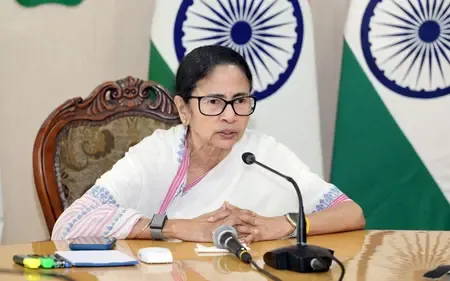
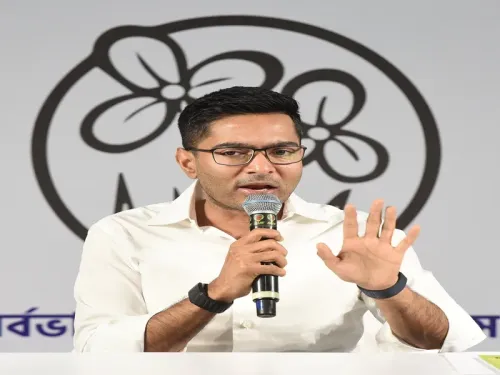
Collectively, the party asserts that these verticals generate over 10,000 reels and short videos daily, highlighting speeches by Mamata Banerjee and Abhishek Banerjee, testimonials from individuals affected by government welfare initiatives, and counter-narratives to the BJP.
According to party insiders, its digital ecosystem collectively garners over 50 crore views and impressions daily across platforms, establishing it as one of the most active political communication networks in India, particularly among regional parties.
Point of View
The evolution of Trinamool Congress's digital ecosystem illustrates the party's commitment to modern political engagement. By leveraging technology and volunteer networks, the party seeks to deepen its outreach and influence in the upcoming Assembly elections.
NationPress
23 Sept 2026
Frequently Asked Questions
What is the significance of Trinamool's digital ecosystem?
Trinamool's digital ecosystem is crucial for enhancing outreach, engaging with voters, and countering opposition narratives, particularly as the Assembly elections approach.
How many active members are involved in the Ami Banglar Digital Joddha network?
The Ami Banglar Digital Joddha network reportedly consists of over 1.6 lakh active members engaged across various districts.
What role does the 'Didir Doot' app play?
The 'Didir Doot' app serves as a direct engagement tool for the party's cadre and supporters, facilitating communication and outreach efforts.
How many WhatsApp groups does the party utilize for outreach?
The party has established over 1.5 lakh WhatsApp groups, reportedly including more than 1 crore individuals for deep penetration of their messages.
What types of content does Trinamool produce for digital platforms?
Trinamool produces a variety of content, including reels, short videos, speeches, testimonials, and counter-narratives against the BJP, generating significant daily engagement.