What Insights Did the Tripura MLAs’ Delegation Gain from Their Visit to the Gujarat Legislative Assembly?
Synopsis
A delegation of Tripura MLAs recently explored the Gujarat Legislative Assembly, gaining insights into its advanced infrastructure and governance practices. Their visit highlighted key learnings that could enhance Tripura's legislative framework and urban development initiatives.
Key Takeaways
Delegation from Tripura visits Gujarat Assembly.
Insights on modern legislative practices and infrastructure.
Focus on enhancing Tripura's Assembly library and facilities.
Exploration of Ahmedabad's urban planning successes.
Future visits to learn about developmental policies in Gujarat.
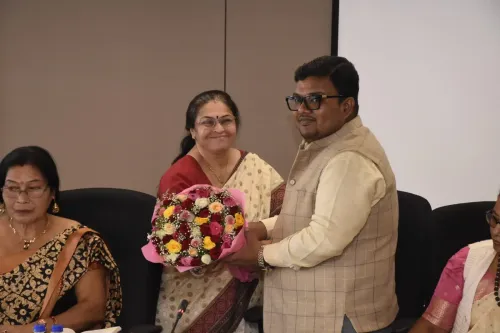
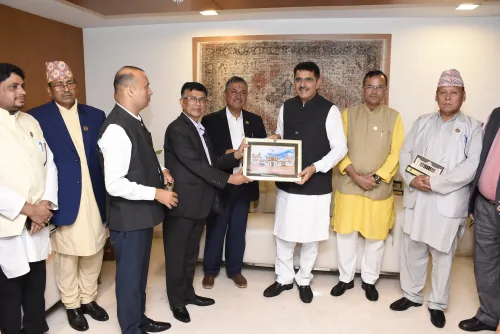
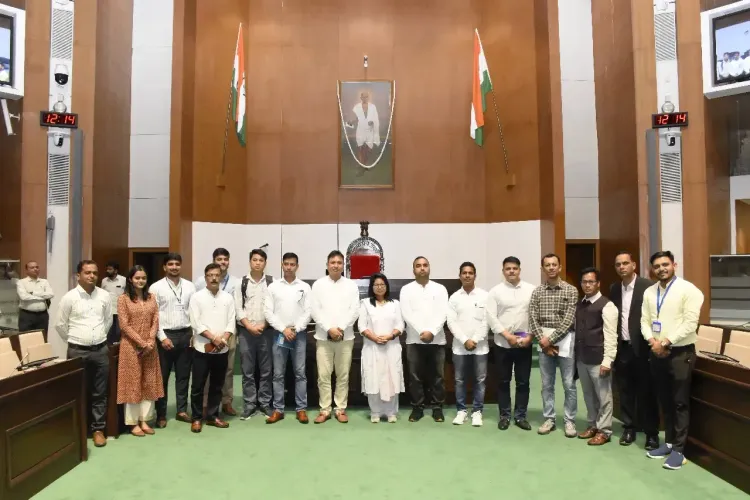
Gandhinagar, Oct 28 (NationPress) A team of 11 individuals, featuring four MLAs from Tripura, toured the Gujarat Legislative Assembly on Monday as part of their five-day exploratory visit to the state, which will last until October 31.
Throughout their stay, the delegation—comprising MLAs Swapna Debbarma, Manab Debbarma, Ramu Das, and Nayan Sarkar—received an extensive briefing from Assembly officials regarding the operations of the legislature. This included insights into the library services, the NeVA (National e-Vidhan Application) service centre, seating arrangements, and amenities available for lawmakers.
Tripura MLA Swapna Debbarma expressed her admiration for the Gujarat Assembly’s cutting-edge infrastructure, especially highlighting its modern library and digital paperless systems.
She mentioned that the knowledge acquired from this visit would assist in enhancing the Tripura Assembly’s library and facilities in the near future.
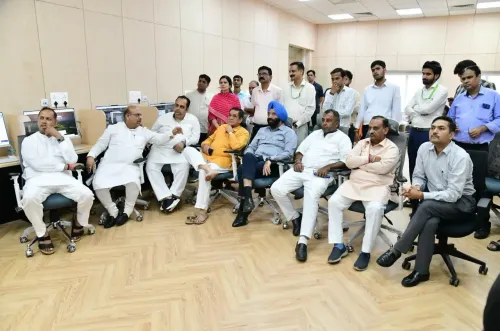
Officials also guided the delegation through various sections of the Assembly, including the press and VVIP galleries, explaining how the paperless operations under NeVA have significantly improved transparency and efficiency in legislative activities. Joint Secretary Rita Mehta and Deputy Secretary Dinesh Chaudhary, along with other Assembly officials and staff, were present during this insightful visit.
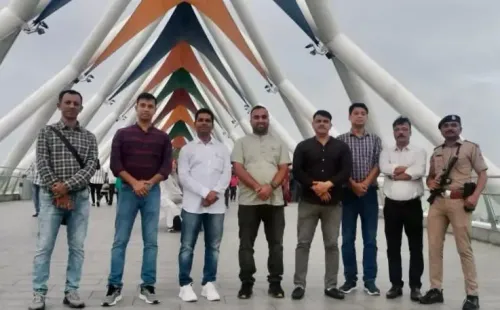
On the first day of their journey, the delegation explored iconic locations in Ahmedabad, including the Sabarmati Riverfront, Atal Bridge, and the Iskcon Temple, as well as notable areas along Ashram Road.
Members gained insights into the city’s urban planning, beautification projects, and infrastructure that have led to Ahmedabad being recognized as the world’s first UNESCO World Heritage City.
Headed by MLA Swapna Debbarma, the delegation includes Manab Debbarma, Ramu Das, and Nayan Sarkar.
The team commended Gujarat’s balanced strategy for urban development and citizen-centric governance, noting that the visit offered crucial insights for future implementations in Tripura.
In the coming days, the delegation is set to visit Somnath, Dwarka, and Porbandar, the birthplace of Mahatma Gandhi, to examine Gujarat’s developmental policies, heritage conservation initiatives, and welfare programs aimed at enhancing the quality of life throughout the state.
Gujarat has emerged as one of India’s most progressive states, propelled by a model that harmonizes rapid industrial development with inclusive social welfare.
The state government has rolled out extensive infrastructure projects like GIFT City, the Sabarmati Riverfront, and Dholera Smart City, alongside initiatives focusing on renewable energy, skill development, and e-governance.
Through programs like Mukhyamantri Amrutam Yojana, Mission Mangalam, and Kanya Kelavani, it prioritizes health, women’s empowerment, and education.
Point of View
I recognize the significance of learning from progressive models. The Tripura MLAs’ visit to Gujarat offers vital insights into effective governance and infrastructure development. Such exchanges are crucial for fostering growth and innovation across Indian states, exemplifying our commitment to improvement and collaboration.
NationPress
6 Oct 2026
Frequently Asked Questions
What was the purpose of the Tripura MLAs' visit to Gujarat?
The visit aimed to study Gujarat's legislative practices and infrastructure to gain insights for improving the Tripura Assembly.
Which MLAs were part of the delegation?
The delegation included MLAs Swapna Debbarma, Manab Debbarma, Ramu Das, and Nayan Sarkar.
What key features of Gujarat's Assembly impressed the delegation?
The delegation was particularly impressed by the Assembly's modern library and paperless digital systems.
Where else will the delegation visit during their tour?
They will also visit Somnath, Dwarka, and Porbandar to study Gujarat’s developmental policies.
How has Gujarat's approach to development been characterized?
Gujarat is recognized for its blend of rapid industrial growth and inclusive social welfare initiatives.