Tripura's 500-year-old royal Durga Puja survives regimes with state funds
Synopsis
In Tripura, a 500-year-old royal Durga Puja at Agartala's Durgabari temple continues to receive state government funding — a practice that has outlasted every political regime since the 1949 merger. From a coin bearing Goddess Durga's image under King Ratna Manikya to today's ₹7.50 lakh state sanction, this is one of India's most unusual fusions of monarchy, religion, and democratic governance.
Key Takeaways
The Durgabari temple in Agartala hosts a Durga Puja tradition initiated by the Manikya dynasty over 500 years ago .
The Tripura state government sanctioned ₹7.50 lakh for this year's celebrations, continuing a practice upheld across successive governments since the 1949 merger .
The West Tripura District Magistrate , designated 'Sebayet', oversees arrangements; Bibhu Kumari Devi of the former royal family provides symbolic approval.
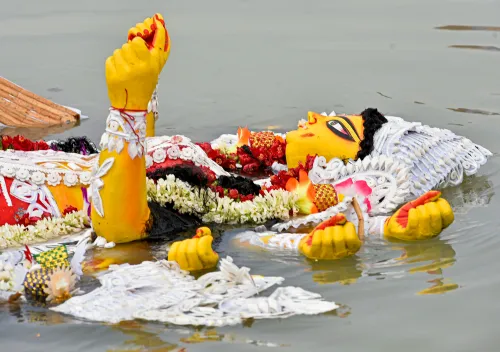
The puja features distinctive offerings including fish, meat, eggs, and liquor, and its Dashami idol immersion leads all processions at Dashamighat with full state honours.
More than 3,020 community Durga Pujas and over 100 family Pujas are being held across Tripura this year, including 775 in West Tripura district .
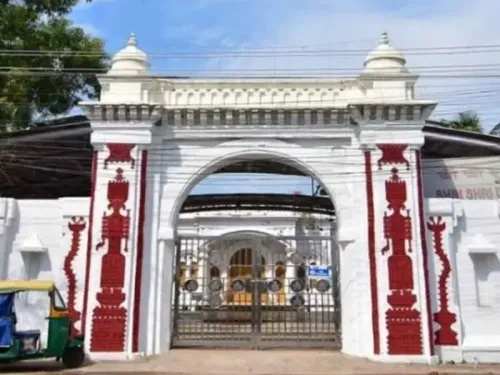
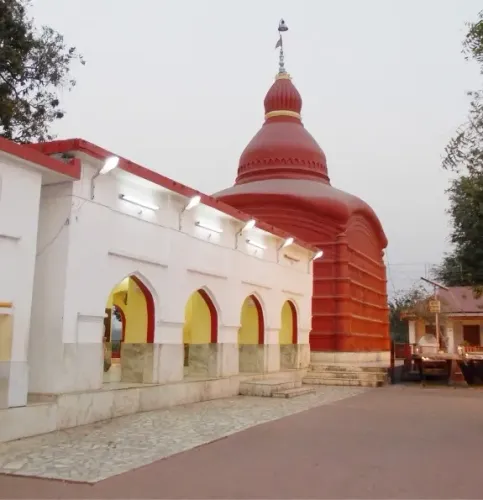
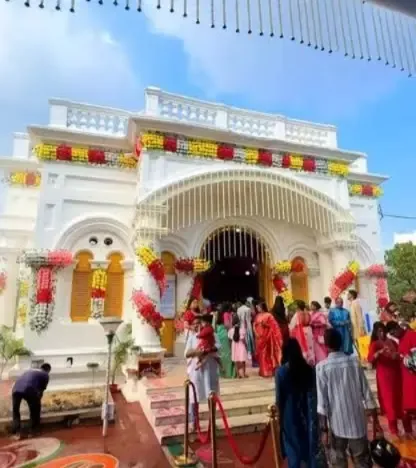
The Durgabari temple in Agartala, Tripura, continues to host one of India's most historically significant Durga Pujas — a 500-year-old royal tradition that has endured successive political regimes and is still funded by the state government, more than seven decades after the erstwhile princely state merged with the Indian Union on 15 October 1949.
A Living Royal Legacy
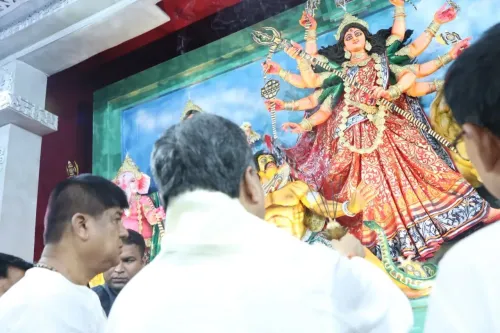
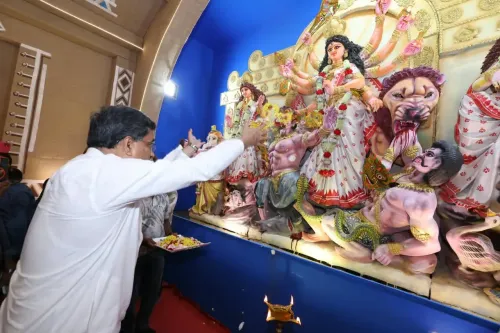
Situated near the magnificent Ujjayanta Palace — the former seat of Tripura's royal administration — the 150-year-old Durgabari temple draws thousands of devotees each year, including pilgrims from across India and neighbouring Bangladesh. The five-day festival opened this year with the traditional Bodhan ceremony, marking the invocation of Goddess Durga, on Friday.
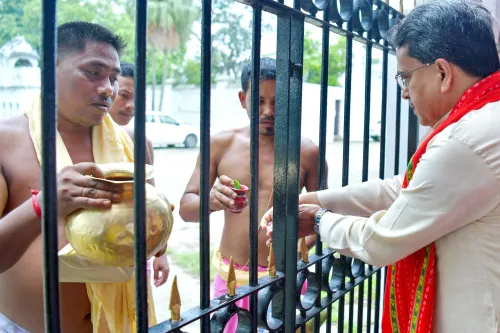
According to Jayanta Bhattacharjee, the temple's head priest whose family has served in that role for more than six generations, the puja traces its origins to the era of the Manikya kings. 'The royal family's tradition of worshipping Goddess Durga has been preserved over the years, with several customary rituals continuing to this day,' Bhattacharjee said.
Historical Roots and the Manikya Dynasty
The puja is believed to have been initiated by the Manikya dynasty over 500 years ago, with the tradition predating the current temple structure. Historian and writer Panna Lal Roy noted that during the reign of King Ratna Manikya (1464–1488), the dynasty issued a 'Mudra' — a currency coin — bearing the image of Goddess Durga, underscoring the deep religious centrality of the deity to Tripura's royal identity.
The royal dynasty's seat shifted across several locations before Maharaja Krishna Kishore Manikya established Agartala as the capital in 1838. The Ujjayanta Palace nearby was subsequently constructed by Maharaja Radha Kishore Manikya between 1899 and 1901, and now houses a large museum dedicated to the history and culture of the eight Northeastern states.
State Funding Across Political Divides
The state government has sanctioned ₹7.50 lakh for this year's celebrations — a practice that has continued under both Left and non-Left administrations. Roy noted that this continuity is partly grounded in the 1949 merger agreement signed between Maharani Kanchan Prabha Devi, the then regent, and Indian authorities, which reportedly provided for the continuation of certain royal religious traditions.
A government division called Debarchan Vibhag currently oversees arrangements at more than 16 temples across four districts of Tripura. The West Tripura District Magistrate and Collector, traditionally designated 'Sebayet', manages the arrangements, while surviving members of the former royal family remain symbolically involved. Bibhu Kumari Devi, an elderly member of the erstwhile royal family, reportedly provides symbolic approval of the arrangements each year.
Distinct Rituals and the Dashami Procession
The Durgabari Puja is distinguished by its unique ritual offerings, which, according to Roy, include not only fruits but also fish, meat, eggs, and liquor — a reflection of the syncretic traditions of the Manikya court. The Dashami procession, marking the immersion of the idols, is another highlight: the Durgabari idols lead the immersion at Dashamighat and are the first to be immersed, accorded full state honours and accompanied by the state police band.
Tripura's Broader Puja Landscape
This year, more than 3,020 community Durga Pujas and over 100 family Pujas are being organised across Tripura, including around 775 in West Tripura district alone. Several pandals this year also incorporate themes around climate change, blending contemporary social messaging with the festive spirit. The scale of celebrations has necessitated extensive security and traffic management arrangements across the state.
As the puja season unfolds, the Durgabari celebrations stand as a rare instance of a pre-Independence royal tradition that has been institutionalised into the post-merger state apparatus — a living bridge between Tripura's monarchical past and its democratic present.
Point of View
Embedding a royal religious tradition directly into the state's administrative machinery. That this practice has survived both decades of Left rule and subsequent governments speaks less to sentiment and more to the legal scaffolding of the 1949 merger agreement. What mainstream coverage of Durga Puja rarely surfaces is how such state-patronised temple traditions raise latent questions about the constitutional boundary between state and religion — questions no government in Tripura has had reason to test, and none has.
NationPress
16 Oct 2026
Frequently Asked Questions
What is the Durgabari temple Durga Puja in Agartala?
The Durgabari temple Durga Puja is a 500-year-old royal religious tradition in Agartala, Tripura, originally initiated by the Manikya dynasty. It is held near the historic Ujjayanta Palace and is state-funded, drawing thousands of devotees including visitors from Bangladesh.
Why does the Tripura government fund the Durgabari Puja?
The state funding is rooted in the 1949 merger agreement between Maharani Kanchan Prabha Devi and Indian authorities, which reportedly provided for the continuation of certain royal religious traditions. This practice has been upheld by successive Left and non-Left governments alike.
How much has the Tripura government sanctioned for the Durgabari Puja this year?
The state government sanctioned ₹7.50 lakh for the 2026 Durgabari Puja celebrations, consistent with the established annual practice.
Who manages the Durgabari Puja arrangements today?
The West Tripura District Magistrate and Collector, traditionally known as 'Sebayet', oversees the arrangements. Bibhu Kumari Devi, an elderly member of the former royal family, symbolically approves the arrangements, while a government body called Debarchan Vibhag manages more than 16 temples across four districts.
What makes the Durgabari Puja rituals unique?
The puja features distinctive offerings including fruits, fish, meat, eggs, and liquor — a reflection of the syncretic Manikya court traditions. The Dashami idol immersion procession is led by the Durgabari idols, which are the first to be immersed at Dashamighat with full state honours and accompanied by the state police band.