Trump Questions US Role in Securing Global Energy Routes
Synopsis
In a recent speech, President Trump challenged the US's ongoing responsibility in securing vital energy corridors, suggesting that nations benefiting from these routes should also take on protective roles. This statement hints at a potential shift in US foreign policy strategy.
Key Takeaways
Trump questions the US role in protecting global energy corridors.
The Strait of Hormuz is vital for global oil transport.
Trump suggests a shift towards burden-sharing among nations.
India's energy security is closely tied to stability in the Strait of Hormuz .
This reflects a more transactional US foreign policy approach.
Washington, April 2 (NationPress) President Donald Trump has emphasized that nations reliant on essential global passages ought to take on the responsibility of safeguarding them.
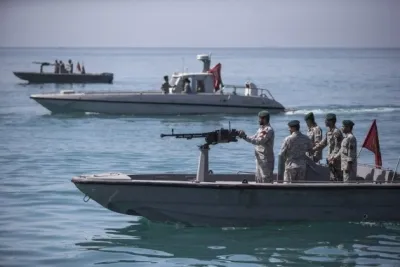
He raised concerns over why the United States should persist in overseeing crucial energy routes like the Strait of Hormuz.
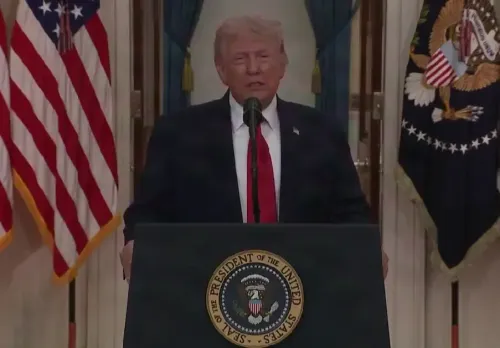
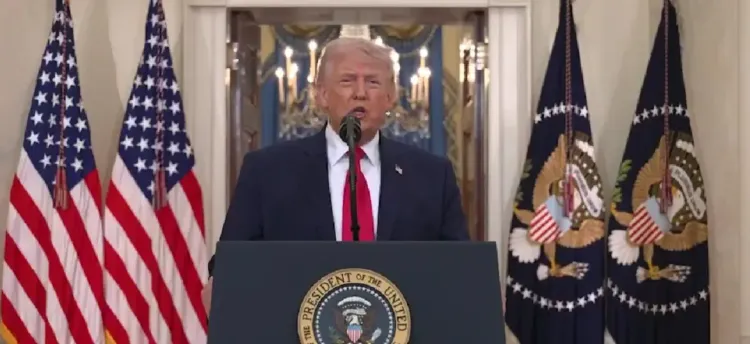
“Let China handle it. Let Japan take charge. Let South Korea step in… what exactly are we doing this for?” Trump expressed during his comments at a White House Easter luncheon, the video of which was subsequently removed from the White House’s YouTube channel. The event was not open to the press.
He remarked that the US has shouldered this burden for many years, specifically citing efforts to secure the strait.
Trump hinted at a potential policy shift, stating that the US is “preparing to withdraw from there.”
He portrayed this transition as part of a larger transformation in US strategy. Military actions by the US, he argued, should concentrate on direct national interests.
“My main goal is to ensure they never acquire a nuclear weapon,” Trump stated.
He also asserted that US forces can operate independently of allies. “We didn’t require them,” he noted.
Trump argued that nations benefiting from global trade routes should contribute to their protection, suggesting that the existing model places excessive pressure on the United States.
These comments indicate a push for sharing the burden among partners and allies.
They also reflect a more transactional perspective on US foreign policy.
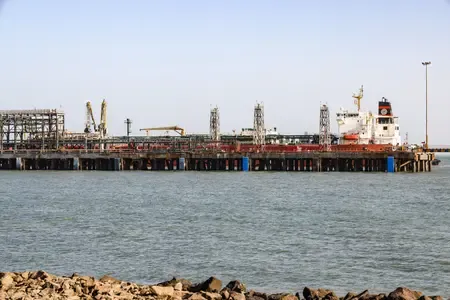
The Strait of Hormuz is a vital oil passage, with a significant portion of global crude oil transiting through it.
Any alteration in US involvement could impact energy markets and supply chains.
India stands as one of the largest energy importers globally, with a notable amount of its crude sourced from the Gulf.
Thus, stability in the Strait of Hormuz is essential for India's energy security.
India has historically adhered to a policy of strategic autonomy, avoiding formal alliances while collaborating with partners to safeguard its interests.
Point of View
Trump's comments reflect a growing sentiment that the US should reconsider its role in global security. The call for burden-sharing among allies could reshape diplomatic relations and influence energy security strategies worldwide.
NationPress
7 Oct 2026
Frequently Asked Questions
What did Trump say about US involvement in energy corridors?
Trump questioned the necessity of the US policing key energy routes, suggesting that other nations should take on this responsibility.
Why is the Strait of Hormuz important?
The Strait of Hormuz is a critical passage for global oil transport, with a significant share of the world's crude passing through it.
How might Trump's comments affect US foreign policy?
His remarks indicate a potential shift towards a more transactional approach in US foreign policy, focusing on direct national interests.
What is India's stance on energy security?
India emphasizes strategic autonomy, collaborating with partners to protect its energy interests without forming formal alliances.
What does burden-sharing mean in this context?
Burden-sharing refers to the idea that countries benefiting from certain global routes should also contribute to their security.