Trump claims US will soon control Iran-linked straits, vows no nuclear weapon
Synopsis
Trump’s claim that the US is ‘essentially controlling’ strategic waterways near Iran — and will soon hold full control — marks a significant escalation in rhetoric, paired with an admission that Americans will pay more for energy. The interview, conducted with his former adversary Michael Cohen, also revealed Trump’s assertion that Iran was just two weeks from a nuclear weapon when B-2 bombers struck.
Key Takeaways
Donald Trump declared the US is ‘essentially controlling’ strategic waterways linked to Iran and will soon assume full control.
Trump said Iran was two weeks away from a nuclear weapon when B-2 bombers struck its nuclear facilities.
He acknowledged American consumers will face higher energy and petrol costs due to the conflict.
Trump claimed Iran’s navy, air force and leadership have been severely weakened, making a negotiated settlement difficult.
He named Israel, Saudi Arabia, Qatar, UAE, Kuwait and Bahrain as countries he said Iran had targeted with missiles.
The interview was conducted with Michael Cohen , Trump’s former lawyer turned prominent critic, and broadcast on 77 WABC Radio .
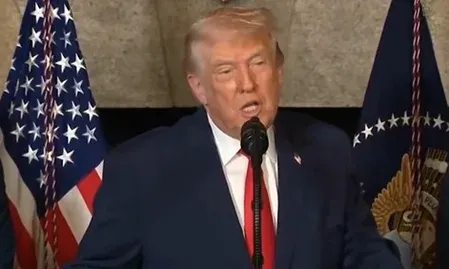
US President Donald Trump has declared that the United States is ‘essentially controlling’ strategic waterways connected to Iran and will soon assume full control, while reaffirming that Tehran will never be permitted to develop a nuclear weapon. Trump made the remarks in a radio interview broadcast on Wednesday, 21 August, defending his administration’s military actions against Iran and acknowledging that American consumers may face higher energy and petrol costs as a consequence.
Key Statements from the Interview
Speaking on 77 WABC Radio in an interview with his former personal lawyer Michael Cohen, Trump said: ‘Now with Iran, they will never have a nuclear weapon. We’ve, we’re controlling, essentially controlling and soon controlling the Straits. We’re doing very well with Iran.’ He did not identify the waterways by name in the portion of the interview released on Wednesday.
Trump claimed Iran’s navy, air force and leadership had been severely weakened, complicating any path to a negotiated settlement. ‘Part of the problem is so many of the leaders are gone. It’s not easy to make a deal. Nobody knows who’s leading,’ he said.
B-2 Bomber Strikes and Nuclear Timeline
The president defended the deployment of B-2 bombers against Iranian nuclear facilities, asserting the strikes were conducted ‘deep at night’ and that every bomb hit its intended target. ‘When we hit them with the B-2 bombers, they were exactly two weeks away from having a nuclear weapon,’ Trump said, describing the operation as one he ‘would’ve done again a hundred times.’
He also claimed Iran had been ‘militarily wiped out,’ citing a degraded capacity to produce missiles and drones, soaring inflation, a weakened currency, and reportedly unpaid military personnel as indicators of mounting pressure on Tehran.
Costs to American Consumers
Trump acknowledged the conflict’s economic toll on ordinary Americans, saying energy and petrol costs would be ‘a little higher.’ He framed the trade-off as unavoidable: ‘We have to make a journey to the Middle East because we can’t let Iran have a nuclear weapon.’ He argued that preventing nuclear proliferation in the region justified the increased burden on consumers.
Broader Regional Claims
Trump contended that a nuclear-armed Iran would have attacked Israel, Saudi Arabia, Qatar, the United Arab Emirates, Kuwait, and Bahrain. ‘There would be no Israel if there was no Donald Trump,’ he said, adding that he believed the broader Middle East ‘would have been entirely wiped out.’
Separately, Trump addressed Venezuela, immigration, tariffs and the US economy, describing manufacturing investment returning to the United States as ‘a renaissance.’ He said tariffs were drawing automobile, semiconductor, pharmaceutical and medical equipment production back to American soil.
Context: Cohen and Trump
Michael Cohen served for years as Trump’s personal lawyer and fixer before a bitter public rupture. Cohen subsequently testified against Trump and became one of his most prominent critics — making the interview an unusual platform for the president’s defence of his Iran policy.
The remarks come amid ongoing uncertainty over Iran’s chain of command following reported strikes on its military and nuclear infrastructure, with no formal peace framework yet announced by either side.
Point of View
But framing it as an unavoidable ‘journey’ sidesteps Congressional oversight and the legal basis for strikes on a sovereign nation’s nuclear infrastructure. What remains unanswered is who, precisely, the US is now negotiating with — or whether negotiation is the goal at all.
NationPress
5 Oct 2026
Frequently Asked Questions
What did Trump say about controlling the straits near Iran?
Trump said the United States is ‘essentially controlling’ strategic waterways linked to Iran and will soon take full control. He made the remarks in a radio interview broadcast on 21 August but did not name the specific waterways.
Why did Trump order B-2 bomber strikes on Iran?
Trump said Iran was ‘exactly two weeks away’ from possessing a nuclear weapon when B-2 bombers struck its nuclear facilities. He described the decision as one he would make again, saying the US ‘had no choice.’
Will Americans pay more for energy because of the Iran conflict?
Trump acknowledged that energy and petrol costs will be ‘a little higher’ for American consumers as a result of the conflict. He argued the cost was justified by the need to prevent Iran from acquiring a nuclear weapon.
What is the current state of Iran’s military, according to Trump?
Trump claimed Iran had been ‘militarily wiped out,’ with its navy, air force and leadership severely weakened. He also cited soaring inflation, a weakened currency and reportedly unpaid military personnel as signs of pressure on Tehran.
Who is Michael Cohen and why does this interview matter?
Michael Cohen was Donald Trump’s personal lawyer and fixer for years before a public rupture; he later testified against Trump and became one of his most prominent critics. The fact that Trump chose Cohen’s platform to defend his Iran policy makes the interview politically significant.