Trump says Iran war 'will not be long', claims Hormuz control
Synopsis
Trump told GB News the Iran war 'will not be long' — claiming US strikes have obliterated three nuclear sites, buried Iran's nuclear material under mountains, and handed Washington full control of the Strait of Hormuz. The interview is the most expansive public account yet of Washington's stated war aims, but several key figures — including a 300% inflation claim and 75,000 protester deaths — were offered without supporting evidence.
Key Takeaways
President Donald Trump said the war with Iran 'will not be long' in a GB News interview on 4 September .
Trump claimed the US struck three Iranian nuclear sites , which he described as 'obliterated,' and said Iran had been two to four weeks from a nuclear weapon.
He asserted the US controls the Strait of Hormuz , with forces reportedly neutralising 30 to 40 boats a night .
Trump alleged Iran's inflation could be as high as 300 per cent and that 75,000 protesters have been killed — figures he offered without supporting evidence.
He warned Europe that Iran posed a greater nuclear threat to the continent than to the US, and criticised NATO allies for not assisting in Hormuz operations.
Trump argued that even if the US withdrew, it would take Iran 25 years to rebuild its nuclear programme.
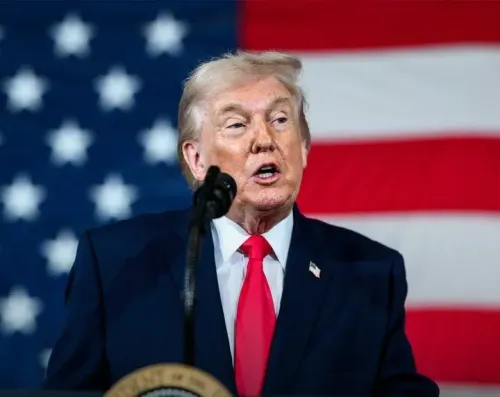
US President Donald Trump has declared that the war with Iran will end soon, asserting in an interview aired on 4 September that American forces have crippled Tehran's military capabilities, are actively monitoring its nuclear sites, and now control the strategically vital Strait of Hormuz. Trump made the remarks to British broadcaster GB News, in conversation with interviewer Bev Turner.
Trump's Claims on the Nuclear Programme
Trump stated that the United States entered the conflict specifically to prevent Iran from acquiring a nuclear weapon. He claimed Iran had been between two and four weeks away from obtaining one before American forces struck three Iranian nuclear sites, which he described as 'obliterated.' He added that nuclear material at those locations is now buried beneath 'millions of tons of mountain' and would be extremely difficult to recover.
'As soon as we win, which will not be long,' Trump said when asked about public support for the conflict. 'We've already won because they can't have a nuclear weapon.' He argued that even if the US were to withdraw today, it would take Iran 25 years to rebuild its nuclear programme — though he added, 'We're not going to do that.'
Washington is reportedly using its space-based surveillance capabilities to monitor the struck sites as well as a location Trump identified as Pickax Mountain. 'We know everybody that walks in and walks out,' he said. 'You can literally from space read their name tag.'
Military Operations and the Strait of Hormuz
Trump claimed the US has effectively dismantled Iran's navy and air force and has recently struck its radar installations. He said American forces are 'taking out 30, 40 boats a night' in the Strait of Hormuz, one of the world's most critical maritime chokepoints for global energy supplies. He also criticised NATO allies, including Britain, for not contributing to operations there despite their dependence on oil transiting the waterway.
Economic Pressure on Iran
Trump claimed Iran's economy is collapsing under the weight of the conflict, suggesting inflation could be as high as 300 per cent. The President, however, offered no supporting evidence for that figure during the interview. He also alleged that 75,000 Iranian protesters have been killed by security forces attempting to suppress internal dissent, saying, 'They tried to rise but when you have somebody with a machine gun or snipers all over the place shooting the people, it's very hard to rise up.' These figures could not be independently verified.
Warning to Europe and Domestic Justification
Trump issued a pointed warning to European nations, arguing that an Iranian nuclear weapon would pose a more immediate danger to the continent than to the United States. 'I'm saving your country from the threat, too, because if Iran had a nuclear weapon, they're more likely to use it in Europe, where they do have missile capability than they are to America, where they don't,' he told Turner.
Defending the conflict to American voters, Trump drew a parallel with what he described as a successful prior operation. 'I did the right thing,' he said. 'And I think the American people, you know, they were very much against my going into Venezuela, then I went in and won and now everybody's saying what a great deal it was.' How the conflict's stated objectives translate into a formal end-state — and on what timeline — remains to be seen.
Point of View
If true, would be the most consequential intelligence disclosure of the conflict; if unverifiable, it is the load-bearing justification for a war that has no stated exit framework. The 300% inflation figure and the 75,000 protester death toll were both offered without evidence, which is a credibility problem for an administration asking allies — and its own voters — to stay the course. Europe's conspicuous absence from Hormuz operations, flagged publicly by Trump himself, also signals an alliance fracture that adversaries will note.
NationPress
19 Oct 2026
Frequently Asked Questions
What did Trump say about the Iran war ending?
Trump said the war with Iran 'will not be long,' asserting that the US has already effectively won by preventing Iran from obtaining a nuclear weapon. He made the remarks in a GB News interview broadcast on 4 September.
What did Trump claim about Iran's nuclear sites?
Trump claimed the US struck three Iranian nuclear sites, describing them as 'obliterated,' with nuclear material now buried under 'millions of tons of mountain.' He said Iran had been between two and four weeks away from acquiring a nuclear weapon before the strikes.
How does the US control the Strait of Hormuz, according to Trump?
Trump said American forces are conducting nightly operations in the Strait of Hormuz, reportedly neutralising 30 to 40 boats per night. He criticised NATO allies, including Britain, for not assisting despite their dependence on oil flowing through the waterway.
What did Trump say about Iran's economy and internal protests?
Trump claimed Iran's economy is collapsing with inflation potentially as high as 300 per cent, and alleged that 75,000 protesters have been killed by Iranian security forces. He provided no supporting evidence for either figure during the interview.
Why did Trump warn Europe about Iran?
Trump argued that a nuclear-armed Iran would pose a greater immediate threat to Europe than to the US, citing Iran's existing missile capability reaching the continent. He framed the US military action as also protecting European nations from that risk.