Trump rules out Iran control of Hormuz Strait amid nuclear talks
Synopsis
Trump drew a hard line at the White House: Iran will not control the Strait of Hormuz, full stop. With oil tankers reportedly queued near the waterway and nuclear talks described as fragile, the Cabinet meeting revealed a US strategy that pairs maximum military pressure with just enough diplomatic rope — and ties any Iran deal to a broader Abraham Accords expansion across the Gulf.
Key Takeaways
President Trump declared the Strait of Hormuz will remain open to all nations and rejected any Iranian control, on 27 May at the White House .
Trump claimed Iran was “negotiating on fumes” with its economy in “freefall” and 250% inflation , citing a US operation called ‘Operation Epic Fury’ .
Secretary of State Marco Rubio confirmed ‘some progress’ in nuclear talks, calling diplomacy the first option while keeping military action on the table.
Secretary of War Pete Hegseth said Iran’s navy, air force, and defence industrial base had been severely degraded.
Trump linked a potential Iran deal to expansion of the Abraham Accords , pressing Saudi Arabia and Qatar to join the framework.
The US confirmed agreements with 20 countries to accept deportees as part of its immigration enforcement push.
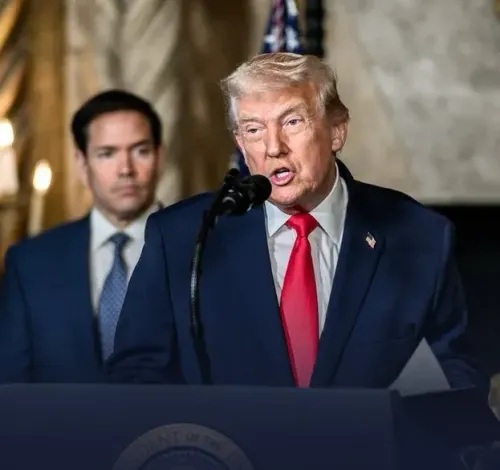
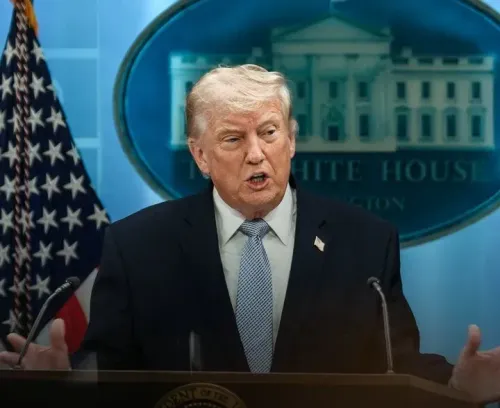
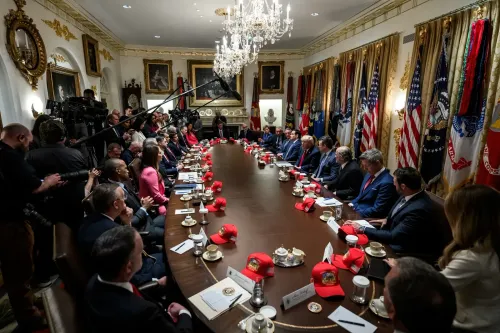
President Donald Trump on Wednesday, 27 May flatly ruled out any arrangement that would give Iran control over the Strait of Hormuz, declaring the critical oil shipping lane international waters that would remain open to all nations. The statement came during a Cabinet meeting at the White House, even as his administration continued nuclear negotiations with Tehran.
Trump's Position on the Strait
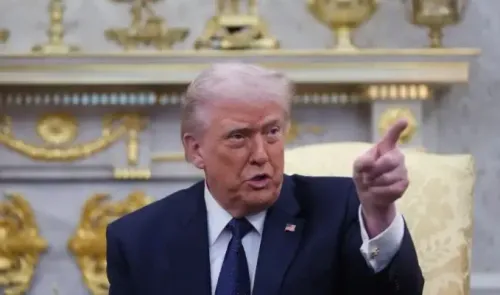
“The Strait is going to be open to everybody,” Trump said. “Nobody’s going to control it. It’s international waters.” He acknowledged that Iran had sought control over the waterway during ongoing talks but was unequivocal that Washington would not permit it. “They would like to control it. Nobody’s going to control it,” he added.
Trump also reiterated that Iran would not be permitted to develop a nuclear weapon under any circumstances. “Iran cannot have a nuclear weapon. I’m doing that for the world,” he said.
Iran’s Weakened Position, According to Washington
Trump claimed Iran’s military and economic standing had deteriorated sharply following recent US operations and sanctions. Referencing what he called ‘Operation Epic Fury’, he said American forces had crippled Iran’s military infrastructure and compelled its leadership back to the negotiating table. “They’re negotiating on fumes,” Trump said, adding that Iran’s economy was “in freefall” with “250% inflation.” These claims could not be independently verified.
Secretary of War Pete Hegseth said Iran’s navy, air force, and defence industrial capacity had been severely damaged. “They may have missiles, but they can’t build more right now,” Hegseth said.
Diplomacy First, Military Options on the Table
Secretary of State Marco Rubio echoed the President’s hard line while leaving room for a negotiated outcome. “The bottom line is Iran’s never going to have a nuclear weapon,” Rubio said. “Diplomacy is always the first option.” He noted there had been “some progress” in talks and that the coming days would be decisive for whether negotiations could advance.
Rubio also confirmed that the US had secured agreements with 20 countries to accept deportees from the United States as part of a wider immigration enforcement strategy — a separate but significant diplomatic development announced at the same Cabinet session.
Energy Markets and the Strait Standoff
Trump defended his administration’s energy record, asserting that the United States now produced more oil than “Russia and Saudi Arabia combined.” He argued that elevated oil prices driven by tensions around the Strait of Hormuz would ease as US production expanded and Venezuelan exports increased. “Those prices are going to come down fast,” he said.
The President noted that oil tankers were reportedly lined up near the Strait awaiting clearance. “At the right time, we’ll release them,” he said, without specifying a timeline.
Abraham Accords and Broader Middle East Diplomacy
Trump indicated that any final deal with Iran could be tied to a broader regional framework, including the expansion of the Abraham Accords. He said the US was “requesting strongly” that countries including Saudi Arabia and Qatar join the agreement framework established during his first term. The linkage signals that Washington views the Iran nuclear file as inseparable from its wider Gulf strategy.
With talks described as ongoing and the next few days flagged as critical, the trajectory of US–Iran negotiations — and the status of global oil flows through the Strait — will remain closely watched.
Point of View
’ the administration is wielding energy flows as a pressure lever — a tactic that blurs the line between diplomacy and economic coercion. The linkage of an Iran nuclear deal to Abraham Accords expansion is the more consequential reveal: it signals Washington will not settle for a narrow non-proliferation agreement but wants a full Gulf realignment. Whether Iran — or Saudi Arabia and Qatar — will accept that package deal is the real question the Cabinet meeting left unanswered.
NationPress
10 Oct 2026
Frequently Asked Questions
Why did Trump say Iran cannot control the Strait of Hormuz?
Trump stated the Strait of Hormuz is international waters and must remain open to all nations, rejecting an Iranian demand reportedly raised during ongoing nuclear negotiations. He warned the US would not permit any single country to control the critical oil shipping lane.
What is the current status of US-Iran nuclear talks?
Secretary of State Marco Rubio described the talks as showing ‘some progress’ and said the coming days would determine whether negotiations could move forward. Diplomacy remains Washington’s stated first option, though military action has not been ruled out.
What is ‘Operation Epic Fury’ mentioned by Trump?
Trump referred to ‘Operation Epic Fury’ as a US military operation that he claimed crippled Iran’s military infrastructure and forced its leadership back to the negotiating table. Independent verification of the operation’s scope and impact was not available at the time of reporting.
How could Iran tensions affect global oil prices?
Trump acknowledged that oil tankers are reportedly lined up near the Strait of Hormuz awaiting clearance, which has contributed to elevated oil prices. He argued prices would fall as US production — which he claimed exceeds that of Russia and Saudi Arabia combined — and Venezuelan exports increase.
What is the Abraham Accords link in the Iran deal?
Trump indicated any final agreement with Iran could be tied to expanding the Abraham Accords, the normalisation framework from his first term. He said the US was pressing Saudi Arabia and Qatar to join the accord, suggesting Washington wants a broader Gulf diplomatic realignment, not just a nuclear deal.