Trump Promises Reopening of the Strait of Hormuz Regardless of Iran's Stance
Synopsis
In a bold statement, President Trump asserts that the vital Strait of Hormuz will soon reopen, regardless of Iran's cooperation. This declaration comes amid ongoing tensions and negotiations between US and Iranian officials.
Key Takeaways
Trump asserts that the Strait of Hormuz will reopen soon.
The reopening will occur automatically , regardless of Iran's involvement.
Trump's primary aim is to prevent Iran from obtaining nuclear weapons.
Iran claims its military is fully prepared amidst ongoing tensions.
The current ceasefire is described as fragile by analysts.
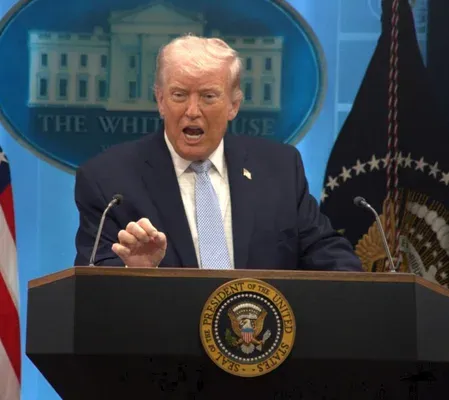
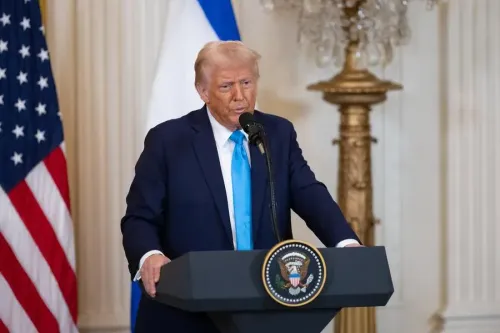
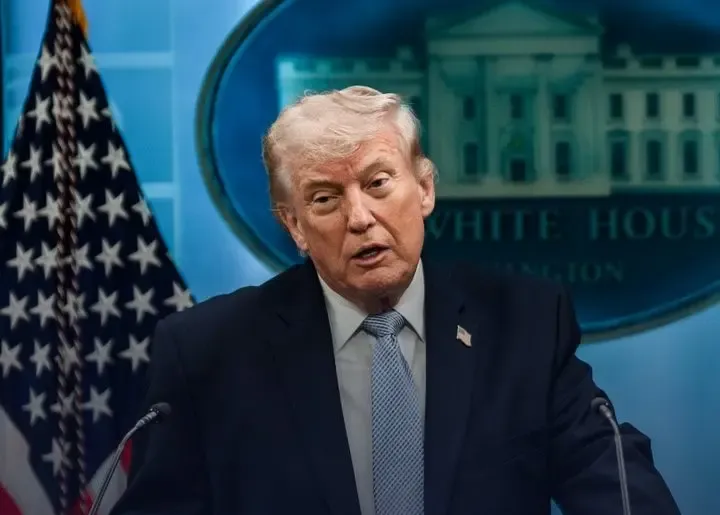
Washington, April 11 (NationPress) US President Donald Trump announced that American negotiators will engage with Iranian representatives to discuss the reopening of the Strait of Hormuz in Pakistan this Saturday. He emphasized that this vital global energy passage will soon reopen, asserting it will happen "automatically," regardless of Iran's involvement.
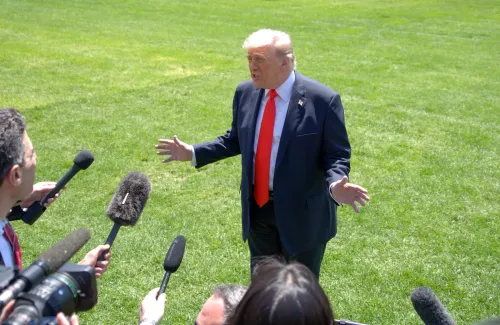
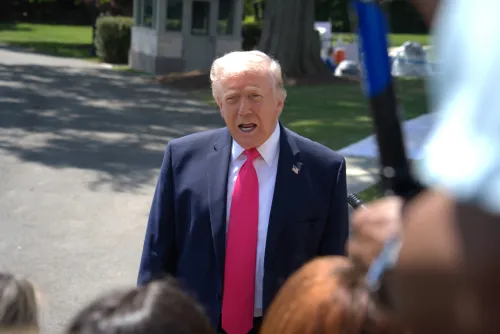
"It will open up automatically," Trump informed the press, expressing confidence that the waterway would be accessible "fairly soon."
"I expect it to happen quite quickly. If not, we have the means to resolve it one way or another," he added, referring to the strait that was effectively closed by Iran amid the prolonged US-Israeli conflict against Iran, as reported by Xinhua news agency.
Trump's primary aim in negotiations with Iran is to ensure that Tehran does not acquire a nuclear weapon.
"No nuclear weapon. That's 99 percent of the deal," Trump stated.
In a separate declaration, Trump indicated that Iran holds "no cards" beyond short-term "extortion" related to the Strait of Hormuz.
On the same day, Iran affirmed that its military remains fully prepared, similar to the 40-day "asymmetric battle," due to the "constant violations of agreements" by the United States and Israel.
"The Iranians appear to overlook that they have no leverage, except for temporary extortion of global markets through international waterways," Trump expressed on his social media platform, Truth Social. "Their survival today hinges on negotiations!"
Earlier, in a phone interview with The New York Post, Trump mentioned that the results of the talks with Iran would be evident "in about 24 hours," warning that US warships are being prepared for potential strikes on Iran if the peace discussions in Pakistan do not succeed.
All parties involved, including the United States, Iran, and Israel, have proclaimed victory in the ongoing conflict. Analysts caution that the current ceasefire is tenuous, and the diverse interests and historical differences among the nations could complicate efforts to achieve a lasting peace in the forthcoming negotiations.
Point of View
The reopening of the Strait of Hormuz emerges as a pivotal issue in US-Iran relations. While Trump emphasizes swift action, the underlying complexities of international diplomacy and regional security cannot be overlooked.
NationPress
23 Sept 2026
Frequently Asked Questions
What did Trump say about the Strait of Hormuz?
Trump stated that the Strait of Hormuz will reopen soon and automatically, regardless of Iran's cooperation.
What is the significance of the Strait of Hormuz?
The Strait of Hormuz is a crucial global energy waterway, vital for oil transportation.
What is Trump's main concern in negotiations with Iran?
Trump's primary focus is to ensure that Iran does not acquire a nuclear weapon.
What did Trump imply about Iran's negotiating power?
He suggested that Iran has no leverage beyond short-term extortion related to the Strait of Hormuz.
What do analysts say about the current ceasefire?
Analysts warn that the ceasefire is fragile and achieving a lasting peace may be challenging.