Trump defers Iran deal decision after 2-hour White House Situation Room meeting
Synopsis
Trump signalled a deal was hours away — then blinked. After a two-hour Situation Room session on 30 May, he deferred his ‘final determination’ on Iran with no explanation. Meanwhile, Tehran insists the nuclear issue isn’t even on the table, exposing a fundamental disconnect that could unravel any framework before it is formalised.
Key Takeaways
President Trump deferred his ‘final determination’ on an Iran draft deal on 30 May after a two-hour White House Situation Room meeting.
Trump’s redlines include Iran never possessing a nuclear weapon, immediate opening of the Strait of Hormuz with no tolls, and removal of water mines.
Trump indicated the US Naval blockade ‘will now be lifted,’ suggesting it was a negotiating lever.
Iran’s enriched nuclear material, reportedly buried after US bombing in June last year, is to be destroyed jointly with the IAEA under Trump’s proposal.
Iranian Foreign Ministry spokesperson Esmail Baghaei said current talks are ‘limited in scope’ and do not include ‘the nuclear issue.’
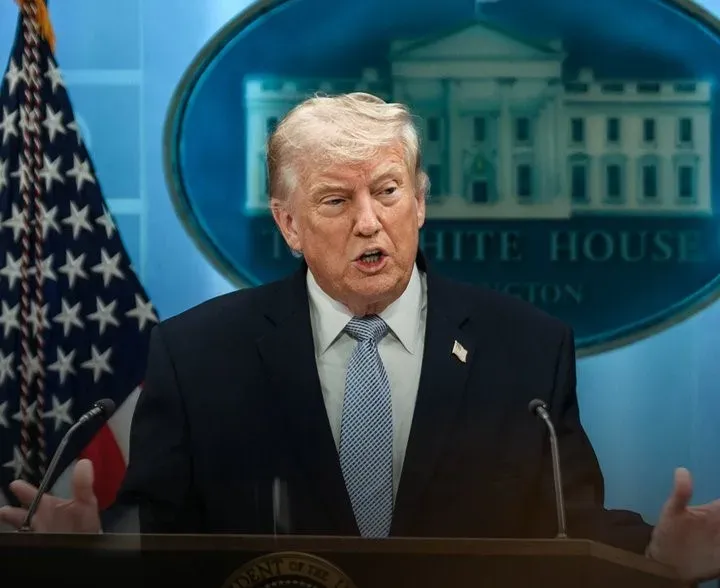
US President Donald Trump on Friday, 30 May deferred his “final determination” on a draft nuclear deal with Iran following an approximately two-hour meeting with his national security team in the White House Situation Room. The decision to delay surprised observers who had expected a definitive outcome after Trump himself signalled a resolution was imminent.
What the White House Said
“The Situation Room meeting has concluded and lasted approximately two hours. President Trump will only make a deal that is good for America and satisfies his redlines. Iran can never possess a nuclear weapon,” a White House official said in a statement. No explanation was offered for why Trump stopped short of a final call.
Trump’s Key Demands on the Table
Earlier on Friday, Trump had laid out his conditions in a post on Truth Social, stating he would meet his national security team “to make a final determination” that day. His stated redlines include the complete elimination of Iran’s enriched nuclear materials, the immediate reopening of the Strait of Hormuz to unrestricted shipping in both directions with no tolls, and the removal of any water mines in the waterway.
“Iran must agree that they will never have a Nuclear Weapon or Bomb. The Hormuz Strait must be immediately open, no tolls, for unrestricted shipping traffic, in both directions. All water mines (bombs), if any, will be terminated,” Trump wrote.
Trump also indicated that a US Naval blockade “will now be lifted,” suggesting the blockade had been a pressure lever in ongoing negotiations. He added that Iran’s enriched nuclear material — described as “nuclear dust” reportedly buried underground following US bombing in June of last year — would be unearthed jointly by the United States, Iran, and the International Atomic Energy Agency (IAEA) and subsequently destroyed.
Iran’s Position: Nuclear Issue Off the Table
Iranian Foreign Ministry spokesperson Esmail Baghaei pushed back sharply in a phone interview with Iranian state media on Friday, stating that current negotiations were “limited in scope” and did not include “the nuclear issue.” This directly contradicts the framing coming from Washington, underscoring the significant gap that remains between the two sides.
This comes amid a broader pattern of stop-start diplomacy between Washington and Tehran that has characterised the Trump administration’s approach to Iran. Notably, the public divergence between the two governments on whether nuclear matters are even on the negotiating table raises questions about how close any deal actually is.
What Happens Next
With Trump’s “final determination” now deferred, the timeline for any agreement remains unclear. The fate of Iran’s nuclear programme, the status of the Hormuz Strait, and the lifting of the naval blockade all hang in the balance. Analysts will be watching for whether a follow-up meeting is scheduled and whether Tehran signals any willingness to bring the nuclear dossier formally into talks.
Point of View
There may be no shared text to sign. The lifting of the naval blockade hint, floated publicly before a deal was confirmed, also risks handing Iran a concession before negotiations conclude.
NationPress
25 Sept 2026
Frequently Asked Questions
Why did Trump defer his final determination on the Iran deal?
Trump deferred his decision on 30 May after a roughly two-hour White House Situation Room meeting with his national security team. No official reason was given for the delay, though the move came despite Trump himself having signalled a resolution was expected that day.
What are Trump’s key demands in the Iran negotiations?
Trump’s stated redlines include Iran permanently forgoing nuclear weapons, the immediate reopening of the Strait of Hormuz to unrestricted shipping with no tolls, the removal of water mines, and the destruction of Iran’s enriched nuclear material in coordination with the IAEA.
What is Iran’s position on the nuclear issue in current talks?
Iranian Foreign Ministry spokesperson Esmail Baghaei said on 30 May that current negotiations are limited in scope and do not include the nuclear issue — a stance that directly contradicts the framework Trump outlined publicly on Truth Social.
What did Trump say about the US Naval blockade?
Trump indicated in his Truth Social post that the US Naval blockade ‘will now be lifted,’ suggesting it had been used as a pressure mechanism during negotiations. The timing of any actual lift remains unconfirmed pending a final deal.
What happens to Iran’s enriched nuclear material under Trump’s proposal?
Under Trump’s stated terms, Iran’s enriched nuclear material — reportedly buried underground after US bombing in June of last year — would be unearthed and destroyed jointly by the United States, Iran, and the International Atomic Energy Agency.