Trump: Iran wants nuclear deal badly, warns of strikes if talks fail
Synopsis
Trump claims Iran has informally agreed to never possess a nuclear weapon — but no deal is signed, Tehran disputes the framing, and Trump has threatened to strike bridges, power stations, and Pickax Mountain if talks break down. With the US reportedly controlling the Strait of Hormuz, the stakes for global energy markets are as high as the diplomatic ones.
Key Takeaways
Donald Trump said on 29 July that Iran wants a nuclear deal 'so badly' and has 'essentially' agreed it will never possess a nuclear weapon.
Trump threatened strikes on Iran's bridges, power stations, and Pickax Mountain if negotiations fail.
The US reportedly controls access through the Strait of Hormuz , allowing only selected ships to pass.
Iran has publicly disputed that nuclear matters were discussed, contradicting Trump's account of the talks.
The original 2015 nuclear deal was abandoned by Trump in 2018 during his first term, setting the stage for the current standoff.
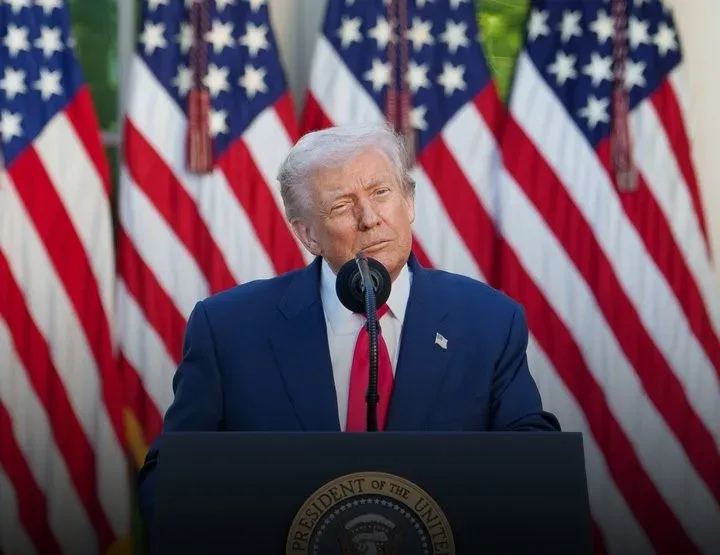
US President Donald Trump on 29 July declared that Iran is eager to reach a nuclear agreement with Washington and has effectively conceded that it will never possess a nuclear weapon — but he warned that American military strikes would resume if negotiations collapse. Trump made the remarks during a virtual rally for Republican Congressman Andy Ogles in Tennessee and in a separate interview with Fox News.
What Trump Said
Speaking to voters in Tennessee, Trump said the United States had struck Iran hard and that Tehran now desperately seeks a resolution. 'We've taken them, we've hit them very hard and they wanna make a deal so badly,' he said. He added that Iran had informally accepted the core US demand. 'They cannot have a nuclear weapon, very simple. And they've agreed to that essentially, we have to get them to make it formal, but they've agreed to it,' Trump said.
In the Fox News interview, Trump pushed back against Iranian statements suggesting that nuclear matters were not on the table. 'For some reason, we can be in the midst of a beautiful discussion, and they'll come out and say, we're not talking or we didn't discuss nuclear,' he said. 'Well, that's all we discussed because they'll never have a nuclear weapon, they understand that.'
Military Threats and the Strait of Hormuz
Trump made clear that a diplomatic failure would trigger extensive military action. He threatened strikes on Iran's bridges, power stations, and other infrastructure. 'If they don't make a deal, then I go back and I finish the job,' he said. He also warned that the United States could target Pickax Mountain, where Iran was reportedly conducting construction and fortification work. 'We took out their nuclear sites, and we'll have to take out Pickax if we don't make a deal,' Trump said.
Trump further claimed that the US military was controlling access through the Strait of Hormuz, allowing passage only to selected ships. He said Washington had temporarily eased the blockade after reaching a preliminary understanding with Tehran, but restored it after Iran reportedly broke the arrangement. 'The only ones that get through are the ones that we want to get through,' he said.
Background: The 2015 Nuclear Deal and Its Collapse
The current standoff has deep roots. Iran and six world powers — including the United States — concluded a landmark nuclear agreement in 2015 that placed restrictions on Tehran's nuclear programme in exchange for sanctions relief. Trump unilaterally withdrew the United States from that accord in 2018 during his first presidential term, triggering a gradual Iranian rollback of its own commitments. The current round of talks represents the most significant diplomatic engagement between the two sides since that withdrawal.
What Happens Next
No formal agreement has been signed, and Iran has publicly disputed the characterisation of talks as being focused exclusively on nuclear matters. The gap between Trump's claims of near-consensus and Tehran's public posture suggests significant ambiguity remains. Analysts will be watching whether Iran moves to formalise any concession, or whether Trump's military threats harden Iranian domestic opposition to a deal. The fate of the Strait of Hormuz blockade — and its impact on global oil flows — adds a sharp economic dimension to an already volatile diplomatic standoff.
Point of View
A gap that mainstream coverage has not sufficiently interrogated. The reactivation of the Strait of Hormuz blockade, if accurate, would represent one of the most aggressive US naval postures in decades and carries enormous consequences for global oil supply. The 2018 withdrawal from the 2015 deal was Trump's own decision; the current crisis is in part a consequence of that choice. Whether this round of talks produces a durable agreement or another cycle of escalation depends on whether either side can move from informal understandings to binding commitments — something that has eluded both for years.
NationPress
27 Oct 2026
Frequently Asked Questions
What did Trump say about Iran and a nuclear deal?
Trump said Iran wants a nuclear agreement with Washington 'so badly' and has essentially accepted that it cannot possess a nuclear weapon. He made the remarks on 29 July during a virtual rally in Tennessee and in a Fox News interview, while also threatening military strikes if talks fail.
What is Pickax Mountain and why did Trump mention it?
Pickax Mountain is a site in Iran where construction and fortification work was reportedly under way. Trump warned that the US would target it militarily if Iran does not reach a formal nuclear agreement with Washington.
Is the US blocking the Strait of Hormuz?
Trump claimed the US military controls access through the Strait of Hormuz and is allowing only selected ships to pass. He said Washington had eased the blockade after reaching a preliminary understanding with Tehran, but restored it after Iran reportedly broke the arrangement.
What was the 2015 Iran nuclear deal and why does it matter now?
The 2015 nuclear deal was an agreement between Iran and six world powers that restricted Tehran's nuclear programme in exchange for sanctions relief. Trump withdrew the United States from the deal in 2018 during his first term, and the current diplomatic effort is the most significant engagement since that withdrawal.
Has Iran formally agreed to give up nuclear weapons?
No formal agreement has been reached. Trump said Iran has 'essentially' agreed but that the commitment has not been formalised. Iran has publicly disputed that nuclear matters were even the focus of discussions, suggesting a significant gap between the two sides' accounts.