Trump warns Iran: deal or total surrender, Hormuz under US control
Synopsis
Trump's 'deal or total surrender' ultimatum to Iran — posted on Truth Social — arrives on the same day Tehran's foreign ministry publicly denied any direct US talks, routing everything through Oman. With the Strait of Hormuz as the pressure point and a nuclear red line drawn, the gap between Washington's and Tehran's public narratives has rarely been wider.
Key Takeaways
Donald Trump on 3 August declared Iran will receive nothing unless it agrees to a deal or 'total surrender,' posting the warning on Truth Social .
Trump asserted the Strait of Hormuz is 'completely controlled' by the US Navy , calling it a 'Wall of Steel.' He reaffirmed a hard red line: ' Iran will never have a nuclear weapon. ' Iranian spokesman Esmaeil Baghaei said Tehran's ongoing talks are with Oman , focused on a temporary Hormuz shipping corridor — not direct engagement with Washington.
The two sides offered contradictory public accounts of whether any US-Iran dialogue is taking place.
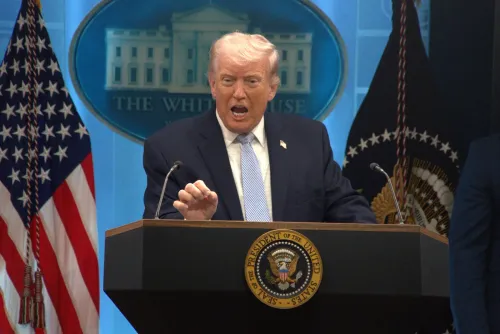
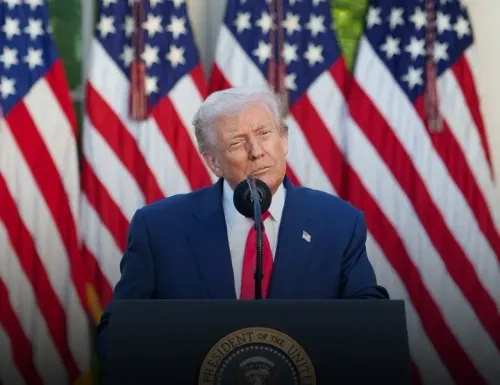
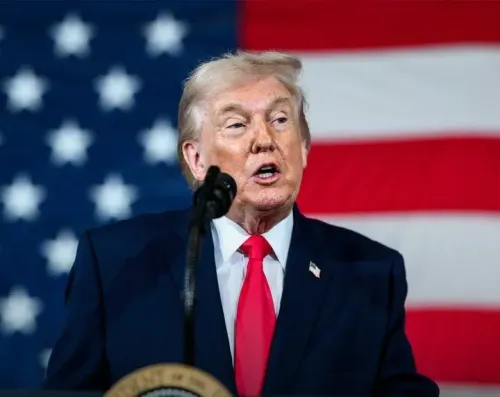
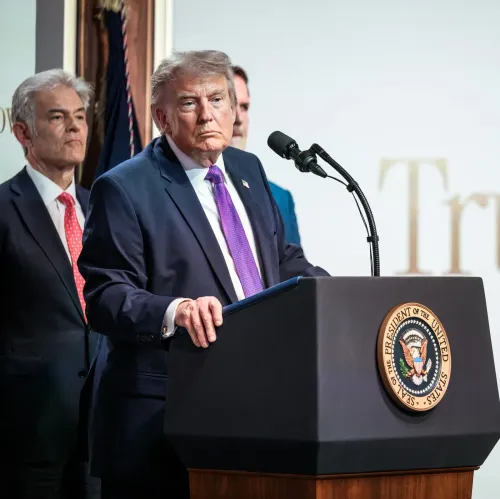
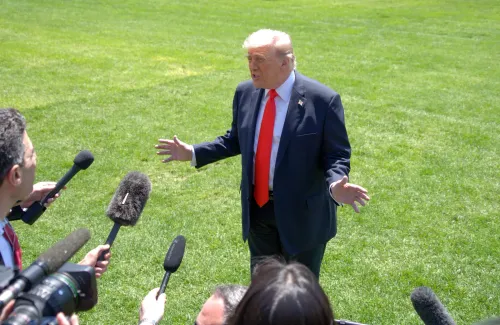
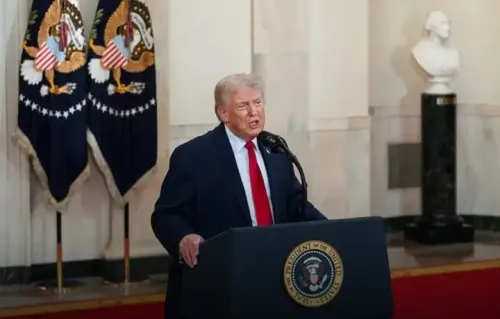
US President Donald Trump on Monday, 3 August declared that Iran will receive nothing — no goods, no relief — unless it agrees to a deal or submits to what he called 'total surrender,' sharply escalating rhetoric against Tehran amid ongoing back-channel negotiations. The statement, posted on his social media platform Truth Social, came as Iranian officials publicly insisted that no direct talks with Washington were taking place.
Trump's Warning in Full
In his Truth Social post, Trump described Iranian leadership as 'unbelievably duplicitous,' accusing Tehran of requesting meetings while simultaneously denying any discussions were underway. He specifically called out Iran's claim of dealing only through Oman as contradictory to the reality on the ground.
'Nothing gets through to Iran unless we want it to, and nothing will get through unless a Deal, or Total Surrender, is accomplished,' Trump wrote, adding that the Strait of Hormuz is 'already completely controlled by the United States Navy' — which he described as a 'Blockade' or 'The United States Wall of Steel.' He concluded with an unambiguous red line: 'Iran will never have a nuclear weapon.'
Iran's Position on Hormuz Talks
Earlier on the same day, Iranian Foreign Ministry spokesman Esmaeil Baghaei said at a weekly press conference in Tehran that ongoing negotiations between Iran and Oman are focused on establishing a 'temporary' shipping corridor through the Strait of Hormuz. Baghaei described the talks as centred on a round-trip corridor — not multiple separate routes — that would serve as an interim arrangement until a permanent route is finalised.
'The negotiations have been focused on the idea that the southern route, which passes through Oman's waters, and the northern route, which passes through Iran's territorial waters, would turn into an intermediate route,' Baghaei said. The spokesman did not acknowledge any direct engagement with the United States.
The Contradiction at the Heart of the Standoff
The duelling statements from Washington and Tehran lay bare a fundamental contradiction: the US insists talks are underway and frames them as a path to resolution, while Iran publicly denies direct negotiations and routes its engagement through Oman as an intermediary. This is not the first time the two sides have offered conflicting accounts of diplomatic contact — a pattern that has complicated every round of nuclear and sanctions negotiations since 2018.
Notably, the Strait of Hormuz carries an estimated 20% of global oil trade, making any disruption — or the threat of one — a pressure point with immediate consequences for energy markets worldwide. Trump's assertion of total US naval control over the waterway is a direct counter to Tehran's longstanding claim that it can shut the strait in a crisis.
What Comes Next
With Oman serving as a back-channel and both sides offering contradictory public narratives, the immediate trajectory depends on whether the interim Hormuz corridor agreement can be formalised — and whether Washington accepts Omani mediation as a substitute for direct talks. Analysts note that Trump's use of the phrase 'total surrender' signals maximum-pressure positioning ahead of any formal negotiating round, a tactic consistent with his first-term approach to Iran diplomacy.
Point of View
Preserving domestic credibility while keeping a back-channel alive. The real risk is that both sides become prisoners of their own public rhetoric: Washington cannot accept a deal that looks like less than surrender, and Tehran cannot accept one that looks like capitulation. The Hormuz corridor talks are the only concrete thread, and if that frays, the next flashpoint is a market one — oil prices, not diplomacy, will force the next move.
NationPress
18 Sept 2026
Frequently Asked Questions
What did Trump say about Iran on 3 August?
Trump posted on Truth Social calling Iranian leadership 'unbelievably duplicitous' and warning that nothing will reach Iran unless it agrees to a deal or total surrender. He also asserted that the US Navy fully controls the Strait of Hormuz and that Iran will never obtain a nuclear weapon.
What is Iran's position on the Strait of Hormuz talks?
Iranian Foreign Ministry spokesman Esmaeil Baghaei said on 3 August that Tehran is negotiating with Oman — not the United States — on a temporary shipping corridor through the Strait of Hormuz. The proposed route would combine southern waters through Oman and northern waters through Iran into an intermediate corridor until a permanent arrangement is agreed.
Why is the Strait of Hormuz significant?
The Strait of Hormuz is one of the world's most critical oil transit chokepoints, carrying an estimated 20% of global oil trade. Control over — or disruption of — the strait has immediate consequences for global energy markets and is a longstanding leverage point in US-Iran tensions.
Are the US and Iran currently in direct talks?
The two sides offer contradictory accounts. Trump's post implies talks are underway and framed as a path to resolution, while Iran publicly denies direct negotiations and says its engagement runs exclusively through Oman as an intermediary.
What has Trump's approach to Iran diplomacy looked like historically?
Trump's current maximum-pressure posture — threatening total economic blockade while keeping a negotiating door open — mirrors his first-term strategy, which included withdrawing from the 2018 nuclear deal and imposing sweeping sanctions. Critics argue the approach has hardened Iranian positions; supporters say it is the only leverage that moves Tehran.