Trump says Iran nuclear deal 'nearly done' as talks advance
Synopsis
Trump’s claim that Iran has agreed to ‘just about everything’ in nuclear talks is the most bullish public signal yet from Washington — but it arrives alongside assertions of military dominance, a naval blockade, and repeated strikes. The gap between Trump’s optimism and Iran’s public posture is wide, and the real test is whether Tehran’s negotiators will confirm what Washington is describing.
Key Takeaways
President Donald Trump said on 3 July that Iran had agreed to ‘just about everything’ the US needs in nuclear negotiations.
Trump ruled out regime change, saying the sole US objective is preventing Iran from obtaining a nuclear weapon.
He claimed the US carried out strikes on Iran on three consecutive nights in the past week following Iranian provocations.
Trump described a near-total naval blockade , saying ‘not one ship got through to Iran.’ He cited 300 per cent inflation in Iran as evidence that economic pressure is working.
A deal could open the door to US agricultural exports — corn, wheat, and soybeans — to Iran, Trump said.
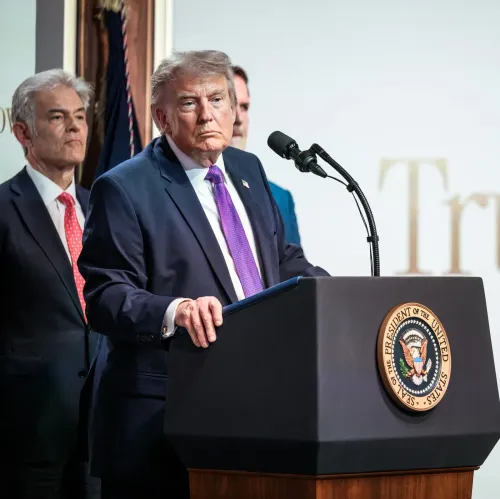
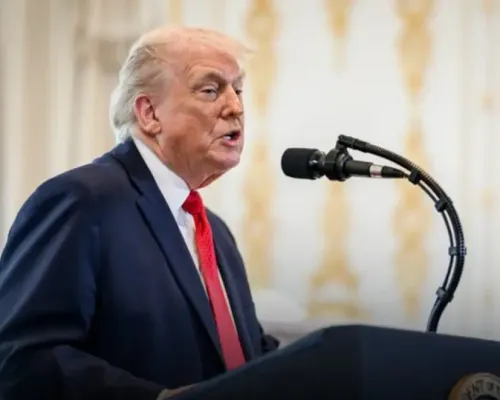
US President Donald Trump said on 3 July that Iran had agreed to “just about everything we need” in ongoing negotiations over its nuclear programme, signalling that a diplomatic resolution could be within reach. Speaking in a CNBC interview, Trump insisted that Tehran would never be permitted to acquire a nuclear weapon, framing the US objective as the “denuking of Iran.”
What Trump Said
Trump described the state of negotiations in notably confident terms. “We’re negotiating, and we’ll see whether or not. I think they’ve agreed to just about everything we need,” he said. He was explicit that the goal was not regime change in Tehran. “I’m not looking for regime change. I’m looking for something very simple. They cannot have a nuclear weapon,” Trump said.
He characterised the US approach as one of disarmament rather than military conquest, saying: “This is the denuking of Iran. You can’t let them have a nuclear weapon.”
Military Pressure and Naval Blockade
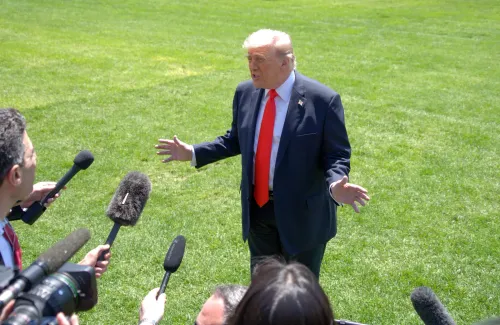
Trump claimed that US military operations had significantly weakened Iran’s armed capabilities since he returned to office. “I’ve defeated them militarily. They’re totally defeated militarily. They have some missiles left, we could wipe them out too,” he said. He described a series of retaliatory strikes carried out over consecutive nights in response to what he characterised as Iranian provocations, including a drone attack on a ship.
Trump also said the United States had imposed what he described as a near-total naval blockade. “I did a blockade that was essentially not a blockade, it was a wall of steel. We have the great Navy, the greatest navy in the world. Not one ship got through to Iran,” he said. He argued the combined military and economic pressure had produced severe consequences for Iran’s economy, citing what he claimed was 300 per cent inflation and a collapse in revenues.
Economic Incentives on the Table
Trump indicated that a successful agreement could open the door to US agricultural exports to Iran. “We’re going to take some of the money, and we’re going to buy them. They need food. They need corn, and wheat, and soybeans, and we’re going to have exclusively our American farmers provide that,” he said, adding the caveat: “Assuming we get to the position where we should get to.”
He also defended the administration’s management of the Strait of Hormuz, saying US naval escorts had helped prevent a sharp spike in global oil prices. “Every night, we were taking ships out through the South… We escorted them out, and nobody knew,” Trump said.
Iran’s Position and the Broader Context
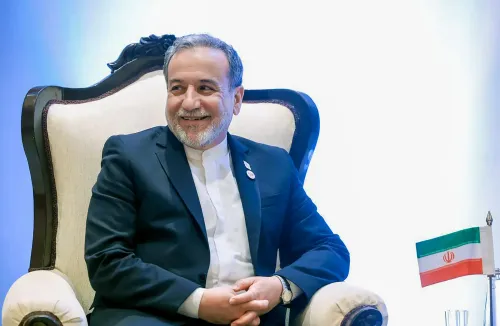
Iran has consistently maintained that its nuclear programme is intended solely for peaceful civilian purposes. The United States and several Western governments have long sought to prevent Tehran from developing a nuclear weapon, a standoff that has defined US-Iran relations for decades. This comes amid a broader pattern of diplomatic overtures and military escalations that have marked Trump’s return to the White House. Notably, the latest statements represent some of the most optimistic public language from the administration on the nuclear talks to date.
How quickly a formal agreement could be concluded — and whether Iran’s leadership will publicly confirm the terms Trump has described — remains to be seen.
Point of View
And Iran’s leadership has domestic political reasons to avoid being seen capitulating to US pressure. The simultaneous claims of military strikes, a naval blockade, and economic devastation sit uneasily alongside the language of diplomatic progress: coercion and negotiation are not always compatible levers. What mainstream coverage risks missing is the gap between Trump’s deal-making rhetoric and the verifiable state of the talks — a gap that has widened before, most notably with the collapse of the 2018 JCPOA withdrawal aftermath.
NationPress
1 Oct 2026
Frequently Asked Questions
What did Trump say about the Iran nuclear deal on 3 July?
Trump said Iran had agreed to ‘just about everything’ the US requires in ongoing nuclear negotiations, in a CNBC interview on 3 July. He framed the US goal as the full denuclearisation of Iran, not regime change.
Is the United States seeking regime change in Iran?
No, according to Trump. He explicitly stated he is not seeking regime change, saying his sole objective is ensuring Iran cannot acquire a nuclear weapon.
What military actions did Trump claim the US took against Iran?
Trump said the US carried out strikes on Iran on three consecutive nights in the week prior to the interview, and two nights the week before that, in response to Iranian provocations including a drone attack on a ship. He also described a naval blockade he called a ‘wall of steel.’
What economic incentives did Trump offer Iran in a potential deal?
Trump indicated that a successful nuclear agreement could allow the US to supply Iran with agricultural products — specifically corn, wheat, and soybeans — sourced exclusively from American farmers.
What is Iran’s stated position on its nuclear programme?
Iran has consistently maintained that its nuclear programme is intended for peaceful civilian purposes. Tehran has not publicly confirmed the concessions Trump described in his 3 July interview.