Kolkata Metro Blue Line hit by two suicide attempts, services disrupted for over an hour
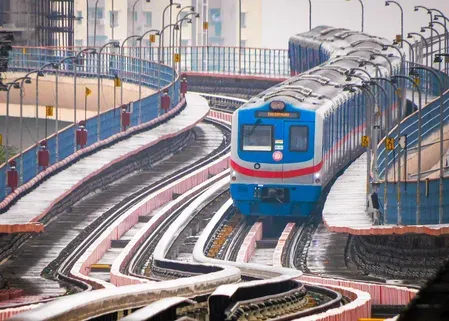
Synopsis
Two suicide attempts on the same day brought Kolkata Metro's busiest corridor to a near-standstill — first for 25 minutes in the morning, then for nearly an hour in the afternoon. The Blue Line, carrying up to 7 lakh passengers daily, still has no platform screen doors, making it uniquely vulnerable. Saturday's twin incidents put fresh pressure on Metro Railway to act.
Key Takeaways
Two suicide attempts disrupted Kolkata Metro Blue Line services on 27 June .
The first incident at Kalighat station at 7:20 am caused a ~25-minute delay; the person survived.
The second at Belgachia station at 3:09 pm caused a ~47-minute disruption; the person did not survive.
The Blue Line carries 6.5–7 lakh passengers daily and lacks platform screen doors , unlike newer Kolkata Metro lines.
RPF personnel and reduced platform speeds are currently the primary prevention measures, but are acknowledged as insufficient.
Kolkata Metro services on the Blue Line were severely disrupted on Saturday, 27 June after two separate suicide attempts at different stations, leaving thousands of daily commuters stranded during peak hours. One person survived, while the other did not.
First Incident: Kalighat Station, Morning
The first attempt occurred at Kalighat Metro station at 7:20 am, when a person jumped onto the tracks in front of a Dakshineswar-to-Garia bound train. The motorman applied emergency brakes but was unable to halt the train in time. Metro Railway staff switched off power to the third rail and reversed the rake before personnel could access the tracks to carry out a rescue. Truncated services were operated between Dakshineswar and Maidan, and between Mahanayak Uttam Kumar and Shahid Khudiram stations during the disruption. Normal services resumed at 7:44 am — a delay of nearly 25 minutes.
Second Incident: Belgachia Station, Afternoon
The second attempt took place at Belgachia station at 3:09 pm, again involving a person jumping before a Garia-bound train. The same emergency procedure was followed. However, recovery took considerably longer as the person had died. Truncated services ran between Girish Park and Shahid Khudiram stations while the tracks were cleared. Normal operations resumed at 3:56 pm — a disruption of nearly one hour.
Why the Blue Line Remains Vulnerable
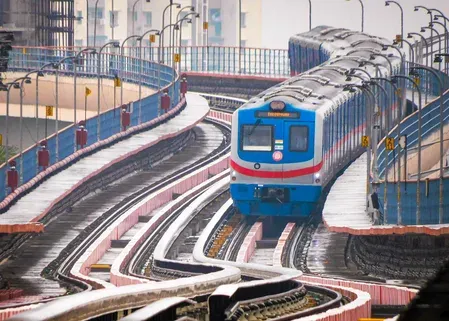
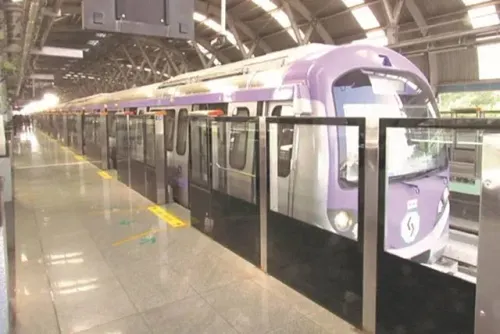
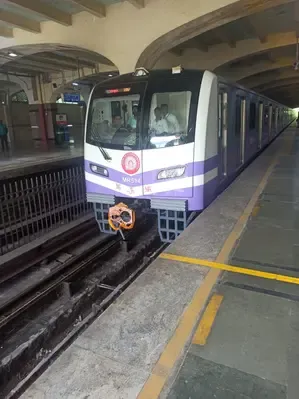
The Blue Line is the oldest metro corridor in the country and notably lacks platform screen doors — a safety barrier present on Kolkata Metro's newer lines that physically prevents access to the tracks. This structural gap has long been identified as a risk factor. The line carries between 6.5 and 7 lakh passengers daily and is widely regarded as the lifeline of Kolkata, connecting the city's northern suburbs to its extreme south. Any disruption, particularly during the monsoon season, causes acute inconvenience to students, office-goers, and other commuters.
Existing Prevention Measures and Their Limits
Railway Protection Force (RPF) personnel and Metro staff are instructed to watch for individuals displaying unusual behaviour on platforms. Motormen are also directed to reduce train speeds before entering stations to improve stopping response. However, according to Metro Railway, this is not always operationally feasible. Notably, Saturday's incidents mark at least the second and third such attempts in recent memory on this corridor, underlining the inadequacy of current preventive measures without structural upgrades like screen doors.
What Comes Next
The back-to-back disruptions are likely to renew pressure on Metro Railway authorities to expedite the installation of platform screen doors on the Blue Line, a measure that has been discussed but not yet implemented. Until such infrastructure is in place, the line's high footfall and open-platform design will continue to pose a risk to both commuters and Metro operations.
Point of View
Yet it remains the only major corridor in the city without platform screen doors. Metro Railway has cited cost and structural complexity, but the human and operational toll of inaction is mounting. RPF vigil and reduced train speeds are band-aids on a structural wound. The question is no longer whether screen doors are needed — it is why they have not been prioritised on the line that carries the most passengers and faces the greatest risk.
NationPress
26 Sept 2026
Frequently Asked Questions
What happened on the Kolkata Metro Blue Line on 27 June?
Two separate suicide attempts disrupted Kolkata Metro Blue Line services on 27 June 2025 — one at Kalighat station at 7:20 am and another at Belgachia station at 3:09 pm. One person survived and one died; combined disruptions lasted over an hour across the two incidents.
Which stations were affected by the Kolkata Metro disruptions?
The morning incident at Kalighat station led to truncated services between Dakshineswar–Maidan and Mahanayak Uttam Kumar–Shahid Khudiram. The afternoon incident at Belgachia station disrupted services between Girish Park and Shahid Khudiram.
Why does the Kolkata Metro Blue Line not have platform screen doors?
The Blue Line is the oldest metro corridor in India and was built before platform screen doors became standard safety infrastructure. Unlike Kolkata Metro's newer lines, it has not yet been retrofitted with screen doors, leaving the tracks directly accessible from platforms.
How many passengers does the Kolkata Metro Blue Line carry daily?
The Blue Line carries between 6.5 and 7 lakh passengers every day, making it the busiest metro corridor in Kolkata and one of the most heavily used urban rail stretches in India.
What steps has Metro Railway taken to prevent suicides on the Blue Line?
Railway Protection Force personnel and Metro staff are trained to identify and intercept individuals behaving unusually on platforms. Motormen are also instructed to reduce speeds before entering stations. However, Metro Railway has acknowledged these measures are not always sufficient, and the absence of platform screen doors remains a critical gap.