Two youths buried alive in Baramulla sand extraction mishap

Synopsis
Two young men from Dachanpora in Baramulla were buried alive when a sand mound caved in during a night-time extraction operation. Their bodies lay buried until morning. The deaths follow a near-identical fatal incident at another Baramulla site earlier this month, raising pointed questions about the enforcement of J&K mining regulations.
Key Takeaways
Javid Ahmad Mir, 28 , and Mohammad Anees Malik, 29 , both of Dachanpora, Baramulla , died on Tuesday night after a sand mound collapsed during extraction.
Their bodies were buried overnight and recovered the following morning by locals and a Baramulla police team.
Police have taken cognisance and launched an investigation into the circumstances, including whether the extraction was legally authorised.
A 17-year-old boy died in a similar sand extraction accident in Pattan, Baramulla earlier this month.
Extraction in J&K is regulated under the J&K Minor Mineral Concession Rules, 2016 , requiring an Approved Mining Plan, Environmental Clearance, and Consent to Operate.
The National Green Tribunal (NGT) has previously penalised unauthorised riverbed mining in the region.
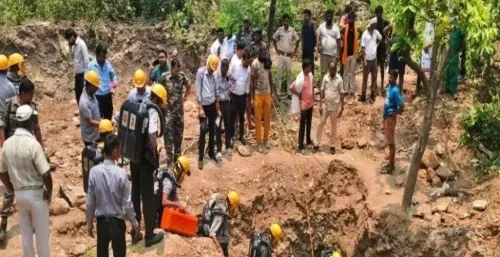
Two young men died on Tuesday night after a sand mound collapsed and buried them alive during extraction operations in the Dachanpora area of Rafiabad, Baramulla district, Jammu and Kashmir, officials confirmed on Wednesday, 28 October 2026. The victims, both residents of Dachanpora, could not be reached until the following morning when locals and police teams recovered their bodies after sustained efforts.
Who the Victims Were
The deceased have been identified as Javid Ahmad Mir, 28, and Mohammad Anees Malik, 29, both from Dachanpora village. According to officials, the accident occurred late at night when a mound of sand caved in during extraction, trapping both men on the spot. Their bodies remained buried throughout the night and were recovered the next morning following hectic rescue efforts by local residents. Police were subsequently informed and a team was dispatched to assist in the recovery.
How the Tragedy Unfolded
The cave-in took place during a night-time extraction operation, a circumstance that significantly delayed the discovery of the buried men. Locals launched an immediate search effort once the incident was known, but the bodies could only be retrieved the following morning. A pall of gloom descended over the village as the news spread. The Baramulla police have taken cognisance of the incident and initiated a formal investigation into the circumstances surrounding the deaths, with further details awaited.
A Pattern of Deadly Accidents
This is not an isolated incident in the region. Earlier this month, in the Pattan area of the same Baramulla district, a 17-year-old boy died from severe head injuries sustained during sand extraction in Singpora. Frequent reports from across Jammu and Kashmir highlight workers being trapped under collapsing sand and soil mounds. Manual extraction from riverbanks and boats carries an inherently high risk of drowning and cave-ins, with night operations compounding the danger.
The Regulatory Framework and Its Gaps
Sand extraction in Jammu and Kashmir is governed by the J&K Minor Mineral Concession, Storage, Transportation and Prevention of Illegal Mining Rules, 2016, which mandates an Approved Mining Plan, an Environmental Clearance, and a Consent to Operate from competent authorities before any extraction can legally proceed. Despite this framework, illegal and unregulated riverbed mining persists. The National Green Tribunal (NGT) has in the past levied penalties for unauthorised mining along waterways such as the Doodh Ganga. Critics argue that enforcement gaps enable dangerous, unregulated operations to continue, often with fatal consequences for the labourers involved. Whether the Dachanpora extraction was authorised is part of the ongoing police investigation.
What Happens Next
The Baramulla police are probing the incident to determine whether the extraction was being carried out legally and whether safety protocols were followed. Authorities have not yet indicated whether any arrests are likely. The deaths are expected to renew pressure on the administration to tighten enforcement of mining rules and improve safety oversight, particularly for operations conducted after dark.
Point of View
Yet night-time manual extraction without apparent oversight continues. The question the investigation must answer is not just how the sand caved in, but who authorised the operation and what safeguards, if any, were mandated. Repeated NGT penalties have not deterred illegal mining, suggesting that fines alone are insufficient deterrence when enforcement is thin on the ground. Until the administration pairs regulation with real-time monitoring and criminal accountability for operators, these tragedies will recur.
NationPress
28 Oct 2026
Frequently Asked Questions
Who died in the Baramulla sand extraction accident?
The two victims were Javid Ahmad Mir, 28 , and Mohammad Anees Malik, 29 , both residents of Dachanpora village in the Rafiabad area of Baramulla district, Jammu and Kashmir. They were buried alive when a sand mound collapsed during extraction late on Tuesday night and were found the following morning.
Where and when did the sand extraction accident occur?
The accident occurred on Tuesday night in the Dachanpora area of Rafiabad, Baramulla district, Jammu and Kashmir. The bodies were recovered on Wednesday morning, 28 October 2026, after overnight efforts by local residents and police.
Is sand extraction in Jammu and Kashmir regulated?
Yes. Sand and other riverbed material extraction in J&K is governed by the J&K Minor Mineral Concession, Storage, Transportation and Prevention of Illegal Mining Rules, 2016. Legal extraction requires an Approved Mining Plan, an Environmental Clearance, and Consent to Operate from competent authorities. However, illegal and unregulated operations are reportedly common.
Has this happened before in Baramulla?
Yes. Earlier in October 2026, a 17-year-old boy died from severe head injuries during sand extraction in Singpora in the Pattan area of the same Baramulla district. Authorities and safety groups have repeatedly flagged the risk of cave-ins and drowning during manual riverbank extraction.
What action is being taken after the deaths?
Baramulla police have taken cognisance of the incident and launched an investigation into the circumstances surrounding the deaths, including whether the extraction operation was legally authorised. Further details, including potential arrests or regulatory action, were awaited as of Wednesday.