Udit Raj backs Italy's school veil ban: 'Their society, their rules'
Synopsis
Congress leader Udit Raj's endorsement of Italy's school veil ban carries a sting in the tail — his personal call to bar all religious instruction until age 18 cuts across every faith, not just Islam. Combined with his defence of former VP Ansari against CM Yogi's broadside, Raj has made two politically charged statements in a single breath, each pulling in a different direction from the Congress's usual messaging.
Key Takeaways
Congress leader Udit Raj on 21 September 2026 backed Italy's proposed ban on burqas and niqabs in schools, calling it the country's sovereign right.
Raj argued that no religious instruction should be given to anyone until the age of 18 , applying the principle to 'all of humanity.' Italy's legislation — which also limits foreign students per classroom and requires some parents to learn Italian — still needs parliamentary approval.
Raj defended former Vice President Mohammad Hamid Ansari over remarks citing Nehru's warning about Hindu Right-wing communalism, invoking Nehru and Ambedkar as precedents.
UP Chief Minister Yogi Adityanath had called Ansari's remarks 'unfortunate' and 'against India, Indian culture and Indian tradition.'
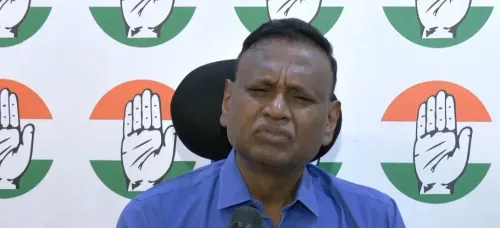
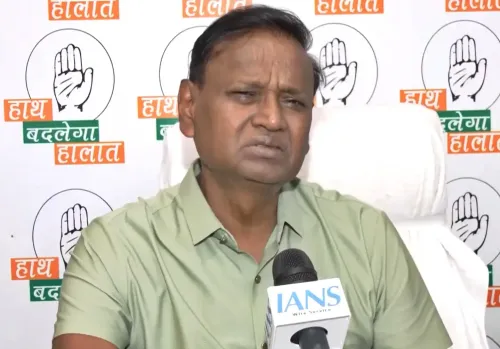
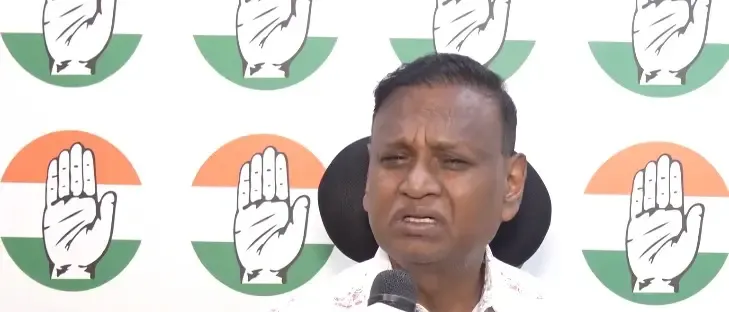
Congress leader Udit Raj on Monday, 21 September 2026, voiced support for Italy's proposed ban on face coverings — including burqas and niqabs — in schools, stating that it is Italy's society and its education system's prerogative to decide such protocols. Raj also used the occasion to articulate a broader personal position: that religious instruction should not be imparted to any individual until the age of 18.
Raj on Italy's Proposed Veil Ban
Italy is preparing legislation that would prohibit face coverings in schools, restrict the proportion of foreign students in classrooms, and require certain parents to learn Italian. The proposal requires parliamentary approval before it can become law.
Responding to the development, Raj said: 'As far as Meloni and Italy are concerned, it is their society and their education system's requirement, and they have the right to decide what protocols should be followed in their schools and whether religious symbols should be allowed. If it applies to everyone, then there is no question of discrimination.'
Raj further laid out what he described as a universal principle: 'Whether in school or outside school, I believe no religious knowledge should be given to anyone until the age of 18. I am saying this for all of humanity. When someone is born, they do not decide their own religion, name or caste. Their parents and society decide these things. They do not choose for themselves, so they should have the freedom to grow and then choose their religion.'
Raj Defends Former Vice President Ansari
The Congress leader also weighed in on the controversy surrounding former Vice President Mohammad Hamid Ansari, who drew sharp criticism from Uttar Pradesh Chief Minister Yogi Adityanath after remarks at a New Delhi event on Saturday. At that gathering, Ansari cited late Prime Minister Jawaharlal Nehru's documented warning — recalled in former Foreign Secretary Jagat Singh Gundevia's writings and referenced in constitutional expert A.G. Noorani's 2019 book The RSS: A Menace to India — that Hindu Right-wing communalism posed a greater danger to India than communism.
Chief Minister Adityanath on Sunday called Ansari's remarks 'unfortunate', saying they were 'against India, Indian culture and Indian tradition.'
Raj pushed back sharply. 'I don't think Hamid Ansari has done anything to criticise Sanatan tradition. And second, what has he said that is wrong? Pandit Nehru also said this, and Dr Ambedkar also said this. Why is so much importance being given to the fact that he belongs to the Muslim community?' he said.
Raj also accused political actors of selectively targeting Muslim voices: 'Such speeches and statements happen every day. It seems they are constantly looking for an opportunity, waiting for any person from the Muslim community to say anything from which they can create a controversy.'
Context and Significance
Raj's comments on Italy come as debates around religious identity in public institutions intensify across Europe. France has long enforced strict secularism in schools, and similar conversations have surfaced in Belgium and Germany. Italy's proposed legislation, backed by Prime Minister Giorgia Meloni's government, represents the latest front in that broader European policy trend.
On the domestic front, the Ansari episode has reignited long-running tensions around Hindu nationalist rhetoric, free speech, and the political treatment of minority voices. Notably, invoking Nehru's and Ambedkar's views on communalism is a recurring Congress counter-strategy against the ruling establishment's cultural framing.
What Comes Next
Italy's veil-ban bill will be watched closely by minority rights groups and European human-rights bodies once it reaches parliament. Domestically, the exchange between Congress leaders and Chief Minister Adityanath over Ansari's remarks is likely to continue as the political discourse around religion and nationalism deepens ahead of several state assembly cycles.
Point of View
Given the party's traditional minority-outreach posture. His universalising move — no religion for anyone under 18 — is a rhetorical shield, but it is unlikely to insulate him from scrutiny within his own coalition. Meanwhile, his defence of Ansari is more conventionally Congress but illustrates how quickly the Nehru-Ambedkar citation has become the party's standard rebuttal on communalism charges. The deeper issue is whether a politician invoking secular universalism on a European policy debate can simultaneously mobilise it as a domestic minority-rights argument — the two positions sit in uneasy tension.
NationPress
21 Sept 2026
Frequently Asked Questions
What did Udit Raj say about Italy's proposed school veil ban?
Congress leader Udit Raj said that Italy has the right to decide what protocols are followed in its schools, adding that if the ban applies to everyone equally, there is no question of discrimination. He endorsed the proposal as a matter of national and institutional sovereignty.
What is Italy's proposed school veil ban about?
Italy is preparing legislation that would ban face coverings, including burqas and niqabs, in schools, limit the share of foreign students in classrooms, and require some parents to learn Italian. The proposal still requires parliamentary approval to become law.
What is Udit Raj's position on religious education for children?
Raj stated that no religious knowledge should be given to anyone until the age of 18, arguing that children do not choose their religion themselves and should be free to make that choice as adults. He said this principle applies to all of humanity, not any single faith.
Why did Udit Raj defend former VP Hamid Ansari?
Raj defended Ansari after UP Chief Minister Yogi Adityanath criticised the former Vice President for citing Nehru's documented warning about Hindu Right-wing communalism at a New Delhi event. Raj argued that Ansari said nothing wrong, noting that both Nehru and Ambedkar had expressed similar views.
What did former VP Ansari say that drew criticism?
At a New Delhi event on Saturday, Ansari referenced A.G. Noorani's 2019 book and recalled Nehru's remark — documented by former Foreign Secretary Jagat Singh Gundevia — that Hindu Right-wing communalism posed a greater danger to India than communism. CM Yogi Adityanath called the remarks unfortunate and anti-India.