UDP withdraws support to Conrad Sangma govt after 11 MLAs quit party
Synopsis
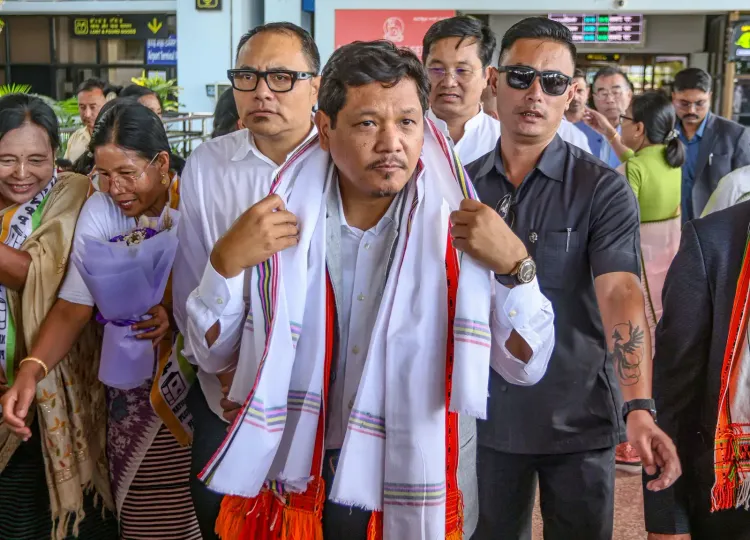
The UDP has formally pulled out of Conrad Sangma's Meghalaya government after losing 11 of its 12 MLAs to rival parties in months — 8 to the BJP and 3 to the NPP. With only its president left as the party's sole legislator, the withdrawal is more a symbolic last stand than a threat to the government's majority, which now sits comfortably at 46 in a 60-member House.
Key Takeaways
The United Democratic Party (UDP) unanimously voted to withdraw support to the Conrad K.
Sangma -led Meghalaya government on 3 November 2026 .
UDP president Metbah Lyngdoh resigned from the state Cabinet on the preceding Saturday , triggering the formal split.
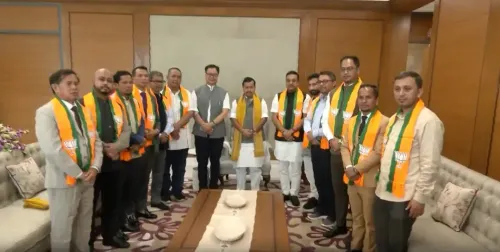
8 of 12 UDP MLAs had merged with the BJP in September , with the Assembly Speaker recognising the merger on 16 October .
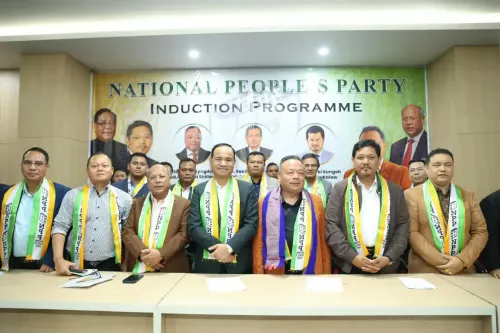
Three further legislators — Paul Lyngdoh , Renikton Lyngdoh Tongkhar , and Nujorki Sungoh — subsequently joined the ruling NPP , leaving Metbah Lyngdoh as the UDP's sole MLA.
The NPP now holds 36 seats and the BJP holds 10 in the 60-member Assembly , leaving the government's majority intact.
The UDP says it will rebuild its organisational base and act as an independent voice holding the government accountable.
The United Democratic Party (UDP), a constituent of Meghalaya's ruling Meghalaya Democratic Alliance (MDA-II), on Tuesday, 3 November 2026, formally resolved to withdraw its support to the Conrad K. Sangma-led state government, ending a nearly three-year coalition partnership. The decision, taken unanimously at a meeting of the party's Central Executive Committee (CEC), follows a dramatic mass exodus of 11 of the party's 12 MLAs since the 2023 Assembly elections.
How the Collapse Unfolded
The immediate trigger was the resignation of UDP president and lone remaining legislator Metbah Lyngdoh from the state Cabinet on the preceding Saturday. UDP General Secretary Titosstarwell Chyne confirmed that Lyngdoh informed the CEC about his ministerial departure during Tuesday's meeting. 'The president has informed the CEC that he has resigned as Cabinet Minister and submitted his resignation to the Chief Minister on Saturday,' Chyne told reporters.
Chyne maintained that Lyngdoh's resignation was voluntary and was not prompted by any external pressure. The committee subsequently urged Lyngdoh to formalise the UDP's withdrawal of support to the government.
The Mass Exodus Behind the Decision
The UDP's unravelling began well before Tuesday's resolution. Of the 12 legislators the party held after the 2023 Meghalaya Assembly elections, eight MLAs merged with the Bharatiya Janata Party (BJP) in September, a move the Assembly Speaker formally recognised on 16 October. Shortly after, three of the remaining UDP legislators — Paul Lyngdoh, Renikton Lyngdoh Tongkhar, and Nujorki Sungoh — merged with the ruling National People's Party (NPP), leaving Metbah Lyngdoh as the party's sole MLA.
This is a striking reversal of fortunes for a party that, just over two years ago, held 12 seats and a meaningful presence in a coalition government.
Impact on Government Stability
Despite the symbolic weight of the withdrawal, the UDP's exit is unlikely to destabilise the Conrad Sangma government in numerical terms. The NPP's strength in the 60-member Assembly has risen to 36 seats, bolstered by the absorption of former UDP legislators, while the BJP holds 10 seats. The ruling coalition thus retains a comfortable majority without the UDP's solitary vote.
UDP's Stated Path Forward
Chyne said the party would now focus on rebuilding its organisational structure, particularly in constituencies where it no longer holds elected representation. He added that operating outside the government would allow the UDP to independently raise public concerns and hold the ruling alliance accountable on issues affecting the people of Meghalaya. The statement signals an attempt to recast the party's identity as a constructive opposition force rather than a coalition partner.
How effectively the UDP can reconstitute itself after losing 11 of its 12 legislators in the space of months will be the defining question for the party's future in Meghalaya politics.
Point of View
Even as anti-defection norms remain contested terrain in smaller Northeastern states. For Conrad Sangma, the optics of a coalition partner walking out matter less than the arithmetic, which now tilts decisively in his favour. The more consequential story is whether Meghalaya's smaller regional parties can survive the gravitational pull of the two national parties — a pattern playing out across the Northeast.
NationPress
3 Nov 2026
Frequently Asked Questions
Why did the UDP withdraw support from the Conrad Sangma government?
The UDP withdrew support after its president, Metbah Lyngdoh, resigned from the state Cabinet on Saturday, 1 November 2026. The party's Central Executive Committee unanimously resolved that his departure from the Cabinet warranted a formal withdrawal of coalition support.
How many UDP MLAs left the party before this decision?
Eleven of the UDP's 12 MLAs left the party: eight merged with the BJP in September 2026 — a merger recognised by the Assembly Speaker on 16 October — and three others subsequently joined the ruling NPP, leaving Metbah Lyngdoh as the party's sole remaining legislator.
Does the UDP's withdrawal threaten the Meghalaya government's majority?
No. The NPP now holds 36 seats and the BJP holds 10 in the 60-member Meghalaya Assembly, giving the ruling coalition a comfortable majority. The UDP's sole MLA does not alter the government's numerical position.
What will the UDP do after leaving the government?
UDP General Secretary Titosstarwell Chyne said the party will focus on rebuilding its organisational structure, particularly in constituencies where it no longer has elected representatives. The party intends to function as an independent voice to raise public concerns and hold the government accountable.
Which parties absorbed the UDP's former MLAs?
Eight UDP MLAs merged with the Bharatiya Janata Party (BJP) in September 2026, and three others — Paul Lyngdoh, Renikton Lyngdoh Tongkhar, and Nujorki Sungoh — merged with the ruling National People's Party (NPP) shortly after.