UN projects India GDP growth at 7.3% in FY27, fastest major economy
Synopsis
UNCTAD's flagship Trade and Development Report 2026 pegs India at 7.3% GDP growth for FY27 — the fastest among all major economies — while flagging a meaningful slowdown in household consumption and warning that import-dependent developing nations face a far harsher ride. India's digital public infrastructure is also emerging as a global export, with 23 countries signed up to replicate its architecture.
Key Takeaways
UNCTAD projects India's GDP growth at 7.3% in 2026 (FY27) and 6.8% in 2027 (FY28) .
India is the fastest-growing major economy , ahead of China (4.5%) and Indonesia (5.2%) .
Household consumption growth is estimated at 6.9% in 2026, but represents a significant deceleration from prior years.
India's Digital Public Infrastructure (DPI) model has agreements with 23 countries ; operational in 8 countries including Sri Lanka and the UAE .
Global GDP growth is projected at 2.6% in 2026, down from 2.9% in 2025; global trade hit a record $35 trillion in 2025.
Asia is set to contribute 59% of global growth in 2026.
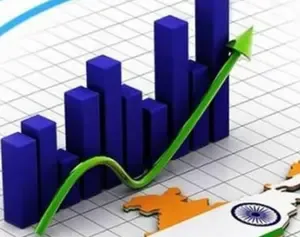
India is projected to remain the world's fastest-growing major economy, with its GDP set to expand by 7.3% in 2026 (FY27) and 6.8% in 2027 (FY28), according to the United Nations Conference on Trade and Development (UNCTAD)'s Trade and Development Report 2026: The Geoeconomics of Development, released on Friday, 9 October 2026. The report attributes India's sustained momentum to robust domestic demand, expanding manufacturing capacity, and large-scale public infrastructure programmes — even as the country contends with heavy dependence on oil imports.
Key Growth Drivers
Household consumption remains a central pillar of India's expansion, growing at an estimated 6.9% in 2026 and projected at 5.6% in 2027. However, the report cautions that these rates represent a notable deceleration from previous years, as higher prices and elevated input costs constrain further acceleration. The government's continued push on public infrastructure — roads, ports, railways, and digital networks — is cited as a key counterweight to these pressures.
India's Digital Public Infrastructure Goes Global
The report highlights India's digital public infrastructure (DPI) model as a standout example of South-South knowledge transfer. According to UNCTAD, India has signed agreements with 23 countries to share its digital architecture, with technical cooperation already operational in eight countries, including Sri Lanka and the United Arab Emirates. This positions India not merely as a domestic growth story but as a regional anchor exporting institutional and technological frameworks to emerging economies.
Global and Asian Growth Context
Global GDP growth is projected at 2.6% for 2026, down from 2.9% in 2025, while developing economies as a group are expected to grow at 4%, a drop from 4.7% last year. Asia is projected to contribute 59% of global growth in 2026, with China expanding at 4.5% and Indonesia at 5.2% — both well behind India's pace. Global trade reached a record $35 trillion in 2025, and trade in goods and services is expected to grow by approximately 4% at constant prices in 2026, partly driven by energy-shock-induced price increases.
Diverging Fortunes in the Developing World
The report draws attention to a widening fault line within the developing world. A handful of large economies — India foremost among them — are driving global expansion, while import-dependent smaller economies are absorbing external shocks with far less fiscal headroom and rising debt-servicing burdens. UNCTAD Acting Secretary General Pedro Manuel Moreno noted: 'Rising economies of the Global South are becoming regional anchors, extending trade integration to new financial initiatives. This works best alongside a multilateral trading system that keeps non-discrimination and special and differential treatment at its core.'
What This Means for India
India's twin advantages — a large domestic market insulating it from global trade volatility and an expanding digital infrastructure that is now being replicated abroad — place it in a structurally differentiated position compared with most emerging markets. That said, the deceleration in household consumption and persistent oil import dependency remain vulnerabilities the report does not overlook. How policymakers manage inflation and input costs in the next two fiscal years will likely determine whether the 7.3% trajectory holds or softens further.
Point of View
But the fine print matters: household consumption — the real engine of India's growth story — is decelerating, and the report links this directly to price pressures and elevated input costs. A growth model that leans increasingly on public infrastructure spending rather than broad-based consumption is inherently more vulnerable to fiscal constraints. India's DPI export story is genuinely novel and underreported, but 23 bilateral agreements do not automatically translate into geopolitical or trade leverage. The headline number flatters; the consumption slowdown and oil-import dependency deserve equal billing.
NationPress
9 Oct 2026
Frequently Asked Questions
What does the UNCTAD report say about India's GDP growth in FY27?
The UNCTAD Trade and Development Report 2026 projects India's GDP to grow at 7.3% in 2026 (FY27) and 6.8% in 2027 (FY28), driven by domestic demand, manufacturing expansion, and public infrastructure investment. India is identified as the fastest-growing major economy globally.
Why is India's household consumption growth slowing down?
According to the UNCTAD report, household consumption growth — estimated at 6.9% in 2026 — marks a significant deceleration from previous years because higher prices and elevated input costs are constraining expansion. This is identified as a key risk to sustaining India's broader growth trajectory.
How does India compare with China and Indonesia in 2026 growth projections?
India leads at 7.3% GDP growth in 2026, ahead of Indonesia at 5.2% and China at 4.5%. Together, Asia is projected to contribute 59% of total global growth this year.
What is India's Digital Public Infrastructure model and how far has it spread?
India's Digital Public Infrastructure (DPI) model encompasses its digital payments architecture and interoperable technology systems. The UNCTAD report notes that India has signed agreements with 23 countries to share this architecture, with technical cooperation already operational in eight countries including Sri Lanka and the UAE.
What is the global economic outlook according to UNCTAD's 2026 report?
UNCTAD projects global GDP growth at 2.6% in 2026, down from 2.9% in 2025, while global trade in goods and services is expected to expand by about 4% at constant prices. Global trade reached a record $35 trillion in 2025, though 2026 gains are partly inflated by energy-price-driven value increases.