US Congress debates federal fintech payments charter amid regulatory overhaul push
Synopsis
The US Congress is weighing a regulatory overhaul that could reshape how fintech payment firms operate nationally — replacing a 50-state licence maze with a single federal charter. With Stripe backing the push and major banks warning of systemic risk, the debate exposes a fundamental tension: can Washington modernise financial regulation without opening the door to regulatory arbitrage?
Key Takeaways
The House Financial Services Committee held a hearing on Wednesday, 25 June to debate a potential federal payments charter for fintech firms.
David Portilla of Davis Polk argued there is currently 'no general federal payments legislation and no federal payments licence' in the US.
Eileen O'Mara , Vice Chair of Stripe , said a dedicated charter would enable lower costs, faster settlement, and a more resilient payments system.
Paige Paradon of the Bank Policy Institute warned the move could trigger regulatory arbitrage and erode safety standards protecting consumers.
Tara Flynn of the National Community Reinvestment Coalition called for strong consumer protections and community obligations for any non-bank gaining infrastructure access.
No draft legislation has been introduced; the hearing represents an early stage of what could be a significant regulatory overhaul.
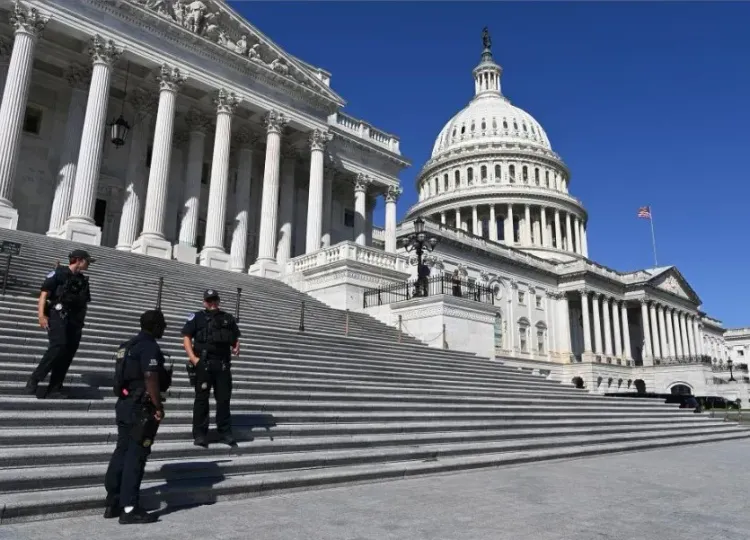
US lawmakers on Wednesday convened a House Financial Services Committee hearing in Washington to examine whether Congress should establish a dedicated federal payments charter for financial technology companies — a move that industry leaders say is long overdue, but which bank representatives and consumer advocates warn could destabilise the financial system.
The Case for a Federal Payments Charter
David Portilla, a partner at Davis Polk, told the committee that the US regulatory architecture remains anchored to a traditional banking model that bundles deposits, lending, and payments — even as those functions have increasingly separated in practice.
'A defining feature of our market today is that these once bundled features have, to a considerable degree, been unbundled,' Portilla said. He argued that specialised payment firms now operate in a regulatory vacuum, noting there is 'no general federal payments legislation and no federal payments licence,' forcing companies to navigate a fragmented patchwork of state-level regimes. 'The remedy should not be to force new business models into ill-fitting categories,' he added. 'Innovation is often best favoured by updated and clear legal standards that match today's markets.'
Eileen O'Mara, Vice Chair at Stripe, reinforced that position, describing the current framework as one that defines companies by what they are not rather than what they do. 'The current framework is defined as you're a banker, you're not a bank,' she said. O'Mara stressed that Stripe does not lend or invest customer funds, and argued that the risks payment firms manage 'require a different kind of regulation.' A dedicated federal charter, she contended, would deliver 'lower costs, faster settlement, and a more resilient system built for how businesses actually operate today.'
Lawmakers' Concerns Over Global Competitiveness
Several members of the committee expressed concern that the United States risks falling behind other advanced economies on payments innovation if it fails to modernise its regulatory framework. Supporters of the proposal highlighted the burden placed on businesses that must secure multiple state licences and banking partnerships before gaining access to the Federal Reserve's payment infrastructure. A federal charter, they argued, could streamline oversight while tailoring regulation specifically to payment companies rather than treating them as conventional banks.
Banks and Consumer Groups Urge Caution
Paige Paradon of the Bank Policy Institute cautioned that companies seeking new charters should not receive 'the implicit imprimatur of federal oversight without accepting the full scope of those obligations.' She warned that granting non-bank firms broader access to Federal Reserve payment services could draw deposits away from insured banks into uninsured institutions, creating systemic risk. 'That is not a formula for innovation,' Paradon said. 'It is a formula for regulatory arbitrage and for the gradual erosion of the safety and soundness standards that protect the American public.'
Tara Flynn of the National Community Reinvestment Coalition argued that any non-bank entity receiving access to banking and payments infrastructure must face robust consumer protection rules, community investment obligations, and rigorous supervision. 'When a non-bank receives access to the banking and payments infrastructure, it should come with responsibilities,' Flynn said.
What Happens Next
The hearing marks an early but significant step in what could become a major legislative effort to reshape how fintech payment companies are regulated in the US. No draft bill has been introduced yet, and the debate reflects deep divisions between the financial technology sector, traditional banks, and consumer advocates. The outcome will have implications not only for US-based payment firms but also for international competitors and emerging markets — including India — that rely on cross-border payment corridors.
Point of View
At its core, a contest over who controls the plumbing of the US financial system. The incumbents — traditional banks — have long used regulatory complexity as a competitive moat; a federal charter would lower that drawbridge. But the critics are not entirely wrong: access to Federal Reserve infrastructure without deposit insurance obligations is a genuine asymmetry that could shift systemic risk in ways that are hard to price in advance. What is missing from the hearing is a serious discussion of graduated obligations — a framework where access scales with systemic footprint. Without that, the US risks trading one blunt instrument for another.
NationPress
23 Sept 2026
Frequently Asked Questions
What is the proposed federal fintech payments charter?
It is a proposed new federal regulatory framework that would allow financial technology companies focused solely on payments — not deposits or lending — to operate under a single federal licence rather than navigating separate state-level regulations. The proposal was debated at a House Financial Services Committee hearing on 25 June.
Why do fintech companies want a federal payments charter?
Fintech firms argue that the existing US regulatory system was built for traditional banks that bundle deposits, lending, and payments together. Companies like Stripe say they do not lend or invest customer funds, and that a dedicated federal charter would reduce compliance costs, speed up settlement, and create clearer rules suited to modern payment models.
What are the risks critics have identified?
Critics, including the Bank Policy Institute, warn that granting non-bank firms access to Federal Reserve payment infrastructure without full banking obligations could encourage deposits to shift from insured banks to uninsured entities, creating systemic risk. Consumer advocates have also called for strong consumer protection and community investment obligations as conditions of any new charter.
Has any legislation been introduced yet?
No draft bill has been introduced as of the 25 June hearing. The committee session represents an early deliberative stage, with significant disagreement remaining between the fintech industry, traditional banks, and consumer groups.
How does this affect countries like India?
A US federal payments charter could have downstream effects on cross-border payment corridors that connect the US to major remittance markets, including India. Regulatory clarity in the US could accelerate fintech expansion internationally, though the ultimate impact will depend on the specific obligations attached to any new charter.