US Commission Critiques Pakistan's Grave Religious Freedom Violations
Synopsis
The USCIRF has requested the US government to reclassify Pakistan as a 'Country of Particular Concern' due to alarming violations of religious freedom, impacting various faiths. This report emphasizes a troubling trend in 2025, highlighting specific incidents of violence and discrimination against religious minorities.
Key Takeaways
The USCIRF urges the US to redesignate Pakistan as a CPC.
Violations of religious freedom are ongoing and severe.
Enforcement of blasphemy laws disproportionately affects minorities.
Mob violence and vigilante attacks are increasing.
International awareness is crucial for promoting religious rights.
Islamabad, March 16 (NationPress) The United States Commission on International Religious Freedom (USCIRF) has called on the US government to reclassify Pakistan as a 'Country of Particular Concern' (CPC) due to its persistent and severe violations of religious freedom, as per the International Religious Freedom Act (IRFA).
In its latest annual report, the USCIRF—a US government advisory entity distinct from the State Department, which monitors and evaluates religious freedom globally and advises the US President, Secretary of State, and Congress—indicated that the state of religious freedom in Pakistan has continued to deteriorate in 2025.
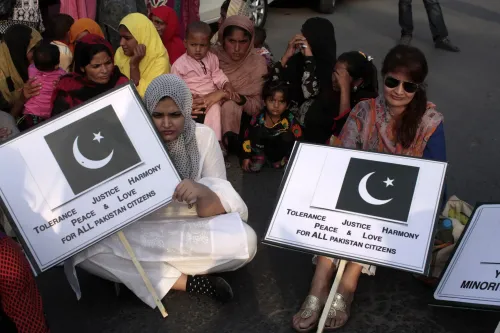
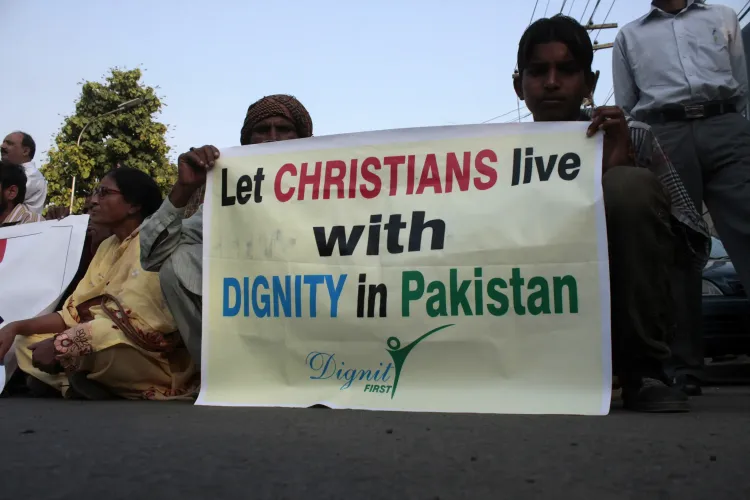
“The government has persistently enforced its stringent blasphemy law, adversely affecting individuals of various faiths, particularly religious minorities. The rise in vigilante violence and mob attacks targeting groups such as Ahmadiyya Muslims and Christians has exacerbated a climate of fear and intolerance,” the report asserted.
The report noted that Pakistani authorities have leveraged the blasphemy law and its associated death penalty to penalize individuals perceived to have insulted Islam.
In January 2025, four people were condemned to death for allegedly sharing blasphemous material online. That same month, a mentally ill Christian man, Farhan Masih, was incarcerated on blasphemy and terrorism charges. Despite his acquittal, Masih could not return to his village due to safety fears. In February, another individual was sentenced to death after being accused by a member of Tehreek-e-Labbaik Pakistan (TLP) of 'insulting religious sentiment'. The Lahore High Court also dismissed Junaid Hafeez’s appeal regarding blasphemy charges; Hafeez has been in solitary confinement since 2014 and was sentenced to death in 2019, with his trial still pending since 2020,” the report elaborated.
Last year, the Council of Islamic Ideology in Pakistan vehemently opposed the Islamabad Capital Territory Child Marriage Restraint Bill, which was passed unanimously by the National Assembly to combat child marriages and prevent forced conversions of underage girls.
This legislation stipulates that anyone who facilitates or coerces a child into marriage, including family members or religious leaders, could face up to seven years in prison.
The USCIRF report highlighted that the bill was declared “un-Islamic” for not aligning with Islamic directives. Maulana Fazlur Rahman, the chief of Jamiat Ulema-i-Islam-Fazl (JUI-F), called for protests against the law, while leaders of the Mili Yakjethi Council (MYC) similarly condemned it as un-Islamic and unconstitutional.
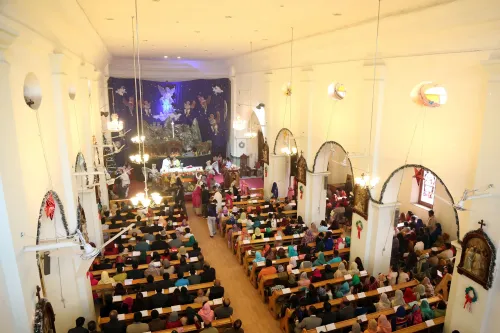
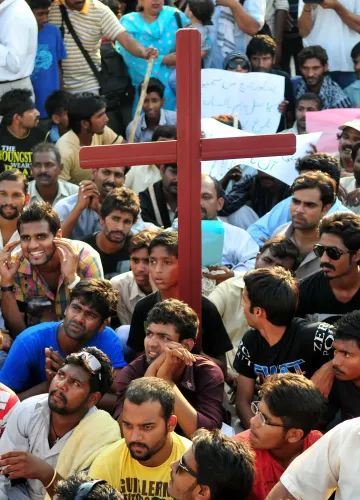
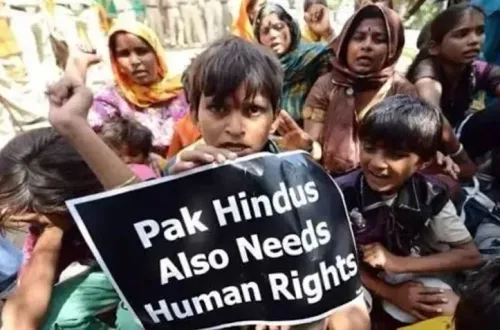
The report also detailed that violent acts against religious minorities transpired with minimal repercussions and, in certain instances, under allegations of forced conversions. In March 2025, a Muslim man attacked his coworker Waqas Masih, a 22-year-old Christian, by slashing his throat, accusing him of blasphemy for coming into contact with an Islamic book with ‘unclean hands’. Shortly thereafter, a Muslim man shot and killed a Hindu named Nadeem Naath after he allegedly refused to convert to Islam. In September, two assailants targeted Christian pastor Kamran Naz while he was en route to Islamabad for a church service. The pastor had previously received death threats for allegedly 'proselytizing among Afghan refugees'. Reports of forced conversions involving Hindu and Christian girls in Punjab and Sindh Provinces persisted throughout 2025,” the annual USCIRF report noted.
Additionally, throughout 2025, the Pakistani government has sought to forcibly repatriate thousands of Afghan refugees, including religious minorities, to Afghanistan, particularly targeting Hazara Shi’as, who face persecution from the Taliban.
The US Department of State last designated Pakistan as a CPC under IRFA for its notably severe violations of religious freedom on December 29, 2023.
“Any presidential actions resulting from this designation will expire at the end of 2025 unless explicitly reauthorized by law,” the annual report stated.
The USCIRF has recommended that up to 13 nations—including Pakistan, Burma, China, Cuba, Eritrea, Iran, Nicaragua, Nigeria, North Korea, Russia, Saudi Arabia, Tajikistan, and Turkmenistan—be redesignated as 'Countries of Particular Concern' (CPCs).
Point of View
It is crucial to present the USCIRF's findings as a significant concern for Pakistan's religious landscape. The report underscores the challenges faced by religious minorities and highlights the urgent need for international awareness and intervention to promote religious freedom in the region.
NationPress
30 Sept 2026
Frequently Asked Questions
What does it mean to be designated as a Country of Particular Concern?
Being designated as a CPC indicates severe violations of religious freedom, prompting potential US government actions to address these issues.
What are some examples of religious freedom violations in Pakistan?
The report cites instances of blasphemy laws being enforced against individuals, mob violence against religious minorities, and forced conversions.
What actions can the US take in response to the USCIRF report?
The US government may impose sanctions, restrict aid, or engage in diplomatic discussions to encourage improvements in religious freedom.
How can individuals help improve religious freedom in Pakistan?
Raising awareness, supporting advocacy groups, and urging policymakers to address these issues can contribute to positive change.