Christian persecution rising in Pakistan: USCIRF urges urgent global action
Synopsis
Even as USCIRF pushes the US to redesignate Pakistan as a Country of Particular Concern, Christians face a worsening crisis: forced conversions of girls as young as 12, mob violence, and a blasphemy law that sends the acquitted into hiding. The gap between international recommendations and on-ground reality has never been starker.
Key Takeaways
The USCIRF urged the US government in March 2025 to redesignate Pakistan as a Country of Particular Concern (CPC) for religious freedom violations.
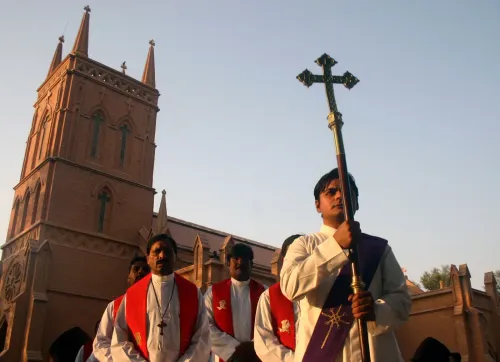
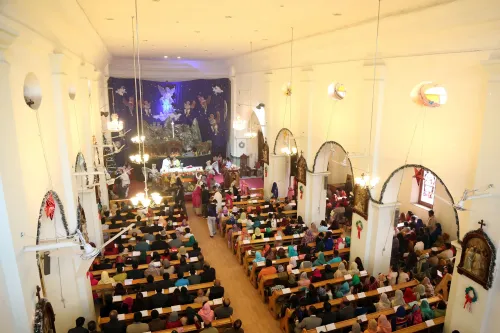
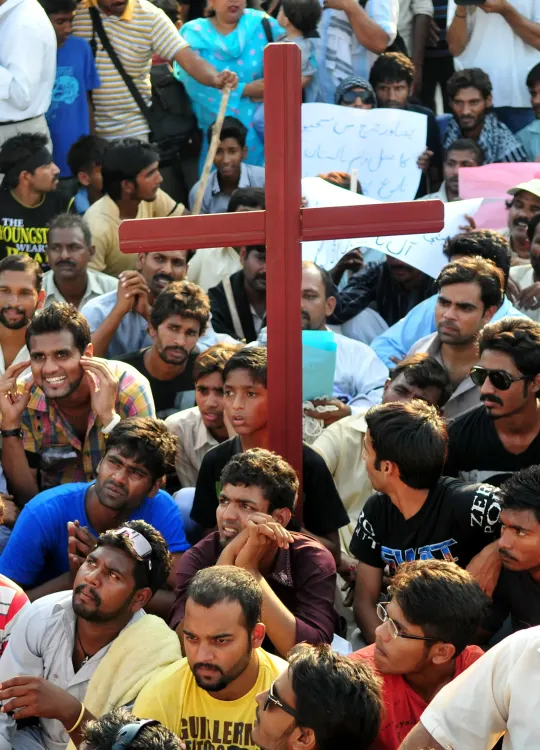
Extremist groups in Pakistan are targeting Christian churches , families, and entire communities, according to Mission Network News .
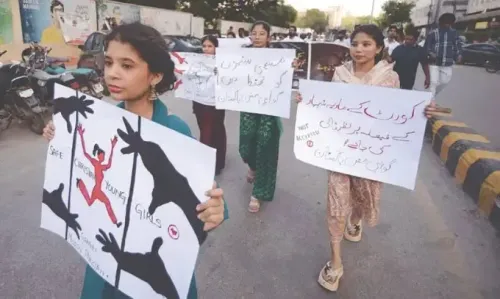
Christian girls as young as 12 years old are being kidnapped, forcibly converted, and married, with courts offering little protection.
Four individuals were sentenced to death last year for allegedly posting blasphemous content on social media.
Christian man Farhan Masih , imprisoned in January 2025 on blasphemy charges, was acquitted but cannot return home due to safety fears.
Junaid Hafeez has been held in solitary confinement since 2014 ; his death sentence dates to 2019 and his trial has been pending since 2020 .
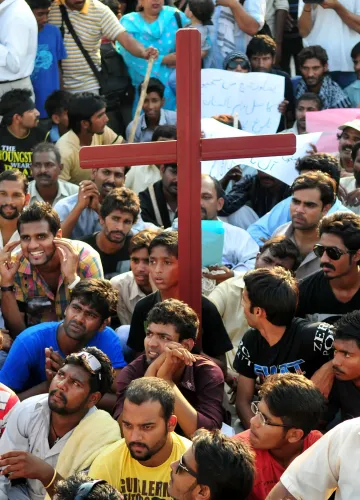
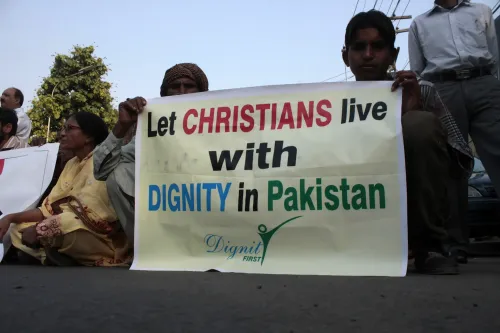
The persecution of Christians in Pakistan continues to intensify, with extremist groups targeting places of worship, families, and entire communities, according to a report by Mission Network News. The findings come even as the US Commission on International Religious Freedom (USCIRF) has urged the US government to redesignate Pakistan as a Country of Particular Concern (CPC) for systematic and egregious violations of religious freedom.
Extremist Attacks on Christian Communities
Greg Kelley of Unknown Nations, an organisation that works with indigenous missionaries worldwide, described the scale of the threat facing Christians in Pakistan. "They [extremists] will attack churches. They will go after families. And so there's tremendous adversity that the Christian church deals with inside of Pakistan," Kelley stated.
Kelley added that sustained international pressure — particularly from the United States — has the potential to shift conditions on the ground in Pakistan. Mission Network News cited his remarks as part of a broader call for coordinated global action.
Forced Conversions and Kidnapping of Minors
Among the most alarming patterns documented is the kidnapping, forced conversion, and forced marriage of Christian girls, some as young as 12 years old. Families reportedly receive little more than an official notice that their daughter has been converted and married into a Muslim household, with courts offering minimal recourse. This pattern has been flagged repeatedly by human rights observers as a systemic failure of the Pakistani legal system to protect religious minorities.
USCIRF Annual Report: A Troubling Trajectory
In its 2025 annual report, the USCIRF — a US government advisory body separate from the State Department that monitors religious freedom abroad and makes policy recommendations to the President, the Secretary of State, and Congress — concluded that religious freedom conditions in Pakistan "continued along a troubling trajectory" through 2025.
"The government continued to enforce its strict blasphemy law, impacting people of all faiths, including religious minorities. Increasing vigilante attacks and mob violence targeting religious minorities, specifically Ahmadiyya Muslims and Christians, contributed to an intensified climate of fear and intolerance," the report stated.
The USCIRF noted that Pakistani authorities continued to use the blasphemy law and its death penalty provision to punish those accused of insulting Islam. Last year, four individuals were sentenced to death for allegedly posting blasphemous content on social media.
Notable Cases Highlighting Legal Persecution
In January 2025, a mentally ill Christian man, Farhan Masih, was imprisoned on blasphemy and terrorism charges. Despite being acquitted, Masih could not return to his village due to fears for his safety — illustrating how acquittal offers little protection in practice.
In a separate case, a sessions court sentenced another man to death after a member of Tehreek-e-Labbaik Pakistan (TLP) accused him of insulting religious sentiment. The following month, the Lahore High Court removed from its case list the appeal hearing of Junaid Hafeez, who has been held in solitary confinement since 2014. A sessions court sentenced Hafeez to death in 2019, and his trial has remained pending since 2020, according to the USCIRF report.
Calls for International Action
The USCIRF's recommendation to redesignate Pakistan as a CPC under the International Religious Freedom Act (IRFA) was made in March 2025, citing systematic, ongoing, and egregious violations. Observers argue that without firm diplomatic and legislative action from the international community, conditions for Christians and other religious minorities in Pakistan are unlikely to improve in the near term.
Point of View
With a man in solitary confinement since 2014 and a trial pending since 2020, exposes a judicial system that has effectively outsourced its function to mob sentiment. What is missing from the international discourse is accountability: the US has historically prioritised its strategic relationship with Islamabad over religious freedom enforcement, and that calculus has cost Pakistan's minorities dearly. A CPC designation without binding consequences is diplomatic theatre.
NationPress
19 Sept 2026
Frequently Asked Questions
What is the USCIRF and what has it said about Pakistan?
The US Commission on International Religious Freedom (USCIRF) is a US government advisory body that monitors religious freedom globally and makes policy recommendations to the President, Secretary of State, and Congress. In March 2025, it urged the US government to redesignate Pakistan as a Country of Particular Concern (CPC) for systematic, ongoing, and egregious violations of religious freedom under the International Religious Freedom Act (IRFA).
What forms of persecution are Christians facing in Pakistan?
Christians in Pakistan face extremist attacks on churches and families, kidnapping and forced conversion of girls as young as 12, mob violence, and prosecution under the blasphemy law. Courts have offered little protection, with some acquitted individuals still unable to return home due to safety fears.
What is Pakistan's blasphemy law and how is it being used?
Pakistan's blasphemy law criminalises insults to Islam and carries a death penalty provision. According to the USCIRF 2025 report, Pakistani authorities have used it to imprison and sentence to death individuals accused of blasphemy, including a mentally ill Christian man and those accused of posting content on social media.
Who is Junaid Hafeez and why is his case significant?
Junaid Hafeez is a Pakistani man who has been held in solitary confinement since 2014 on blasphemy charges. A sessions court sentenced him to death in 2019, and his trial has been pending since 2020. In 2025, the Lahore High Court removed his appeal from its case list, further stalling any prospect of justice.
What can the international community do to help Christians in Pakistan?
According to Greg Kelley of Unknown Nations, sustained international pressure — especially from the United States — can help change conditions for Christians in Pakistan. The USCIRF has recommended a formal CPC designation, which would require the US government to take specific diplomatic or legislative action against Pakistan over its religious freedom violations.