Did the US House Just Pass a Bill to Exclude China Over Taiwan?

Synopsis
In a bold move, the US House of Representatives has passed the PROTECT Taiwan Act, which seeks to remove China from key international financial institutions in the event of a threat to Taiwan. This legislation, backed by significant political figures, emphasizes the need for robust action against Chinese aggression.
Key Takeaways
US House passes the PROTECT Taiwan Act.
China could face exclusion from key global financial institutions.
The legislation underscores the US commitment to Taiwan's security.
Supporters highlight Taiwan's role in the semiconductor industry.
Potential geopolitical ramifications are significant.
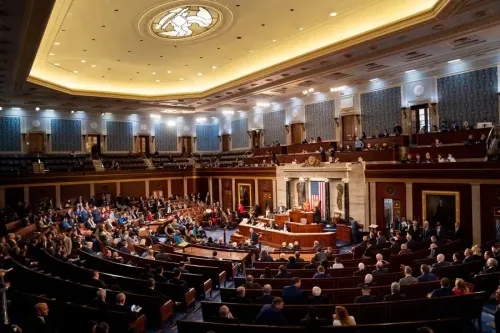
Washington, Feb 11 (NationPress) The US House of Representatives has enacted a bill aimed at potentially excluding China from prominent global financial organizations if Beijing presents an immediate threat to Taiwan.
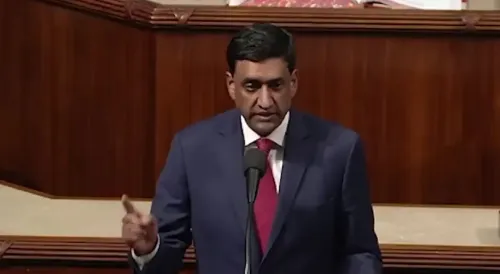
The proposed legislation, spearheaded by Rep. Frank D. Lucas from Oklahoma, is termed the PROTECT Taiwan Act. It establishes a US policy to advocate for the removal of Chinese representatives from vital multilateral entities when the president notifies Congress of an imminent threat to Taiwan's security.
According to the Taiwan Relations Act, the president is required to inform Congress should such a threat occur. Upon such notification, the bill mandates the exclusion of China from organizations like the Group of 20, the Financial Stability Board, and the Basel Committee on Banking Supervision.
“The response of the United States to any invasion of Taiwan ought to be strong and comprise multiple sanctions and economic penalties. Exclusion from international bodies must be a component of that response,” Lucas articulated on the House floor.
He further emphasized that if China “attempts to disrupt the global order,” it “should not remain a member of international organizations dedicated to maintaining that order.”
Rep. French Hill of Arkansas, who chairs the House Financial Services Committee, also endorsed the initiative.
“The Protect Taiwan Act guarantees that there will be substantial financial and diplomatic repercussions if China were to invade Taiwan. Period,” Hill commented. “The US has to convey a clear message that China’s hostility towards Taiwan is unacceptable and will face consequences.”
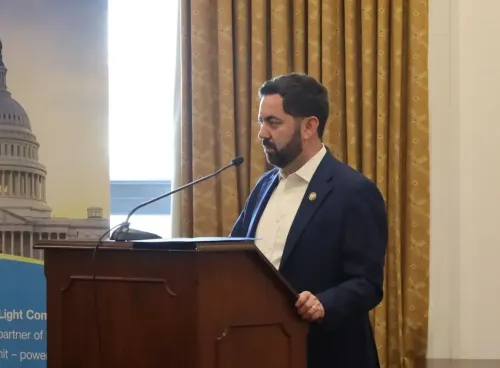
The bill previously received unanimous approval from the House Financial Services Committee and is co-sponsored by Rep. Vicente Gonzalez from Texas.
Supporters highlighted Taiwan's crucial role in the global semiconductor sector. Approximately 90% of the world’s most advanced semiconductor chips are manufactured by Taiwan Semiconductor Manufacturing Co., a key provider for technology and defense industries worldwide. The legislation will now move to the Senate.
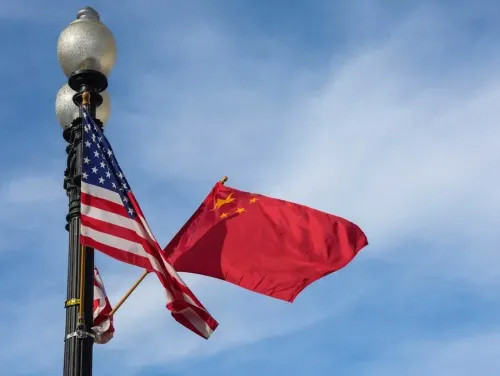
China regards Taiwan as part of its territory and has not dismissed the possibility of employing force to bring the self-governing island under its authority. The United States has no formal diplomatic ties with Taiwan but serves as its primary security ally under the Taiwan Relations Act.
Point of View
It's crucial to recognize the strategic implications of the US House's decision. This legislative action not only signals a commitment to Taiwan's security but also underscores the US's stance against potential Chinese expansionism. The international community must pay attention as this could lead to significant geopolitical consequences.
NationPress
7 Oct 2026
Frequently Asked Questions
What is the PROTECT Taiwan Act?
The PROTECT Taiwan Act is a legislative measure passed by the US House aimed at excluding China from major international financial institutions if there is an immediate threat to Taiwan.
Who introduced the PROTECT Taiwan Act?
The act was introduced by Rep. Frank D. Lucas from Oklahoma.
What institutions could China be excluded from?
If enacted, China could be excluded from institutions like the Group of 20, the Financial Stability Board, and the Basel Committee on Banking Supervision.
What is the significance of Taiwan in the global market?
Taiwan plays a crucial role in the semiconductor industry, producing around 90% of the world’s advanced semiconductor chips.
How does this bill impact US-China relations?
The bill represents a significant stance from the US against Chinese aggression towards Taiwan, potentially escalating tensions between the two nations.