US, Japan, South Korea sign SMR pact targeting Indo-Pacific energy security
Synopsis
On the sidelines of the NATO Summit in Ankara, the US, Japan, and South Korea formalised a trilateral SMR pact aimed squarely at the Indo-Pacific — backed by over $10 million in new US funding and a private-sector push involving GE Vernova, Hitachi, and Samsung C&T. The move is as much a geopolitical play as an energy one, positioning the three allies as a credible counter to Russian and Chinese nuclear exports.
Key Takeaways
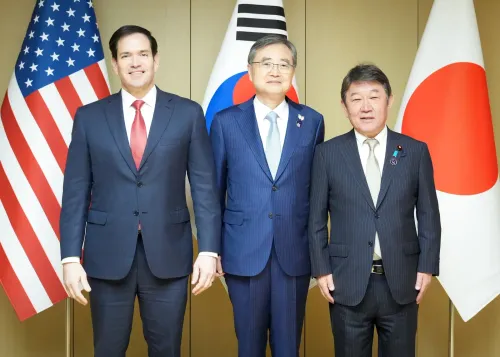
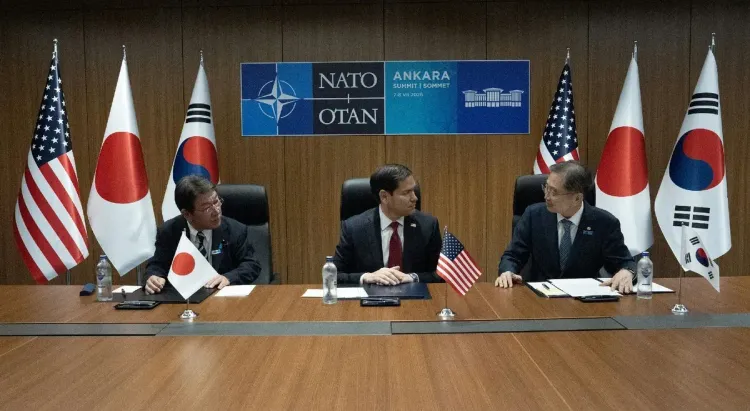
US Secretary of State Marco Rubio , Japanese Foreign Minister Motegi Toshimitsu , and South Korean Foreign Minister Cho Hyun signed the SMR Memorandum of Cooperation on 8 July 2025 in Ankara .
The pact targets accelerated SMR deployment in third countries , with an initial focus on the Indo-Pacific region.
The US State Department announced more than $10 million in new funding for the FIRST Programme to support technical assistance and workforce training in the Indo-Pacific.
An industry initiative involving GE Vernova , Hitachi , Samsung C&T , and SGE will support BWRX-300 SMR deployment across Europe .
The framework aims to streamline licensing, reduce project risk, attract private investment, and optimise supply chains across the three nations' nuclear industries.
The United States, Japan, and South Korea on Tuesday, 8 July 2025 signed a landmark trilateral agreement to accelerate the deployment of small modular reactors (SMRs) in third countries, with an initial focus on the Indo-Pacific region. The Memorandum of Cooperation (MOC) was formalised on the sidelines of the NATO Summit in Ankara, marking a concrete advance in the three allies' deepening strategic alignment on energy security and civil nuclear technology.
Who Signed and What Was Agreed
The MOC was signed by US Secretary of State Marco Rubio, Japanese Foreign Minister Motegi Toshimitsu, and South Korean Foreign Minister Cho Hyun. The framework establishes a structure for trilateral cooperation to fast-track SMR deployment in partner nations, while advancing shared security interests and helping those countries meet their own energy needs.
According to the US State Department, the agreement seeks to encourage cooperation among the three countries' nuclear industries by promoting fleet deployment models, reducing project risks, achieving economies of scale, attracting private investment, streamlining licensing processes, and optimising supply chains.
What the US, Japan, and South Korea Said
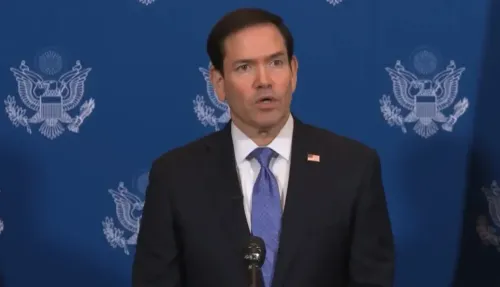
Rubio framed the agreement in the context of mounting global energy pressures. 'One of the most important issues in the world today, as we're reminded of even now with events happening in the Straits of Hormuz and in other places, is energy security,' he said. He added that the deal would allow the three nations 'to move forward on joint work on small modular reactors, which is going to be in many ways the future of energy generation in a very safe, efficient way, cost-effective way that will make our economies stronger.'
Rubio also described the MOC as 'a product of our trilateral engagement,' signalling that the forum was producing tangible results beyond diplomatic declarations. He separately welcomed the strengthening of the Japan–South Korea bilateral relationship, calling it one that 'has grown stronger over the last three to four years.'
Japanese Foreign Minister Motegi noted that the three countries had already made 'concrete efforts' since last October, including strengthening critical minerals supply chains and addressing North Korea's cyber threats. South Korean Foreign Minister Cho described SMRs as 'one of the many areas where we can work together, facing the challenges of the world.'
US Funding and Industry Initiative
Alongside the MOC, the United States announced more than $10 million in new funding for the State Department's Foundational Infrastructure for Responsible Use of Small Modular Reactor Technology (FIRST) Programme. The funding is intended to support technical assistance for Indo-Pacific nations, advance SMR project development, and establish a regional training hub for workforce development.
Separately, Washington announced an industry-level initiative involving GE Vernova, Hitachi, Samsung C&T, and SGE to support the deployment of the BWRX-300 SMR model across Europe.
Why SMRs and Why Now
Small modular reactors are advanced nuclear reactors engineered to generate reliable, low-carbon electricity with smaller physical footprints and lower upfront capital costs compared to conventional nuclear plants. Governments across the world are investing heavily in the technology as they seek secure, clean, and dependable energy sources while reducing greenhouse gas emissions.
This agreement comes amid intensifying competition in the global civil nuclear market, where Russia and China have historically dominated exports. A coordinated US–Japan–South Korea approach is designed to offer partner countries a credible alternative, backed by what the State Department described as 'the highest standards of nuclear safety, security, and nonproliferation.' The pact signals that the three allies intend to convert their technological edge into geopolitical influence across the Indo-Pacific and beyond.
Point of View
Washington, Tokyo, and Seoul are directly challenging Russia's Rosatom and China's CGNPC, which have long dominated civil nuclear deals across Asia and Africa through state-backed financing. The $10 million FIRST Programme pledge is modest relative to what Beijing and Moscow offer, and the real test will be whether the three allies can match state-subsidised rivals on financing terms — not just on safety standards. The inclusion of GE Vernova, Hitachi, and Samsung C&T in a separate European push suggests the coalition is thinking beyond the Indo-Pacific, but spreading focus risks diluting the very competitive edge the pact is meant to build.
NationPress
6 Oct 2026
Frequently Asked Questions
What is the US-Japan-South Korea SMR agreement signed in Ankara?
It is a Memorandum of Cooperation signed on 8 July 2025 on the sidelines of the NATO Summit in Ankara, establishing a trilateral framework to accelerate small modular reactor deployment in third countries, with an initial focus on the Indo-Pacific. The pact covers fleet deployment models, licensing streamlining, supply chain optimisation, and attracting private investment.
What is a small modular reactor (SMR)?
A small modular reactor is an advanced nuclear reactor designed to produce reliable, low-carbon electricity with a smaller physical footprint and lower upfront costs than conventional nuclear plants. Multiple countries are investing in SMR technology as a cleaner and more flexible alternative to fossil fuels.
How much funding did the US commit under this agreement?
The United States announced more than $10 million in new funding for the State Department's FIRST Programme, which will support technical assistance for Indo-Pacific countries, advance SMR project development, and establish a regional training hub for nuclear workforce development.
Which companies are involved in the SMR industry initiative?
GE Vernova, Hitachi, Samsung C&T, and SGE are part of a separate industry initiative announced alongside the MOC, focused on deploying the BWRX-300 SMR model across Europe.
Why is the Indo-Pacific the focus of the SMR pact?
The Indo-Pacific is a strategic priority for all three signatories amid intensifying competition with Russia and China in the global civil nuclear market. A coordinated trilateral approach is intended to offer partner nations in the region a credible, high-standard alternative to Russian and Chinese nuclear export programmes.