Could US Military Buildup Lead to Action Against Iran?
Synopsis
As tensions rise in the Middle East, a significant US military buildup raises questions about President Trump's potential military action against Iran. Despite ongoing negotiations, the administration's readiness to strike Iran's military capabilities underscores a critical moment in US-Iran relations. What might this mean for regional stability?
Key Takeaways
US military buildup in the Middle East could lead to action against Iran.
President Trump has not yet made a decision regarding military action.
Diplomatic negotiations with Iran continue, despite military preparations.
Deployment includes advanced fighter jets and missile defense systems.
Israeli forces are also preparing for potential joint actions against Iran.
Washington, Feb 19 (NationPress) The swift escalation of US military forces in the Middle East has reached a stage where President Donald Trump could potentially initiate military action against Iran as early as this weekend, according to a report from a reputable newspaper, citing sources within the administration and the Pentagon.
The report from The New York Times stated that the current military readiness enables Trump to target Iran's nuclear program, ballistic missile systems, and launch sites. Nonetheless, the President has shown no signs of having made a definitive decision on his course of action.
This military buildup persists despite ongoing indirect negotiations between Washington and Tehran in Geneva on Tuesday. The Foreign Minister of Iran mentioned that there was consensus on a set of guiding principles, while US officials acknowledged some progress but indicated that substantial gaps remain.
Trump has consistently insisted on Iran abandoning its nuclear ambitions, including ceasing uranium enrichment. He has cautioned that Iran must comply with his demands or face serious repercussions.
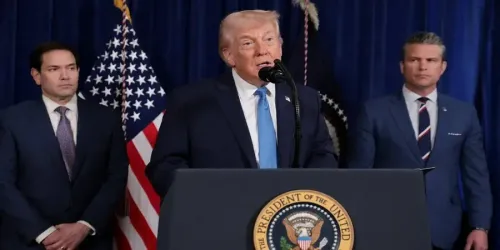
White House Press Secretary Karoline Leavitt asserted that the President still favors diplomatic solutions. 'The President has always made it clear that diplomacy is his first approach, and Iran would be wise to negotiate with President Trump and his administration,' she stated.
She added, 'He prioritizes what is in the best interest of the United States, including our military and the American populace, and that influences his decisions regarding military actions.'
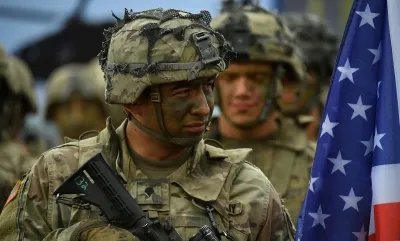
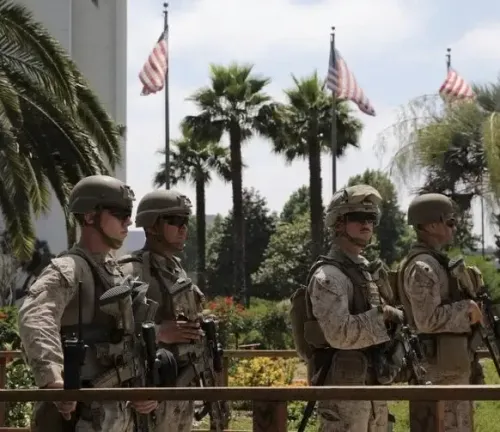
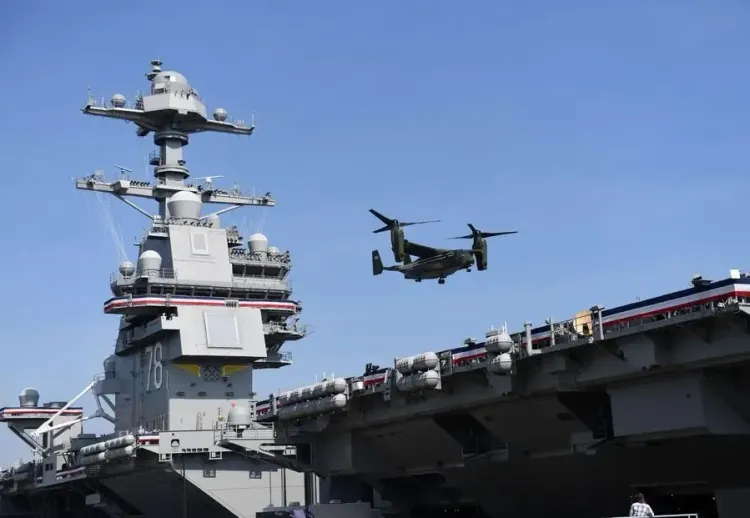
The New York Times further reported that the military buildup encompasses over 50 additional fighter jets, numerous refueling tankers, and two aircraft carrier strike groups. The USS Gerald R. Ford was reportedly nearing Gibraltar while en route to join the USS Abraham Lincoln in the area.
According to US officials, the deployment also features Patriot missile defense systems and THAAD systems, designed specifically to intercept Iranian ballistic missiles.
Additional F-35, F-22, and F-16 fighter jets have been relocated from the United States to Europe and subsequently to the Middle East. Refueling aircraft necessary for prolonged air operations have also been repositioned.
One military official informed the newspaper that the US is currently in a position to protect its troops, allies, and assets from Iranian retaliation, at least for a brief campaign. However, the official warned that it remains uncertain whether the military is equipped for a prolonged and broader conflict.
Israeli forces are reportedly preparing for potential coordinated actions. As per Israeli defense officials, the strategy involves inflicting substantial damage over several days to compel Iran into concessions during negotiations.
Last June, Trump ordered strikes on three Iranian nuclear sites amidst a 12-day conflict, declaring that Iran's nuclear program had been 'obliterated.' He is now contemplating the possibility of resuming military operations.
Senior national security officials have advised the President that any operation aimed at altering Iranian leadership does not guarantee success, according to the report.
Point of View
The situation demands careful monitoring. While military readiness can deter aggression, diplomacy remains paramount. The US must navigate these complex dynamics with both strength and strategy, prioritizing peaceful resolutions while remaining vigilant against potential threats.
NationPress
7 Oct 2026
Frequently Asked Questions
What is the current US military strategy regarding Iran?
The US military strategy involves a significant buildup of forces in the Middle East, including fighter jets and missile defense systems, to deter Iranian aggression and maintain regional stability.
How has Iran responded to US military actions?
Iran has expressed concerns about US military actions and has engaged in indirect negotiations with Washington to address underlying issues, although significant gaps remain.
What are the implications of a US strike on Iran?
A US strike on Iran could escalate tensions in the region, potentially leading to wider conflict and impacting global oil markets and international relations.