VHP welcomes Amit Shah's UCC push for all NDA states by 2029
Synopsis
Home Minister Amit Shah has put a 2029 deadline on UCC rollout across all 21 NDA-governed states — the most explicit political commitment yet on a policy the BJP has championed for decades. With five states already onboard and three in progress, the VHP is pressing non-BJP governments to follow suit, turning a phased administrative plan into a nationwide political challenge.
Key Takeaways
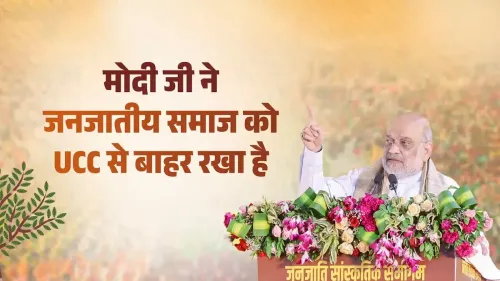
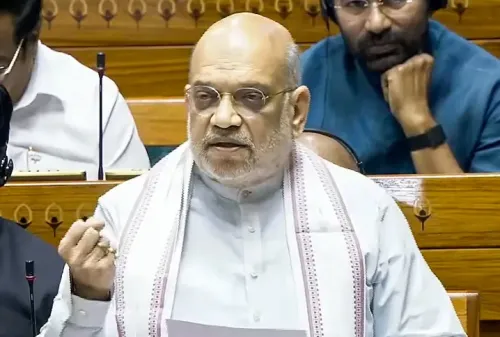
Union Home Minister Amit Shah announced on Sunday, 13 September 2026 that the Uniform Civil Code (UCC) will be implemented in all 21 BJP-NDA-governed states before 2029 .
The VHP welcomed the announcement, calling it a milestone for women's and children's rights in India.
VHP spokesperson Vinod Bansal confirmed via an X post that the UCC is already in force in five states , with three more actively working towards implementation.
The VHP urged non-BJP state governments to independently adopt the UCC without waiting for a central mandate.
Shah said the rollout will proceed in a phased manner through necessary legislative and administrative steps.
The Vishwa Hindu Parishad (VHP) on Monday, 14 September 2026, welcomed Union Home Minister Amit Shah's announcement that the Uniform Civil Code (UCC) would be implemented across all 21 BJP-NDA-governed states before 2029, calling the move a potential milestone for women's and children's rights in India. The VHP also urged non-BJP state governments to independently adopt the UCC without waiting for a central directive.
What Shah Announced
Speaking on Sunday, Home Minister Amit Shah stated that the UCC would be rolled out across all states under the BJP-NDA alliance through a phased approach, with necessary legislative and administrative measures. Shah acknowledged that the code has already been enacted in several states, with work actively underway in others, and committed to ensuring the remaining NDA states follow suit before the end of the current term.
VHP's Reaction and Key Demands
VHP spokesperson Vinod Bansal, in a post on X, welcomed the announcement and noted that the UCC has already been implemented in five states, while three more states are in the process of doing so. “This decision will prove to be a milestone in the development of women and child rights by eliminating the remaining gender inequality and discrimination in India,” Bansal wrote. He further stated that the UCC would help “deprived sections of the country… access the rights they have not been able to enjoy in the last 75 years.”
The VHP also called on state governments outside the BJP fold to take independent initiative. Bansal stressed that the UCC's importance should not be confined to NDA-ruled territories, and urged all remaining states to come forward and adopt the common civil code.
The Broader UCC Landscape
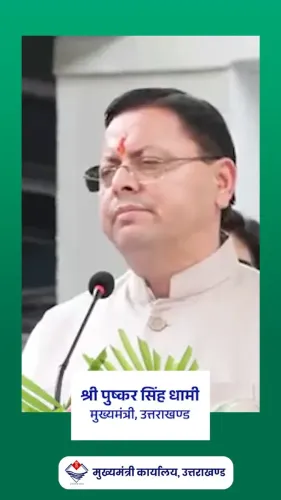
The UCC has remained one of the most politically charged policy commitments of the Bharatiya Janata Party (BJP), featuring in successive election manifestos since the 1990s. Uttarakhand became the first state to enact a UCC law in 2024, setting a legislative template others are reportedly examining. Critics from opposition quarters, however, argue that a patchwork state-by-state rollout risks inconsistency, and that a uniform code, by definition, requires central legislation to be truly uniform across the country. This concern remains unaddressed in the current announcement.
Notably, this is the first time a senior Union government figure has set an explicit 2029 deadline for UCC adoption across all NDA states — adding political urgency to what had previously been a more open-ended commitment.
What Comes Next
With the 2029 general elections on the horizon, the UCC announcement is expected to define a key plank of the BJP's political messaging. States currently in the process of drafting UCC legislation will face renewed pressure to accelerate timelines. Opposition-governed states, meanwhile, have shown no indication of aligning with the Centre's position, making a nationwide uniform application through state-level action unlikely without fresh central legislation.
Point of View
However, is hard to miss: a 'uniform' code applied state by state, within party-aligned boundaries, is by definition not uniform. Opposition states have no incentive to comply, and without central legislation, the code will remain a patchwork. The VHP's appeal to non-BJP governments adds rhetorical pressure but carries no enforcement weight. The real question mainstream coverage underplays is whether the states 'in process' have draft legislation ready or are simply signalling alignment — that distinction will determine whether 2029 is a deadline or another aspirational marker.
NationPress
14 Sept 2026
Frequently Asked Questions
What did Amit Shah announce about the Uniform Civil Code?
Home Minister Amit Shah announced on Sunday, 13 September 2026, that the Uniform Civil Code will be implemented across all 21 BJP-NDA-governed states before 2029. He said the rollout will proceed in a phased manner through necessary legislative and administrative steps.
How many states have already implemented the UCC?
According to VHP spokesperson Vinod Bansal, the UCC has been implemented in five states, while three more are currently in the process of doing so. Shah confirmed that work is underway in several states with others expected to follow.
Why has the VHP welcomed the UCC announcement?
The VHP believes the UCC will eliminate gender inequality and discrimination, advancing women's and children's rights. The organisation also argues it will give 'deprived sections' of society access to equal rights they have been denied for decades, according to Bansal's post on X.
What has the VHP asked of non-BJP state governments?
The VHP has urged governments in states not ruled by the BJP or NDA to take independent initiative and implement the UCC in their respective states. It stressed that the issue should not remain confined to BJP-governed territories.
What is the significance of the 2029 UCC deadline?
The 2029 deadline is the most explicit political commitment yet from a senior Union government figure on UCC implementation, coming ahead of the next general elections. It signals the BJP intends to make the UCC a central electoral issue, while also raising questions about consistency, since a state-by-state rollout may not achieve true uniformity without central legislation.