Sameer Wankhede: Drug De-Addiction Needs Law & Awareness Together
Synopsis
Former NCB Mumbai chief Sameer Wankhede urged India's Hindu community at a Mumbai conference to lead the fight against drug abuse, saying 100% law enforcement plus religious-rooted awareness can eliminate narcotics trafficking — even as his own CBI bribery FIR linked to the Aryan Khan cruise case is being contested in the Bombay High Court.
Key Takeaways
Sameer Wankhede , Indian Railway Service officer and former NCB Mumbai chief, spoke at a Hindu conference in Mumbai on April 26, 2025 , advocating for drug de-addiction.
Wankhede stated that 100% law enforcement combined with public awareness is the only effective formula to fight drug abuse in India.
He urged Hindu and Buddhist religious leaders to use scriptures to educate communities, noting that de-addiction principles are embedded in both faiths.
Wankhede demanded severe punishment for those who supply narcotics to children, drawing on cases he encountered during his NCB tenure .
The Bombay High Court is currently hearing a petition to quash a CBI FIR against Wankhede under the Prevention of Corruption Act , linked to the Cordelia cruise drug case involving Aryan Khan .
Senior counsel Abad Ponda told the court that no concrete evidence has been presented to support the bribery allegations against Wankhede.
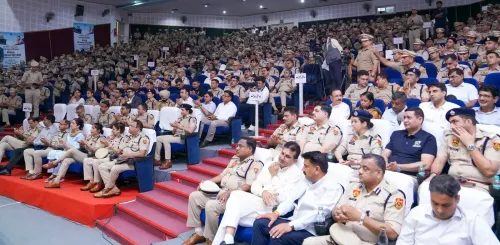
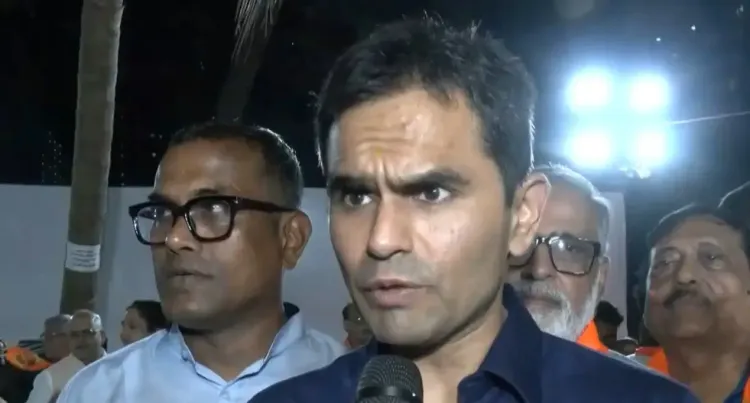
Mumbai, April 26: Sameer Wankhede, an officer of the Indian Railway Service and former chief of the Narcotics Control Bureau (NCB) Mumbai zone, addressed a Hindu conference in Mumbai on April 26, 2025, emphasizing that drug de-addiction in India is achievable only when stringent law enforcement works in tandem with widespread public awareness. Speaking to news agency IANS, Wankhede called the programme highly commendable and urged the Hindu community to lead the charge against drug abuse across the nation.
Wankhede's Core Message on De-Addiction
Sameer Wankhede stated that his primary focus has always been on anti-drug initiatives and de-addiction programmes. He stressed that when society unites on such critical issues, collective efforts — combined with effective law enforcement — can bring about meaningful and lasting change on the ground.
He made a pointed appeal to the gathering, urging religious leaders and attendees to leverage religious scriptures as tools for public education. He noted that the principles of de-addiction are deeply enshrined in both Buddhism and Hinduism, making these faiths powerful vehicles for spreading anti-drug messaging.
Wankhede declared that if 100 per cent implementation of the law and community awareness go hand in hand, India can mount a successful fight against drug abuse and dismantle the networks that fuel it.
Hindu Community as a Pillar in the Anti-Drug Fight
Wankhede underscored that the Hindu community constitutes a vast segment of India's population. He argued that if anti-drug awareness takes deep root within this community, drug peddlers will find it increasingly difficult to thrive within society.
He further demanded that those who supply narcotics to children must face the most severe punishment available under the law. Drawing from his own experience at the Narcotics Control Bureau, he said he has personally encountered such disturbing cases during his tenure.
This appeal carries weight given that India's drug crisis has intensified in recent years — particularly in states like Punjab, Manipur, and parts of Maharashtra — where narcotics trafficking has devastated families across communities and economic strata.
Legal Battle: Bombay High Court Hearing on Bribery FIR
The conference appearance comes at a legally significant moment for Wankhede. The Bombay High Court recently heard a petition seeking to quash a First Information Report (FIR) filed against him by the Central Bureau of Investigation (CBI) under the Prevention of Corruption Act.
The FIR stems from allegations that Wankhede demanded a bribe from Bollywood superstar Shah Rukh Khan in connection with the high-profile Cordelia cruise drug case — the same case in which Shah Rukh Khan's son, Aryan Khan, was arrested in October 2021.
Before a Division Bench comprising Chief Justice Chandrashekhar and Justice Suman Shyam, senior counsel Abad Ponda represented Wankhede and argued that his client neither demanded money from anyone nor accepted any sum as alleged. Ponda further contended that no concrete evidence has been presented thus far to substantiate the CBI's charges.
Wankhede himself categorically denied all allegations, asserting that he did not demand a bribe from Shah Rukh Khan or any other individual in connection with the case.
Background: The Cordelia Cruise Case and Its Fallout
The Cordelia cruise drug bust of October 2021 was one of the most sensational drug-related arrests in recent Indian history, drawing national attention because of Aryan Khan's involvement. The case triggered a political storm, with allegations of extortion and procedural violations levelled against the NCB team led by Wankhede.
Aryan Khan was eventually granted bail and was not chargesheeted by the NCB, raising questions about the strength of the original case. The subsequent CBI FIR against Wankhede added another layer of controversy to an already polarising episode in India's law enforcement history.
Critics argue that the case exposed systemic vulnerabilities in India's anti-narcotics apparatus — where high-profile arrests can become entangled in political and judicial battles, potentially undermining the credibility of genuine anti-drug operations.
What to Watch Next
The Bombay High Court is expected to continue hearing arguments on the petition to quash the CBI FIR against Wankhede in the coming weeks. A ruling in his favour could significantly rehabilitate his public image and strengthen his position as a vocal anti-drug crusader. Meanwhile, his engagement with community-level de-addiction advocacy signals a broader strategy of building public support while his legal battles continue. The outcome of this case could also set a precedent for how India's judiciary handles corruption allegations against senior law enforcement officers involved in sensitive, high-profile drug cases.
Point of View
Part public rehabilitation amid an active CBI case. What the mainstream narrative misses is the deeper irony: the very drug-bust machinery that Wankhede once commanded is now under judicial scrutiny, yet his core message on community-driven de-addiction remains substantively sound and urgently needed. India's drug crisis is real, and leveraging religious institutions — which command grassroots trust far beyond government reach — is a legitimate and underutilised strategy. The question policymakers must answer is whether anti-drug advocacy can be institutionalised beyond individual officers and political cycles.
NationPress
15 Oct 2026
Frequently Asked Questions
What did Sameer Wankhede say at the Hindu conference in Mumbai?
Sameer Wankhede said that drug de-addiction in India is possible if 100% law enforcement and public awareness go hand in hand. He urged religious leaders to use Hindu and Buddhist scriptures to educate communities about the dangers of drug abuse.
What is the CBI FIR against Sameer Wankhede about?
The CBI filed an FIR against Sameer Wankhede under the Prevention of Corruption Act, alleging he demanded a bribe from actor Shah Rukh Khan in connection with the Cordelia cruise drug case. Wankhede has categorically denied these allegations in the Bombay High Court.
What is the current status of the Bombay High Court case involving Wankhede?
The Bombay High Court is hearing a petition to quash the CBI FIR against Wankhede. Senior counsel Abad Ponda argued before a Division Bench that no concrete evidence supports the corruption charges filed against his client.
What is the connection between Sameer Wankhede and Aryan Khan?
Sameer Wankhede, then heading the NCB Mumbai zone, led the October 2021 Cordelia cruise drug bust in which Shah Rukh Khan's son Aryan Khan was arrested. Aryan Khan was later granted bail and was not chargesheeted by the NCB.
Why is community awareness important in fighting drug abuse in India?
Community awareness helps cut off the social acceptance and demand that allows drug networks to thrive. Wankhede argued that if India's large Hindu community actively opposes drug use, drug peddlers will lose their foothold in society.