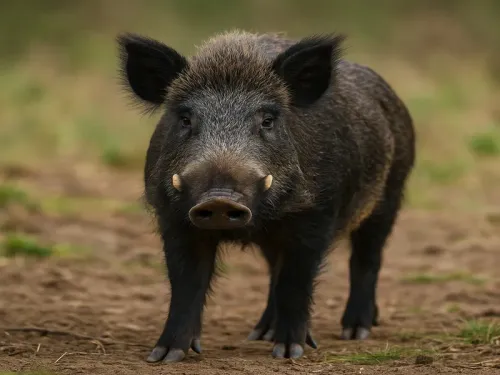
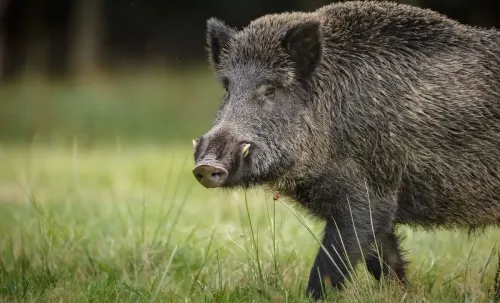
What Happened in Tral Town with the Wild Boar Attack?
Synopsis
In a startling incident, four civilians were injured during a wild boar attack in Tral, Jammu and Kashmir. The unexpected encounter in a busy market area led to panic among shoppers, highlighting the growing concern over the resurgence of these animals in the region. Local authorities acted swiftly to control the situation, ensuring public safety.
Key Takeaways
Four civilians were injured in a wild boar attack in Tral, J&K.
The incident occurred in a busy market area, causing panic.
Wild boars are considered an invasive species impacting local ecosystems.
Authorities are working to manage the increasing wild boar population.
Wild boars threaten local agriculture and compete with endangered species.
Srinagar, Jan 17 (NationPress) On Saturday, a wild boar incident in Tral town, located in the Pulwama district of Jammu and Kashmir, resulted in injuries to four civilians, as confirmed by local police officials.
According to reports, the wild boar charged at pedestrians in the busy Tral market area, leading to chaos and panic among shoppers.
Emergency responders quickly transported the injured individuals to a nearby hospital, where they are currently receiving medical care, and their condition has been reported as stable.
Authorities acted swiftly to manage the situation, ensuring the safety of the public.
Initially brought to Kashmir for hunting purposes in the 1840s, wild boars are now seen as an invasive species that damages habitats and competes for resources with the endangered Hangul deer. Although declared locally extinct in 1984, they re-emerged in Kashmir around 2013.
Since their return, their population has been steadily increasing, raising concerns among local residents and wildlife experts. While an official wildlife census is pending, forest officials estimate approximately 200 wild boars currently inhabit the region.
These fast-breeding animals have been spotted in various areas of Jammu and Kashmir, including Uri, Limber, Lachipora, and Balwar. They have also been observed in Dachigam National Park, where they could disrupt the ecosystem of the critically endangered Hangul deer, as both species vie for similar resources.
The resurgence of wild boars, potentially attributed to milder winter temperatures, poses threats to local agriculture, ecosystems, and wildlife. Recent sightings have even extended to urban areas such as Srinagar's Tulip Garden and agricultural lands.
Recognized as a significant threat, wild boars particularly endanger the population of Hangul deer. Their rooting and foraging habits lead to habitat degradation, impacting food and water sources for native species.
They are known to destroy crops, including saffron and apple orchards, by uprooting plants. Within Dachigam National Park, they compete directly with Hangul deer for resources and may carry diseases harmful to both livestock and humans.
Point of View
I emphasize the importance of addressing wildlife encounters in urban areas. The recent wild boar attack in Tral underscores the need for effective wildlife management strategies to safeguard both human interests and natural ecosystems. Our commitment remains with the nation, prioritizing the safety and awareness of our communities.
NationPress
6 Oct 2026
Frequently Asked Questions
What caused the wild boar attack in Tral?
The attack was a result of a wild boar entering a busy market area, leading to injuries among pedestrians.
What measures are being taken to control wild boar populations?
Local authorities are monitoring the situation and developing strategies to manage the increasing wild boar populations effectively.
Are there health risks associated with wild boars?
Yes, wild boars can carry diseases that may be harmful to both livestock and humans, posing potential health risks to the local population.
How do wild boars affect local agriculture?
Wild boars can damage crops by rooting and foraging, particularly affecting valuable crops like saffron and apples.
What impact do wild boars have on the Hangul deer?
Wild boars compete directly with the endangered Hangul deer for resources, threatening their survival in shared habitats.