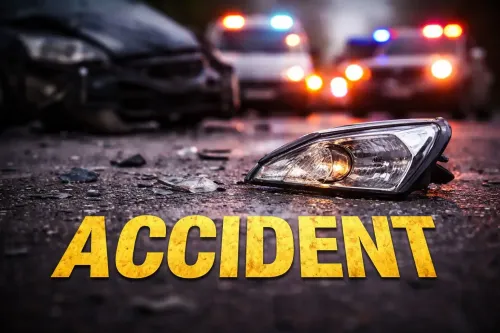
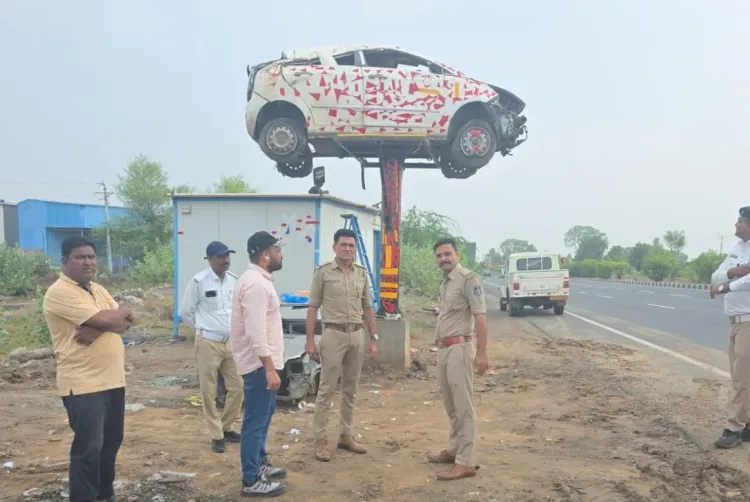
Wrecked car on NH-48 in Sabarkantha warns motorists of road danger
Synopsis
A totalled car placed roadside on NH-48 near Rasulpur, Sabarkantha is NHAI's bluntest road-safety message yet — no signage, just wreckage. The joint initiative with Sabarkantha District Police targets one of Gujarat's busiest and most accident-prone highway corridors, betting that a physical wreck will jolt motorists where conventional warnings have not.
Key Takeaways
NHAI and Sabarkantha District Police placed a wrecked vehicle on NH-48 near Rasulpur on 10 August as a road safety deterrent.
The display is located on the Himmatnagar-Prantij section, identified as an accident-prone stretch.
The NH-48 corridor between Chiloda and Shamlaji carries heavy daily traffic, heightening accident risk.
Authorities are urging motorists to follow speed limits, wear seat belts, and maintain safe distances.
The initiative is part of NHAI's broader safety drive combining infrastructure improvements with behavioural awareness campaigns.
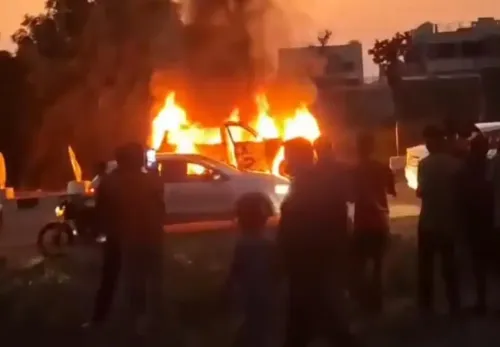
A severely damaged vehicle has been placed on display at an accident-prone stretch of National Highway-48 near Rasulpur in Sabarkantha, Gujarat, as part of a joint road safety drive by the National Highways Authority of India (NHAI) and the Sabarkantha District Police. The initiative, launched on 10 August, uses the wreck as a stark visual deterrent to discourage unsafe driving practices on one of the state's busiest highway corridors.
The Display and Its Purpose
The mangled car — salvaged from a serious accident — has been stationed on the Himmatnagar-Prantij section of NH-48, a stretch long identified as accident-prone. The aim is to confront passing motorists with a visceral reminder of what overspeeding, negligent driving, and traffic-rule violations can lead to. Unlike signage or banners, the physical wreck is designed to make the message impossible to ignore.
Why This Stretch Was Chosen
The NH-48 corridor between Chiloda and Shamlaji carries a heavy volume of daily traffic, making it one of the more vulnerable segments in the district for road accidents. NHAI, working alongside the Traffic Branch of Sabarkantha District Police, identified the Rasulpur zone as a priority location for targeted safety intervention. This display is part of a wider set of engineering and awareness measures being rolled out at such black spots.
What Authorities Are Urging Motorists to Do
NHAI and the district police have jointly appealed to highway users to adhere to prescribed speed limits, wear seat belts at all times, maintain safe following distances, and drive with caution — particularly at high-risk stretches. Officials stated that consistent compliance with these basics can significantly reduce accident frequency and protect both drivers and other road users.
Broader Road Safety Context
The damaged-vehicle display is one component of NHAI's multi-pronged road safety strategy, which combines physical infrastructure upgrades at accident-prone locations with behavioural awareness campaigns. Road safety advocates have long argued that experiential or visual interventions — rather than conventional signage alone — tend to produce stronger behavioural responses among motorists. This initiative reflects that thinking, and similar displays have been used in other states as well. Whether such measures translate into measurable accident reduction on the Sabarkantha stretch will be closely watched by traffic authorities.
Point of View
But its staying power is the real question. Novelty drives attention; once the car becomes part of the scenery, its shock value fades. India's road fatality numbers — among the highest globally — demand more than episodic awareness drives. The Sabarkantha initiative is well-intentioned, but without sustained enforcement of speed limits and a measurable reduction in accident frequency at the Rasulpur stretch, it risks being a photo-op rather than a policy intervention. NHAI's own data on black-spot recurrence rates would be the honest metric to watch.
NationPress
25 Sept 2026
Frequently Asked Questions
Why has a damaged car been placed on NH-48 near Rasulpur in Sabarkantha?
NHAI and Sabarkantha District Police placed the wrecked vehicle on the Himmatnagar-Prantij section of NH-48 as a visual warning to motorists about the consequences of overspeeding and unsafe driving. The stretch near Rasulpur has been identified as accident-prone, and the display is intended to make the road safety message more immediate and impactful than conventional signage.
Which highway stretch is this road safety initiative focused on?
The initiative targets the NH-48 corridor, specifically the Himmatnagar-Prantij section near Rasulpur in Sabarkantha, Gujarat. The broader stretch between Chiloda and Shamlaji on NH-48 sees heavy traffic volume and has recorded a significant number of accidents.
What are NHAI and Sabarkantha Police asking motorists to do?
Authorities are urging highway users to strictly observe speed limits, wear seat belts at all times, maintain safe following distances, and avoid negligent or distracted driving. They stress that compliance with these basic rules can prevent accidents and protect all road users.
Is this a one-off display or part of a larger programme?
The wrecked-car display is part of NHAI's broader road safety programme, which includes engineering interventions at accident-prone locations alongside behavioural awareness campaigns. Similar initiatives have been conducted at other black spots across the country.
Who is behind this road safety campaign in Sabarkantha?
The campaign is a joint effort between the National Highways Authority of India (NHAI) and the Traffic Branch of Sabarkantha District Police. Both agencies have been coordinating on safety measures at identified high-risk locations along NH-48.