Yogi Adityanath alleges dozen hunger deaths in Kushinagar during Mulayam govt's foodgrain scam
Synopsis
Uttar Pradesh CM Yogi Adityanath has alleged that around a dozen Musahar community members starved to death in Kushinagar while a foodgrain scam ran under Mulayam Singh Yadav's SP government — a pointed political attack delivered at the launch of his '50 weeks of outreach' coffee table book, contrasting that alleged neglect with his administration's welfare programmes for tribal and marginalised communities.
Key Takeaways
CM Yogi Adityanath alleged around a dozen Musahar community members died of hunger in Kushinagar during a foodgrain scam under former CM Mulayam Singh Yadav's SP government.
He said he personally led an agitation over the deaths at the time and contrasted that neglect with current welfare measures including land leases and housing for Musahar families.
His government has extended civic rights and amenities to thousands of families across 54 Vantangia settlements ; forest rights laws enacted centrally in 2007–08 were not implemented in UP until 2017 , he alleged.
He claimed encephalitis deaths — which once killed hundreds of children annually in eastern UP — have been completely eradicated under his administration.
Direct Benefit Transfers for uniforms, books, and footwear now cover 1.60 crore children under Operation Kayakalp , with 96 per cent saturation in Basic Education Council schools.
Remarks were made at the launch of coffee table book 'Yogi Ki Pati' in Lucknow on 16 November 2026 , marking over 50 weeks of citizen outreach.
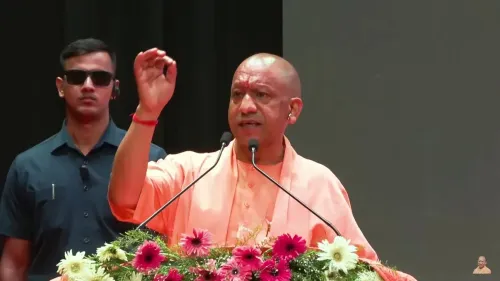
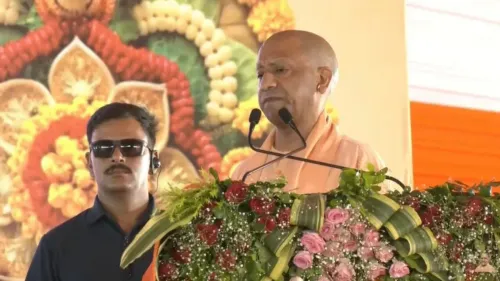
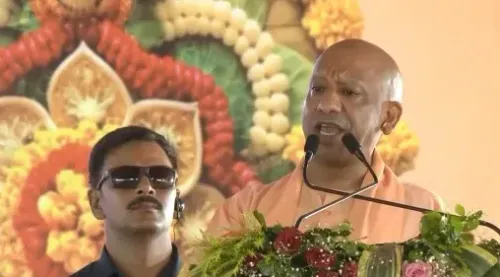
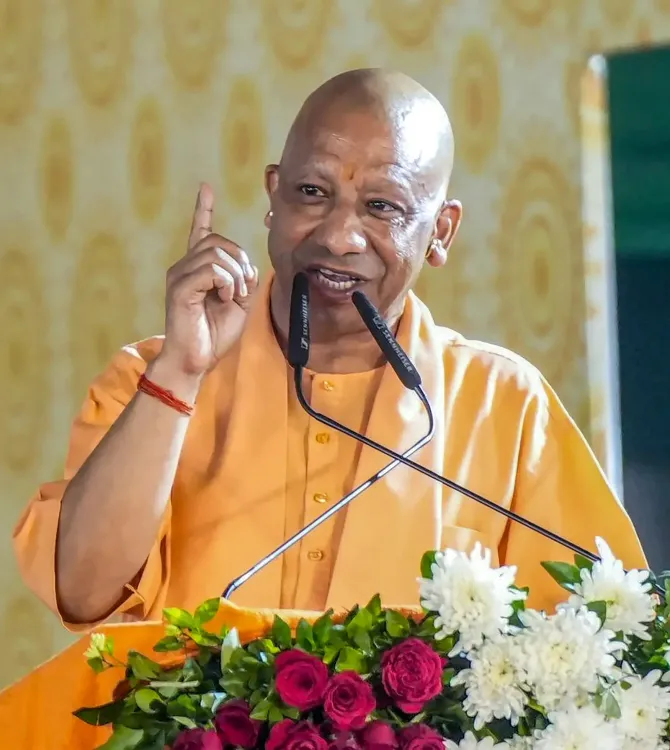
Uttar Pradesh Chief Minister Yogi Adityanath on Monday, 16 November 2026, launched a sharp political offensive against previous Samajwadi Party (SP)-led administrations, alleging that the government of former Chief Minister Mulayam Singh Yadav presided over a foodgrain scam during which around a dozen members of the Musahar community died of hunger in Kushinagar. The remarks came at his official residence in Lucknow during the launch of a coffee table book titled 'Yogi Ki Pati', marking over 50 weeks of citizen outreach across Uttar Pradesh's 25 crore residents.
The Hunger Deaths Allegation
Adityanath alleged that the Musahar community — one of the most economically marginalised groups in the state — was left to starve while a foodgrain distribution scam unfolded under the SP government. He said he had personally led an agitation over the issue at the time, claiming the deaths in Kushinagar reflected the administration's deep insensitivity toward deprived communities. The Chief Minister added that his government has since provided Musahar families with land leases, housing, and access to welfare schemes.
Vantangia and Tribal Communities: Decades of Neglect
The Chief Minister also highlighted what he described as the decades-long neglect of the forest-dwelling Vantangia community. Recalling his 2005–06 interaction with Vantangia families in Maharajganj, he said he had made representations to then-Prime Minister Dr Manmohan Singh, and while central amendments to forest rights laws were enacted in 2007–08, the provisions were not effectively implemented in Uttar Pradesh until 2017.
He said: 'The efforts undertaken for the Vantangia community also inspired him to pay attention to the problems of tribal and deprived communities such as the Musahar, Tharu, Chero, Gond, Kol, Buksa and Sahariya. These communities were once rich in natural resources, but over time, they became impoverished due to neglect and deprivation.' According to the Chief Minister, his government has since extended civic rights and basic amenities to thousands of families across 54 Vantangia settlements. He also said that Kol families in Chitrakoot, who lived in mud-and-thatch dwellings for decades after Independence, are now receiving permanent housing under the Mukhyamantri Awas Yojana.
Education and Healthcare: A Contrast With Pre-2017 Era
Adityanath cited education and healthcare as barometers of administrative sensitivity, alleging that before 2017, a large number of schools had no teachers, buildings were dilapidated, and between 60 to 70 per cent of children — particularly girls — were compelled to attend school barefoot. He said his government initially provided shoes, socks, and uniforms to girls before extending the same facilities to boys.
On healthcare, he recalled how encephalitis had claimed hundreds of children's lives annually in eastern Uttar Pradesh. He said that during his tenure as a Member of Parliament, he found over 1,000 patients crowded into a 100-bed ward at Gorakhpur's BRD Medical College without fans or electricity, while child deaths in Balrampur were officially classified as an 'unknown disease.' He claimed sustained government intervention has now completely eradicated encephalitis-related deaths in the state.
Operation Kayakalp and Direct Benefits for 1.60 Crore Children
Highlighting education reforms, Adityanath stated: 'Through Operation Kayakalp, basic facilities have been developed in schools with public participation, and approximately 96 per cent saturation has been achieved in Basic Education Council schools. Atal Awasiya Vidyalayas for children of labourers and CM Composite Schools equipped with modern facilities are emerging as new centres of quality education. The situation has changed through Operation Kayakalp and Direct Benefit Transfers for uniforms, books, and footwear for 1.60 crore children.'
About 'Yogi Ki Pati' and the Outreach Drive
Describing the coffee table book as an intimate dialogue rather than a mere compilation, Adityanath stressed the need for repeated communication about welfare schemes — including Ayushman cards, ration cards, and destitute women pensions — to ensure benefits reach every citizen. He also virtually inaugurated an exhibition chronicling the 50-week outreach journey. Senior journalists from leading print and visual media outlets attended the event.
The event and its political messaging signal a continued effort by the Chief Minister to sharpen the contrast between his administration and those of his SP predecessors ahead of future electoral cycles in the country's most populous state.
Point of View
Musahar community, a sitting CM's personal agitation) makes it harder to dismiss as generic rhetoric. The SP has not responded publicly, leaving a one-sided narrative on record. What mainstream coverage tends to gloss over is that forest rights implementation gaps cited by Adityanath were partly a Centre-state coordination failure, one that his party's allies in the Centre also bore responsibility for in the 2007–14 period. The welfare metrics he cites — 96 per cent school saturation, encephalitis eradication — are significant claims that deserve independent verification before being accepted as settled fact.
NationPress
16 Nov 2026
Frequently Asked Questions
What did CM Yogi Adityanath allege about hunger deaths during Mulayam Singh Yadav's government?
Chief Minister Yogi Adityanath alleged that around a dozen members of the Musahar community died of hunger in Kushinagar while a foodgrain scam was taking place under the Samajwadi Party government led by former Chief Minister Mulayam Singh Yadav. He said he had personally led an agitation over the deaths at the time.
Who are the Musahar community and why are they significant in this context?
The Musahar are one of the most economically marginalised Dalit communities in Uttar Pradesh, historically engaged in rat-catching and agricultural labour with limited access to land or welfare. Adityanath cited their plight as an example of pre-2017 administrative neglect, adding that his government has since provided them land leases, housing, and welfare scheme access.
What is the Vantangia community and what did Yogi Adityanath say about their rights?
The Vantangia are a forest-dwelling community settled in UP during the British era to cultivate teak plantations, historically denied civic rights and land titles. Adityanath said central forest rights law amendments of 2007–08 were not implemented in UP until 2017, and that his government has since extended civic amenities to thousands of families across 54 Vantangia settlements.
What is 'Yogi Ki Pati' and why was it launched?
'Yogi Ki Pati' is a coffee table book released by Chief Minister Yogi Adityanath marking over 50 weeks of direct citizen outreach with Uttar Pradesh's 25 crore residents. It was launched at his official residence in Lucknow on 16 November 2026, alongside a virtual inauguration of an exhibition chronicling the outreach journey.
What claims did Yogi Adityanath make about encephalitis and education in Uttar Pradesh?
Adityanath claimed that encephalitis, which had killed hundreds of children annually in eastern Uttar Pradesh, has been completely eradicated under his administration. On education, he stated that before 2017, 60–70 per cent of children attended school barefoot, while his government's Operation Kayakalp and Direct Benefit Transfers now cover 1.60 crore children with uniforms, books, and footwear.